Designing Threats That Escalate: A Design Perspective on Advancing Fronts
A design-focused look at what makes an advancing threat work: wants, methods, stakes, visible steps, and counterplay. Learn to build opposition that grows without railroading.
42 posts tagged “Tabletop fundamentals”.

A design-focused look at what makes an advancing threat work: wants, methods, stakes, visible steps, and counterplay. Learn to build opposition that grows without railroading.

A practical walkthrough for turning a villain's plan into a countdown clock you can run: choosing a size, writing triggers, setting steps, and keeping the pace fair.

A close look at why threats that advance on their own make player choices matter more, what the approach costs, and how the structure of a countdown supports fair play.

A plain-language explainer on advancing threats, countdown clocks, and why a world that keeps moving between sessions gives players real consequences.

An illustrative fight on a collapsing bridge, walked through decision by decision with SRD 5.2.1 numbers, shows where hit points shape choices in play and what to watch for at your own table.

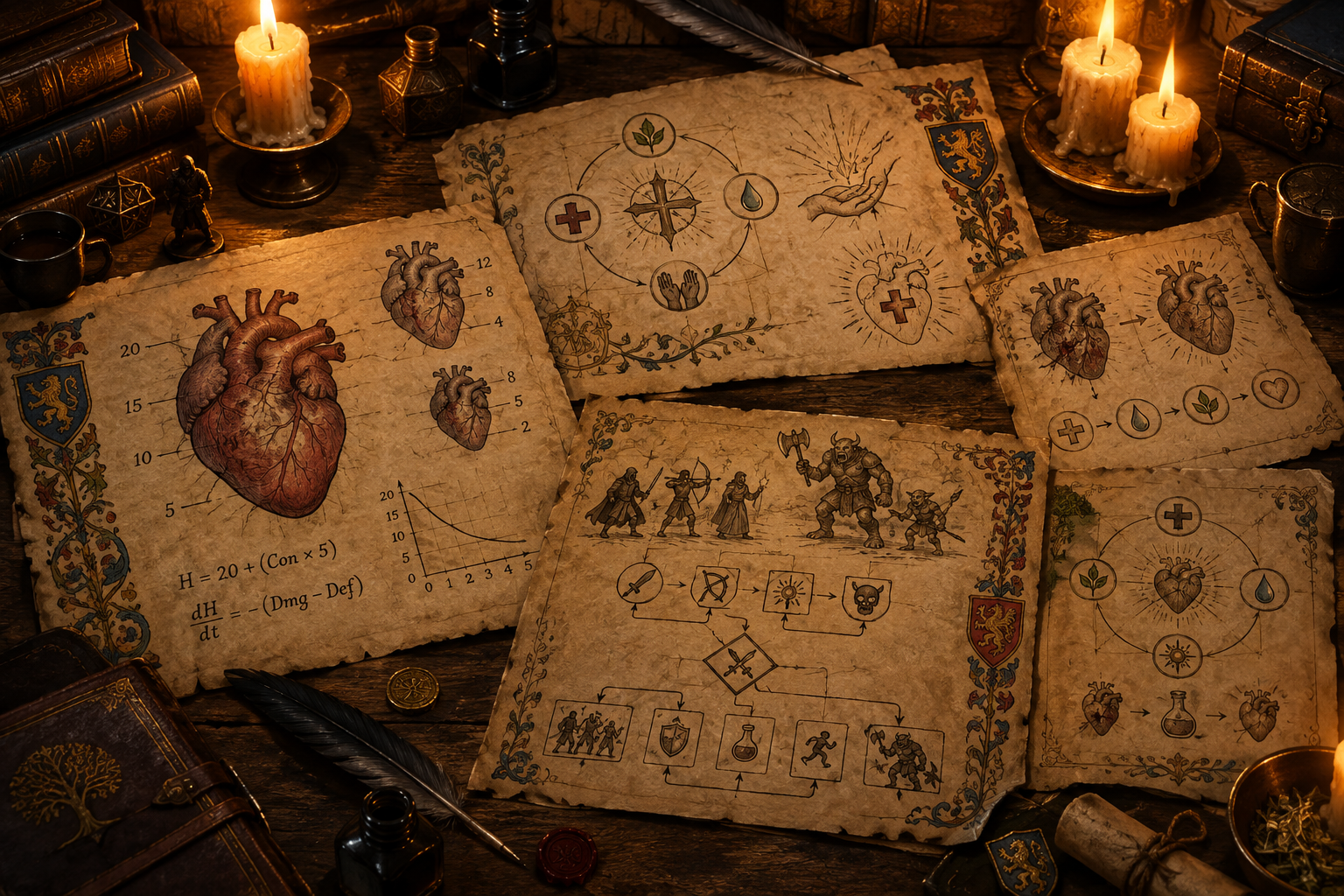
Hit points are not universal. Comparing how different tabletop RPG systems handle damage, survival, and attrition reveals design choices that shape play in distinct ways.

Combat moves faster when you have the right information at hand. These reference charts, condition thresholds, and quick-lookup tables help you track hit points, adjudicate damage, and narrate outcomes without breaking your table's momentum.

Hit points work differently at every table because they serve the fiction you create together. Understanding design choices behind hit point systems helps you run them with confidence and customize them when your game needs it.

Hit point totals drive combat, but your descriptions make them meaningful. Learn practical techniques to narrate damage that respects the fiction, supports player engagement, and keeps combat moving.

Hit point totals shift meaning as combat unfolds. Understanding what those numbers signal helps you pace encounters, adjudicate rulings, and narrate outcomes that respect both the fiction and the mechanics.

Hit points measure more than raw physical damage. Understanding what they actually represent helps you narrate combat, pace encounters, and make rulings that feel consistent and engaging.

An illustrative reflection on lessons a first dungeon crawl can teach, including what tends to work, what tends to fail, and how those insights improve future sessions.