Narrating Hit Point Loss: Techniques for Describing Damage at the Table
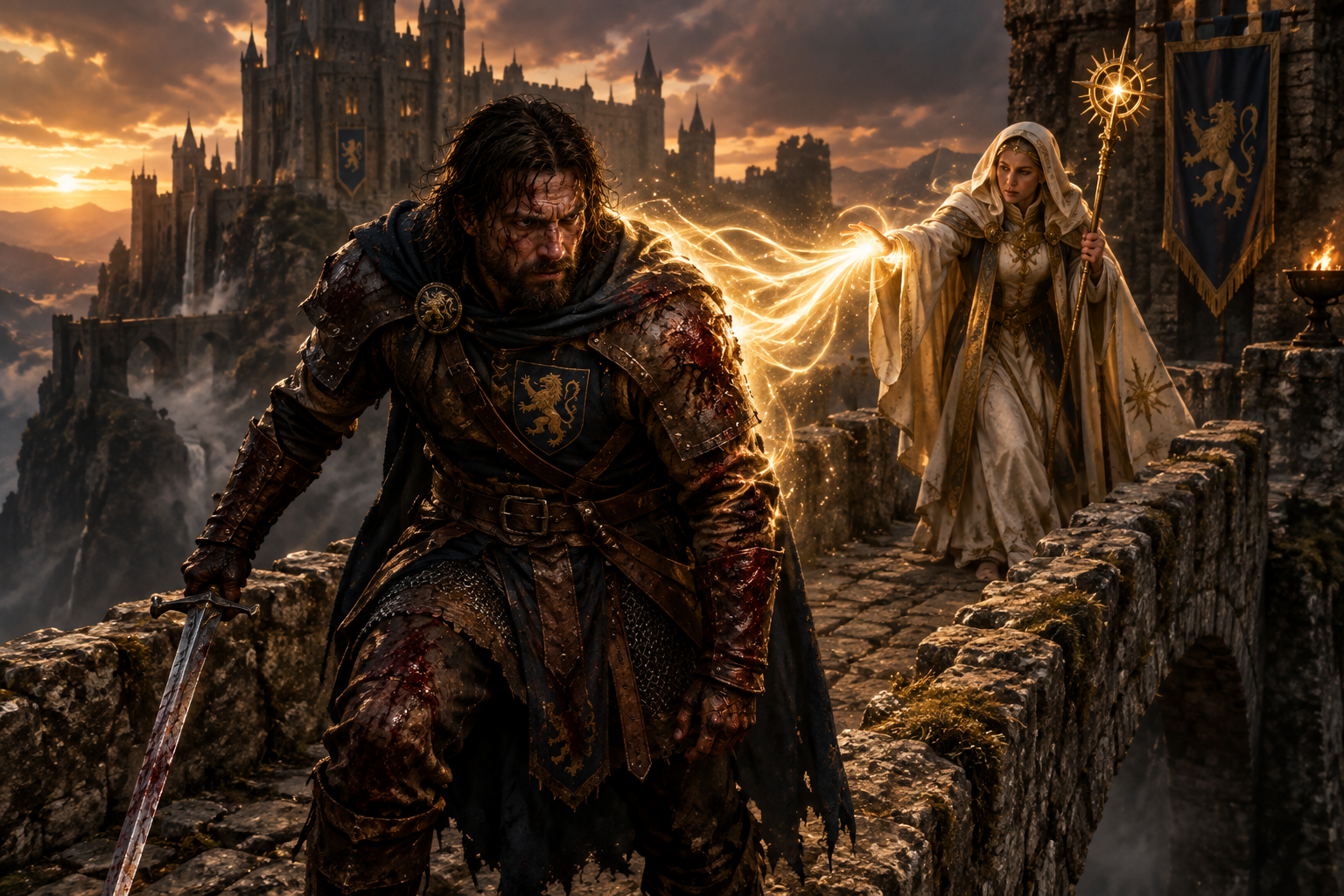
Hit point totals drive combat, but your descriptions make them meaningful. Learn practical techniques to narrate damage that respects the fiction, supports player engagement, and keeps combat moving.
Hit points provide the mechanical structure for combat in most tabletop RPGs, but the numbers themselves tell your players almost nothing about what their characters experience. A fighter reduced from 40 hit points to 25 has lost 15 points, but what actually happened? Did the orc's axe bite into her shoulder, or did she deflect it at the cost of her stamina? Did she take a glancing blow, or did she barely avoid a killing strike?
Your narration bridges the gap between mechanics and fiction. It transforms abstract numbers into concrete moments that players remember long after the session ends. This article presents practical techniques for describing damage in ways that respect both the rules and the story unfolding at your table.
Why Narration Matters for Hit Point Loss
The mechanics of hit point loss are straightforward. A creature takes damage, you subtract that number from its current hit points, and you compare the result to zero. The System Reference Document 5.2.1 defines Hit Points as "a measure of how difficult it is to kill or destroy a creature or an object" (Wizards of the Coast, 2025). The definition says what hit points measure, not what losing them looks like, and that leaves enormous room for interpretation.
Narration serves three essential functions. First, it maintains the fiction. Players and Game Masters alike need to visualize what is happening in the shared imaginary space. Second, it reinforces tone and stakes. A grim, gritty campaign narrates damage differently than a heroic adventure. Third, it provides pacing cues. Descriptions signal whether an encounter is routine, desperate, or turning in the party's favor.
Without narration, combat devolves into a sequence of dice rolls and number adjustments. With it, combat becomes a scene players talk about afterward.
The Scaling Technique: Matching Description to Remaining Hit Points
One of the most reliable approaches ties your description to the percentage of hit points a creature has remaining. This technique divides the hit point range into narrative zones. One of its boundaries is already in the rules: a creature with half its Hit Points or fewer is Bloodied (Wizards of the Coast, 2025).
High hit points (75 percent to 100 percent). Characters in this zone are still fresh. Describe hits as near misses, glancing blows, impacts absorbed by armor, or quick defensive maneuvers that cost stamina but leave no lasting injury. The attack succeeds mechanically, but the fiction emphasizes resilience.
"The goblin's blade skitters across your pauldron. You feel the impact through your shoulder, but the steel holds."
Moderate hit points (50 percent to 74 percent). Characters are now taking real punishment. Describe visible but not incapacitating injuries: shallow cuts, bruises, armor dented or cracked, labored breathing. The character is hurt, but still capable.
"The blade finds the gap between your breastplate and vambrace. You feel a hot line of pain across your forearm, and blood seeps into your gauntlet."
Low hit points (25 percent to 49 percent). Injuries are now serious. Describe deep wounds, broken bones, significant blood loss, or moments where the character barely avoids a killing blow. The fiction should convey that the character is in real danger.
"The orc's axe crashes into your ribs. You hear something crack, and the world tilts. You stay on your feet, but each breath is agony."
Critical hit points (1 percent to 24 percent). Characters on the edge of unconsciousness require visceral description. Emphasize how close they came to death: a blade that could have severed an artery if it struck an inch to the left, a concussive blow that leaves them staggering, vision swimming.
"The warhammer catches you in the chest. You taste blood. Your knees buckle, and for a moment the edges of your vision go dark. You're still standing, but you don't know how."
This technique scales naturally. A 10th-level fighter with 80 hit points and a 2nd-level wizard with 12 hit points both receive descriptions appropriate to their condition, not their absolute totals.
The Zero-Hit-Point Threshold: A Special Case
When a creature drops to zero hit points, your narration must shift. Under the System Reference Document 5.2.1, a character who reaches 0 Hit Points and doesn't die instantly falls unconscious and starts making Death Saving Throws, while a monster dies the instant it drops to 0 unless the Game Master chooses to treat it like a character (Wizards of the Coast, 2025).
For player characters, describe incapacitation without declaring death. Focus on the loss of agency and the sudden halt of their actions.
"The blade takes you in the side. Your sword slips from your hand, and the ground rushes up to meet you. Everything goes dark."
For monsters, you may describe death more conclusively, though the tone should match your campaign. A heroic game might allow clean, quick ends. A grittier game might emphasize suffering or desperation.
"Your arrow punches through the orc's throat. It claws at the shaft, takes two staggering steps, and collapses."
Some tables prefer to avoid graphic descriptions of death entirely. Others embrace them as part of the genre. Establish your table's preferences during session zero and remain consistent.
Adjusting Tone and Detail for Pacing
Not every hit requires extended narration. Combat involves many attacks, and describing each one in detail slows the game to a crawl. Adjust the length and intensity of your descriptions based on context.
Routine hits. When an attack lands but deals minimal damage or occurs in the middle of a long fight, keep the description brief. A single sentence or even a clause is enough.
"The goblin's dagger scrapes across your shield."
Significant hits. When an attack deals substantial damage, represents a turning point, or involves a critical hit, invest more detail. These moments deserve two or three sentences that emphasize impact and consequence.
"The ogre's club crashes into your shoulder. You hear the crunch of metal and feel your arm go numb. Pain flares white-hot, and you stagger back three steps."
Climactic hits. The blow that drops the villain, the critical hit that turns the tide, or the desperate attack that saves an ally should receive your fullest narration. Take your time. Build the moment. Let the players feel its weight.
"You drive the blade upward with everything you have left. It punches through the dragon's scales, slides between ribs, and finds the heart. The dragon's roar dies in its throat. Its wings fold, and the great body crashes to the earth like a felled tree."
Pacing also depends on your players. Some tables want every hit described in detail. Others prefer speed and prefer you summarize minor exchanges. Watch your players' engagement. If they lean forward when you narrate, slow down. If they check their phones, speed up.
The Role of Armor and Defenses in Narration
Armor Class is commonly read as a combination of physical protection, agility, and the difficulty of landing a meaningful blow. When an attack hits, your narration can acknowledge the armor without contradicting the mechanics.
A fighter in plate armor absorbs hits differently than a monk in robes. When the fighter takes damage, describe impacts against steel, the jarring force transmitted through metal, or the way a blow dents a pauldron. When the monk takes damage, describe quick evasions that weren't quite quick enough, or strikes that land despite their agility.
"The mace slams into your breastplate. The steel holds, but the impact drives the breath from your lungs and sends a shockwave through your ribs."
"You twist aside, but the blade catches you across the shoulder. Blood wells from a shallow cut, and your arm goes momentarily weak."
For creatures with natural armor, like dragons or giant insects, describe how their hide or scales deflect or absorb damage.
"Your blade skitters across the dragon's scales, finding no purchase. Sparks fly, but the hide beneath is unmarred."
"Your arrow sinks into the beetle's carapace with a wet crunch, but the creature barely slows."
Armor informs your narration, but it does not determine it. A hit is a hit, and the damage reflects something getting through.
Healing and Hit Point Recovery: Narrating the Reversal
Just as damage deserves description, so does healing. When a character receives magical healing or recovers hit points during a rest, narrate the restoration in ways that respect the fiction.
Magical healing. Spells like cure wounds provide immediate recovery. Describe wounds closing, pain fading, or vitality returning. Keep it brief unless the moment is significant.
"Warm light spreads from the cleric's hand. The gash across your arm knits shut, and the pain recedes to a dull ache."
If a character has been reduced to low hit points and receives major healing, emphasize the relief and renewed strength.
"The healing magic floods through you. Your broken ribs shift and mend, the crushing weight in your chest lifts, and you draw a full breath for the first time in minutes."
Natural recovery. Short rests and long rests represent time spent catching one's breath, binding wounds, eating, and sleeping. These recoveries should feel earned rather than instantaneous.
"You press a cloth to the cut on your forearm and tie it tight. The bleeding stops, and you roll your shoulder, testing the joint. It aches, but it will hold."
"By morning, the bruises have faded to dull yellow. Your ribs still protest when you breathe deep, but the sharp edge of pain is gone."
Narrating recovery reinforces that hit points represent more than meat. They represent resilience, and regaining them is part of the rhythm of adventuring.
Collaborative Narration: Inviting Player Descriptions
You do not have to carry the entire burden of narration. Many tables benefit from inviting players to describe their own characters' experiences, especially when those characters take damage.
After announcing the damage total, ask the player, "What does that look like?" or "How do you take that hit?" This technique, sometimes called collaborative or player-facing narration, gives players agency over their characters' fictional experience.
Some players relish this opportunity. They describe dramatic near-misses, gritty wounds, or heroic endurance. Others prefer you handle it. Watch for cues. If a player hesitates or defers, offer your own description. If they jump in with enthusiasm, let them run with it.
Collaborative narration works especially well for critical hits or when a character drops to zero hit points. These are high-stakes moments, and allowing the player to frame their character's fall or dramatic injury can create memorable scenes.
Player: "The giant's club catches me square in the chest. I hear ribs snap, and I'm airborne for a heartbeat before I crash into the stone wall. I try to stand, but my legs won't answer. Everything goes gray."
This approach also applies to player attacks. When a player rolls a critical hit, ask them to describe the killing blow or devastating strike. Many players remember these moments vividly because they shaped the fiction themselves.
Avoiding Common Pitfalls in Damage Narration
Several patterns can undermine your narration if repeated too often.
Contradicting the mechanics. If a character has 50 hit points remaining out of 60, do not describe them as gravely wounded or on death's door. Keep your descriptions consistent with the numbers. Players trust that the fiction reflects the mechanics.
Overusing "miss" language for hits. When an attack hits but you describe it as a miss or a deflection every time, players become confused. A hit is a hit. The attack succeeded. Describe it as such, even if the fiction frames it as a glancing blow or a strike absorbed by armor.
Ignoring cumulative damage. A character who has taken three moderate hits in quick succession is in worse shape than a fresh character taking a single moderate hit. Let your descriptions reflect accumulation. Reference earlier wounds, labored breathing, or visible fatigue.
Describing healing as incomplete when the mechanics are complete. If a cure wounds spell restores a character to full hit points, do not describe lingering injuries or ongoing pain. The mechanics say the character is fully restored. Your narration should match.
Graphic descriptions without consent. Some tables enjoy visceral, gory descriptions of wounds and death. Others find them uncomfortable or distracting. Establish boundaries during session zero. If a player expresses discomfort, dial back the intensity. Consent and comfort matter more than atmosphere.
Example: The Collapse of the Iron Span
In this illustrative scenario, the party has been fighting on the crumbling Iron Span, the week's recurring bridge over a river chasm. The ranger, Kael, has been whittled down from 38 hit points to 9 by repeated attacks from a pair of hobgoblin warriors, whose Pack Tactics give them Advantage when an ally stands next to their target (Wizards of the Coast, 2025). The fighter, Mira, is still near full strength at 52 out of 58 hit points. A third hobgoblin moves to strike Kael with its longsword.
The hobgoblin's attack hits, dealing 8 damage. Kael is now at 1 hit point. The GM narrates:
"The hobgoblin's blade punches through your leather armor just below the ribs. You feel the cold steel slide in, and then the burning starts. Your knees buckle. Blood runs hot down your side, soaking your belt. You're still on your feet, but your vision swims, and the edges of the world are going dark. One more hit, and you're done."
Mira steps between Kael and the hobgoblins on her turn, and the Game Master decides the nearest hobgoblin turns on the armored fighter blocking its path. It strikes Mira for 7 damage, bringing her to 45 hit points. The GM narrates:
"The hobgoblin's longsword slams into your shield with a ringing crash. The force drives you back a step, and your arm goes numb from wrist to elbow, but your stance holds. You're still strong."
On her turn, the cleric casts cure wounds on Kael, rolling 2d8 plus her spellcasting modifier for 11 hit points (Wizards of the Coast, 2025). Kael is now at 12 hit points. The GM narrates:
"The cleric's hand finds your shoulder, and golden light floods the wound in your side. The bleeding stops, the pain recedes, and you can breathe again without agony. You're not whole, but you're standing."
Kael's player adds:
"I press a hand to my side where the blade went in. There's still blood on my fingers, but the wound is closed. I nod to the cleric and raise my bow. I'm still in this."
The narration respected the mechanics. Kael's single remaining hit point was framed as near death. Mira's moderate damage was framed as a heavy but manageable blow. The healing was immediate and effective, restoring enough function for Kael to continue fighting. The collaborative moment allowed Kael's player to affirm their character's resilience.
Integrating Narration into Your Table's Rhythm
Adding or refining narration does not require overhauling your entire Game Master style. Start small. Commit to describing one or two significant hits per combat session with more detail than you currently use. Pay attention to how your players respond. If they engage, expand the practice. If they seem impatient, dial it back.
Some Game Masters prepare a short list of narrative phrases before the session: "glancing blow," "shallow cut," "armor dented," "ribs cracked," "vision swimming." Having these fragments ready reduces the cognitive load of improvising descriptions in the moment.
Others record themselves running combat and review the narration afterward. Listening to your own descriptions reveals patterns, repetitions, and opportunities for improvement.
Narration is a skill that improves with practice. You will develop your own voice, your own preferred techniques, and your own sense of what works at your table. The techniques in this article provide a foundation, not a script.
Bringing the Fiction and Mechanics Together
Hit points are an abstraction, but they need not feel abstract. Your narration transforms them into something players see, hear, and feel. When you describe a blow that drops a character to 5 hit points, you are not just subtracting numbers. You are showing that character's resilience, their desperation, and the stakes of the fight.
Every hit point lost is an opportunity to reinforce the fiction. Every recovery is a chance to show renewal and determination. The mechanics give you the structure. Your words give it life.
For tables looking to support their narration with clear combat tracking during play, The Dungeon Trainer tracks hit points, conditions, and initiative in code, so the story can keep moving without losing the thread of the fiction. Whether you are running a heroic campaign where every blow is a clash of titans or a gritty crawl where every hit point matters, the platform helps you focus on what matters: the moment unfolding at your table.
Sources and Further Reading
Wizards of the Coast. (2025). System Reference Document 5.2.1.
This work includes material from the System Reference Document 5.2.1 ("SRD 5.2.1") by Wizards of the Coast LLC, available at https://www.dndbeyond.com/srd. The SRD 5.2.1 is licensed under the Creative Commons Attribution 4.0 International License, available at https://creativecommons.org/licenses/by/4.0/legalcode.
Play 5E at your own table
Dice and character math run in code, and an optional AI Dungeon Master can run the game for you. Free to start, no card required.
Related reading
- Designing Hit Point Systems That Support Your Table's Fiction
Hit points work differently at every table because they serve the fiction you create together. Understanding design choices behind hit point systems helps you run them with confidence and customize them when your game needs it.
- Hit Points Under Stress: What the Numbers Actually Tell You During Play
Hit point totals shift meaning as combat unfolds. Understanding what those numbers signal helps you pace encounters, adjudicate rulings, and narrate outcomes that respect both the fiction and the mechanics.
- Understanding Hit Points: What They Represent and Why It Matters at Your Table
Hit points measure more than raw physical damage. Understanding what they actually represent helps you narrate combat, pace encounters, and make rulings that feel consistent and engaging.