Hit Points Under Stress: What the Numbers Actually Tell You During Play
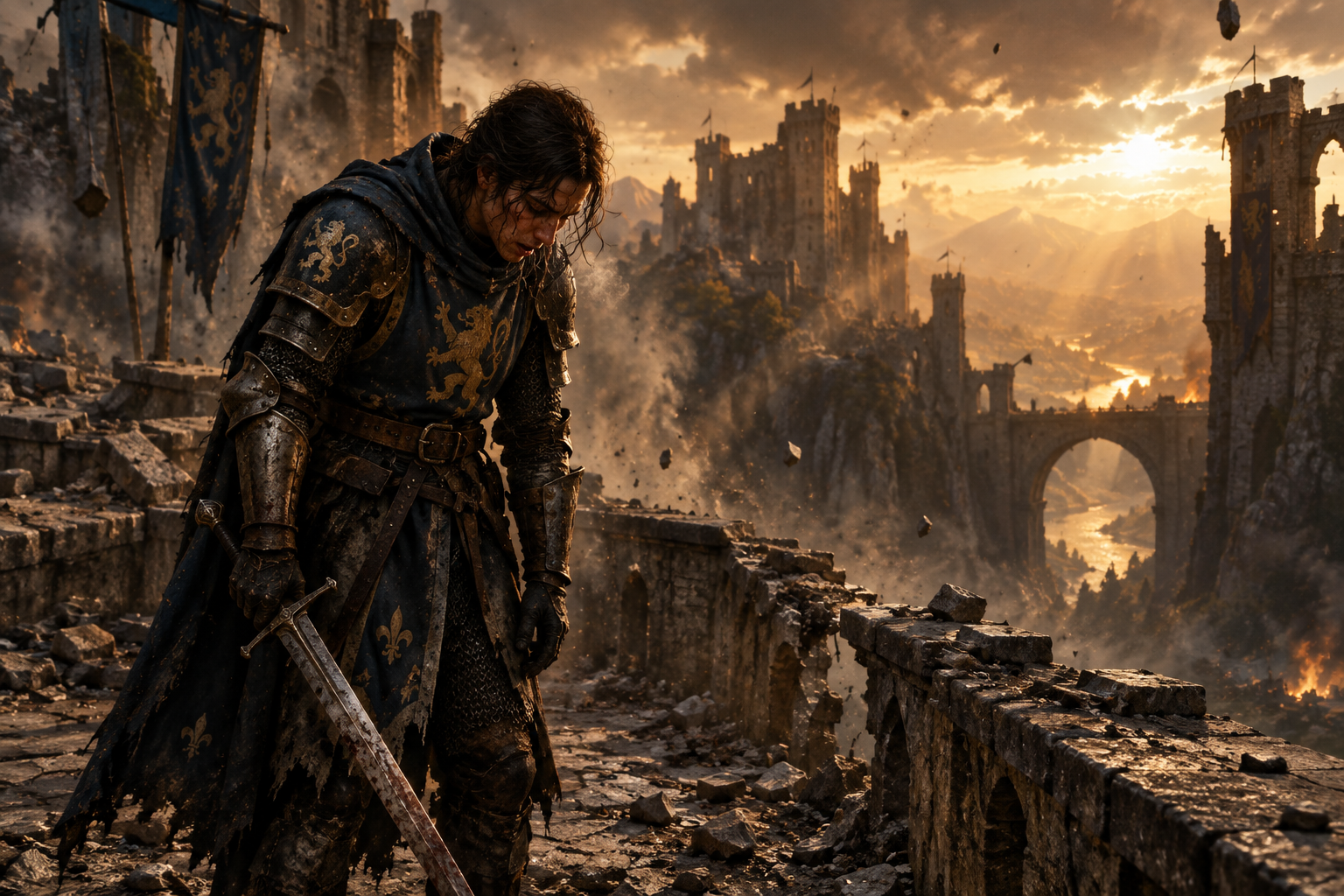
Hit point totals shift meaning as combat unfolds. Understanding what those numbers signal helps you pace encounters, adjudicate rulings, and narrate outcomes that respect both the fiction and the mechanics.
Hit points begin every combat as a resource and end every combat as a story. Between those moments, the numbers on your character sheet or behind your screen communicate information about pacing, threat, and narrative stakes that experienced players and Game Masters read instinctively. New tables sometimes treat hit points as simple subtraction, a health bar that empties until someone falls. That approach works, but it ignores the diagnostic and narrative work those numbers perform during play.
This article examines what hit point totals signal at different stages of an encounter, how Game Masters can use those signals to pace combat and adjust difficulty on the fly, and how players can make better tactical decisions by reading the combat state their hit points reveal. You will leave with a clearer sense of when a 15-point loss matters more than a 30-point loss, why identical hit point totals can mean opposite things in different fights, and how to use hit point thresholds to communicate threat without metagaming.
Hit Points as a Pacing Mechanism
Hit points do not measure pure physical injury. The current rules define them only as "a measure of how difficult it is to kill or destroy a creature or an object" (Wizards of the Coast, 2025), and the game's first Dungeon Masters Guide credited their growth to "skill in combat," a "sixth sense," and "sheer luck" rather than a body that can absorb more wounds (Gygax, 1979, p. 82). This abstraction means that hit point loss during combat signals fatigue, narrowing options, and mounting pressure rather than accumulating cuts. When you lose 20 hit points, you have not necessarily taken a sword to the ribs; you might have dodged, parried at cost to your endurance, or taken a glancing blow that rattled your focus.
This understanding changes how you read hit point totals during play. A character at full hit points has every option available: risky maneuvers, defensive retreats, aggressive advances. A character at half hit points has burned through reserves and must weigh every action more carefully. A character in single digits has no margin for error. The numbers track not injury alone but the shrinking space for heroic action.
Game Masters can use this information to pace encounters. When every player character sits above 75 percent of maximum hit points, the fight has not yet imposed meaningful cost, and you can escalate threat through reinforcements, environmental changes, or secondary objectives. When the party averages 40 percent, they face real danger and must commit resources or retreat. When anyone drops below 25 percent, death becomes a present possibility, and the table's focus narrows to immediate survival.
These percentages are a rule of thumb, not rules of the game. They shift with party composition, encounter design, and available healing. But they provide a rough diagnostic for reading the room. If you intended a hard fight and the party sits at 80 percent hit points after four rounds, something has misaligned. If you designed a medium encounter and the party has already burned healing spells to stabilize at 50 percent, the balance has tipped.
Reading Hit Point Loss Patterns
How hit points fall matters as much as how many fall. A party that loses 60 hit points spread evenly across five characters faces a different situation than a party that loses 60 hit points concentrated on one character. The first scenario suggests steady attrition and balanced threat. The second suggests focus fire, poor positioning, or a tactical mismatch that demands immediate response.
Game Masters who track these patterns during combat can adjust on the fly. When damage spreads evenly, the encounter is likely working as designed. When one character absorbs disproportionate damage, you can decide whether that reflects smart enemy tactics (in which case the players must adapt), bad luck (in which case you might redistribute future attacks), or an imbalance you did not anticipate (in which case you can recalibrate mid-fight by shifting enemy attention or introducing a new element).
Players benefit from the same analysis. If your party's hit points are dropping evenly, you face a war of attrition and must manage resources carefully. If one character is taking most of the damage, you must either support that character with healing and protection or change your tactics to draw fire elsewhere. If your damage output is steady but enemy hit points are not falling at a similar rate, you face enemies with higher defenses or hit point pools than expected, and you may need to commit bigger resources or rethink your approach.
The shape of hit point loss also signals pacing within a single round. Three small hits that total 18 points feel less threatening than a single 18-point hit, even though the mechanical effect is identical. The single large hit suggests a dangerous enemy, a critical strike, or a tactical mistake. It demands a reaction. The three small hits suggest manageable threat, distributed risk, and the possibility of weathering the storm. Game Masters can manipulate this perception by clustering damage or spreading it, creating tension or relief without changing the total.
Hit Point Thresholds and Player Behavior
Many players change their behavior as hit points fall, and Game Masters can watch for those shifts to read the table's mood and pacing. The rules mark one threshold themselves: a creature with half its Hit Points or fewer is Bloodied (Wizards of the Coast, 2025), and that is often where players start considering retreat, healing, or defensive positioning. Lower still, a player may disengage from the front line or burn a powerful resource. When a character enters single-digit hit points, every action becomes a calculated gamble.
These thresholds are not universal, and they are observations rather than rules. Experienced players with healing options or resurrection magic available may tolerate lower thresholds. New players may panic at 60 percent. Barbarians with damage resistance and large hit point pools may fight comfortably at 30 percent, while wizards with 40 maximum hit points may feel endangered at 25. Watching for them still helps you read the table.
You can design encounters that deliberately push players past these thresholds to create tension. A fight that brings every character to 40 percent hit points tests resource management. A fight that drops one character to 10 percent creates a moment of fear and forces the party to choose between aggressive tactics and defensive stabilization. A fight that ends with everyone above 70 percent may feel too easy unless it achieved some other goal, such as information gathering or terrain control.
Players can also use these thresholds to communicate with each other without breaking immersion. When you drop below half hit points, you signal to your party that you need support soon. When you stabilize above half, you signal that you can continue without immediate help. When you drop to single digits, you signal an emergency. These signals work because everyone at the table understands hit points as a shared language for threat and urgency.
Damage Spikes and Variance
Not all damage is created equal, even when the totals match. A damage spike (a single attack that removes a large percentage of a character's hit points) creates more tension and demands more response than gradual attrition. This happens because of variance, the range between minimum and maximum possible damage on a single attack.
When a monster's attack deals 2d6+4 damage, it averages 11 points but can spike to 16. That spike represents a dangerous outlier, and when it happens, the table feels it. A monster dealing four attacks of 1d4+1 damage (averaging 3.5 each, or 14 total per round) creates less tension because no single attack threatens a dramatic shift. The average damage is similar, but the experience differs.
Game Masters can use this principle to modulate tension. High-variance enemies (those with large damage dice or critical hit potential) create swingier combats with more dramatic moments. Low-variance enemies (those with many small attacks or fixed damage) create steadier attrition and predictable outcomes. Neither is better; they serve different purposes. A climactic boss fight benefits from variance because it creates memorable moments. A resource-drain encounter before the boss benefits from steady attrition because it tests endurance without creating false climaxes.
Players should also account for variance when assessing risk. If you sit at 20 hit points and face an enemy whose attack averages 16 damage, you might assume you can survive one more hit. But if that attack has high variance (say, 2d12+3), the maximum damage is 27, and you risk dropping to 0. Instant death needs more: the damage left over after reaching 0 has to equal or exceed your hit point maximum (Wizards of the Coast, 2025). Understanding variance helps you decide when to heal, when to retreat, and when to gamble on one more round of offense.
Hit Points as a Timer
Every combat is a race between two timers: the party's collective hit points and the enemies' collective hit points. Whichever side's timer runs out first loses. This simple truth shapes all combat tactics, and Game Masters can use it to design encounters that reward different approaches.
When the party's hit point pool is large relative to enemy damage output, they can afford a slow, methodical approach that minimizes risk. When enemy damage output is high relative to the party's hit point pool, they must end the fight quickly or die trying. When both sides have roughly equal timers, the fight becomes a tense exchange where every decision matters.
You can manipulate these timers during play by adjusting enemy behavior, adding reinforcements, introducing environmental hazards, or altering the terrain. If a fight is ending too quickly because the party's timer is too long, add enemies or increase their damage output. If a fight is dragging because both timers are too long, introduce a secondary objective or environmental pressure that forces faster decisions. If a fight is threatening a total party kill because the enemy timer is too long, provide an escape route, a defensive position, or a mid-fight healing opportunity.
Players should also think about combat as a timer race. If your party's hit points are dropping faster than the enemy's, you must change your strategy: focus fire to eliminate threats, use control spells to reduce incoming damage, or disengage and reset. If the enemy's hit points are dropping faster, you can maintain your approach and trust your plan. If both sides are dropping at similar rates, you must commit resources to tip the balance: healing to extend your timer or burst damage to shorten theirs.
Healing and Hit Point Economy
Healing spells and abilities do not restore health; they extend the hit point timer. Every healing spell you cast adds rounds to the fight by restoring hit points you can afford to lose. This economic view of healing helps you decide when to heal, how much to heal, and whether healing is the right choice at all.
In-combat healing is often inefficient. Many healing spells restore fewer hit points than an enemy can remove in a single turn, so you trade your action to delay the inevitable by one round. This trade makes sense only when it prevents an immediate loss: bringing an unconscious ally back to consciousness, keeping a critical character alive through a dangerous turn, or stabilizing the party long enough to finish the fight.
Out of combat, the cheapest healing is usually a Short Rest: an hour of downtime in which a character can spend Hit Point Dice, rolling each and adding their Constitution modifier (Wizards of the Coast, 2025). Spending spell slots on healing between fights is a judgment call that depends on how soon you expect the next one.
Game Masters should track healing resources as carefully as hit points. When the party has abundant healing available, they can tolerate higher damage and more aggressive tactics. When healing resources run low, every hit point becomes more valuable, and the party must fight more conservatively or risk a death spiral. You can design encounters that force this calculation: multiple fights in quick succession, limited rest opportunities, or resource drains that make healing more expensive.
Players should budget healing resources across the adventuring day. If you burn all your healing in the first two fights, you enter later encounters at a structural disadvantage. If you hoard healing and never use it, you let allies fall and lose action economy. The balance lies in spending enough to stay functional without spending so much that you have nothing left when it matters most.
Narrative and Mechanical Alignment
Hit points create a persistent tension between narrative and mechanics. Under the core rules, a character at 1 hit point attacks, moves, and casts exactly as it does at full; the main exception is the Bloodied condition at half Hit Points or fewer, which some creatures' abilities key off (Wizards of the Coast, 2025). Narratively, that makes no sense. A warrior who has taken 80 points of damage should look and act differently than a warrior who has taken none.
Game Masters can bridge this gap through narration. When a character loses hit points, describe not just the damage but the effort, the fatigue, the narrowing options. A hit that brings a character from 40 hit points to 20 might land as a glancing blow that forces a stumble, a jarring impact that rattles focus, or a near-miss that burns stamina in the dodge. A hit that brings a character from 10 hit points to 1 might slice skin, break bone, or leave them gasping and desperate.
This narrative layering helps players understand what their hit point totals mean in the fiction. It also gives them permission to roleplay exhaustion, injury, and fear without feeling like they are ignoring the mechanics. A character at 5 hit points can still swing a sword at full attack bonus, but the player can describe that swing as slower, less precise, or driven by adrenaline rather than skill.
Players can also close this gap by describing their actions in ways that reflect their hit point totals. When you sit at full hit points, you can narrate bold, confident actions. When you drop below half, you might describe defensive positioning, cautious strikes, or visible strain. When you enter single digits, you can roleplay desperation, injury, or the last reserves of will keeping you upright. This approach respects the abstraction of hit points while grounding it in the fiction.
Example: The Collapse of the Iron Span
In this illustrative scenario, the party fights a pack of rust monsters on the Iron Span, the week's recurring crumbling bridge over a river chasm, while the structure itself threatens to collapse. Hit point tracking became a multi-layered problem because the party had to manage both combat damage and environmental threat.
At the start of the fight, the party's collective hit points totaled 120 across four characters. The rust monsters dealt modest damage (a rust monster's Bite deals 5 on average, and its Antennae attack armor and weapons rather than hit points; Wizards of the Coast, 2025), but the collapsing bridge imposed a persistent threat: any character who failed a saving throw would lose 2d6 hit points from falling debris.
By round three, the party's hit points had dropped to 85, spread unevenly. The fighter had taken 20 points of damage from rust monster attacks and falling stone, dropping to 55 percent of maximum. The rogue had avoided most attacks but taken 10 points from the environment, sitting at 70 percent. The cleric had taken 5 points and remained near full, while the wizard had taken no damage but was burning spell slots on battlefield control to prevent worse outcomes.
The hit point distribution told the Game Master that the encounter was working as designed: meaningful but not lethal threat, pressure from multiple sources, and resource expenditure without desperation. The fighter's lower percentage signaled that they might need support soon, but the cleric's reserve meant healing was available.
By round five, the party had stabilized. The cleric spent a 2nd-level cure wounds to bring the fighter back to 75 percent, the rogue eliminated one rust monster, and the wizard used misty step to reposition and avoid another round of environmental damage. The party's collective hit points sat at 95, higher than round three despite continued damage, because the healing had extended their timer and the reduced enemy count had lowered incoming damage.
The fight ended at round seven with the party at 80 collective hit points, down 40 from the start but never in serious danger of a death. The Game Master noted that the damage pattern matched the intended difficulty: a hard encounter that tested resources and positioning without forcing desperate measures. The hit points told the story of a fight that pushed the party but respected their competence.
Using Hit Points to Communicate Stakes
Hit points are not private information. Players always know their own totals, and in many groups, they share that information freely. Game Masters can use this transparency to communicate stakes and guide table mood without resorting to metagaming or forced narrative.
When you tell a player they have taken 18 points of damage, you are not just subtracting from their total. You are signaling how dangerous the encounter has become, how much buffer they have left, and how urgently they need to respond. A player who drops from 50 hit points to 32 understands they are past the halfway mark and approaching danger. A player who drops from 15 to 3 understands they are one hit from unconsciousness.
You can manipulate this communication by adjusting how you deliver damage information. Rolling damage dice in the open creates tension and surprise; rolling behind the screen allows you to soften or sharpen results to maintain pacing. Announcing damage totals before players subtract gives them a moment to react emotionally; letting them subtract in silence keeps the game moving.
Players can also communicate through their hit point decisions. When you choose to heal an ally, you signal that you believe the threat level justifies the resource cost. When you choose not to heal, you signal confidence in the party's buffer or a judgment that other actions matter more. When you drink a healing potion instead of attacking, you signal that survival has become more important than offense.
These signals work because hit points are a shared language. Everyone at the table understands what it means to sit at 10 percent hit points, what it costs to heal, and what it risks to continue fighting injured. You do not need to explain your reasoning; the numbers carry the weight.
Adjusting Encounters Based on Hit Point State
Game Masters who track party hit points during combat gain the ability to adjust encounters dynamically without breaking immersion or making arbitrary changes. When you see hit points dropping faster than expected, you can introduce a tactical option, shift enemy focus, or create an environmental opportunity that gives the party a chance to recover. When hit points are barely moving, you can escalate threat through reinforcements, environmental hazards, or secondary objectives.
These adjustments should feel organic rather than arbitrary. If the party is struggling, do not simply reduce enemy hit points or lower attack bonuses. Instead, introduce a pillar behind which they can take cover, a rope they can cut to drop a chandelier on enemies, or a group of fleeing civilians who create difficult terrain. If the party is breezing through, do not just add more enemies; have the enemies call for reinforcements that were always nearby, trigger a trap the party overlooked, or introduce a time pressure that forces faster decisions.
The key is to make adjustments that respect both the fiction and the mechanics. Hit points tell you when an adjustment is needed. The narrative tells you what form that adjustment should take. Together, they give you the tools to run combats that challenge without frustrating, that threaten without killing, and that feel fair even when you are changing the rules behind the screen.
Common Misreadings and How to Avoid Them
Not every hit point signal is reliable. Game Masters and players both make common misreadings that lead to poor tactical decisions or mismatched expectations.
One common mistake is treating low hit points as the only measure of danger. A character at 10 hit points is not necessarily in more danger than a character at 40 hit points if the 10-hit-point character has high AC, defensive spells, and allies providing cover. Hit points measure one dimension of threat; positioning, action economy, and available resources matter just as much.
Another mistake is assuming that hit point loss always reflects combat difficulty. If a party loses 50 hit points in a fight but still has abundant healing resources and faces no time pressure, they have not truly been challenged. Real challenge comes from forcing players to make hard choices, not from subtracting numbers.
A third mistake is confusing average hit points with actual hit points. A party that averages 50 percent hit points might consist of three characters at 60 percent and one at 20 percent. The average suggests moderate threat, but the reality is that one character is in serious danger and the party must respond.
To avoid these misreadings, track hit points alongside other combat metrics: enemy hit point totals, action economy, spell slot expenditure, and positioning. Hit points provide one datapoint in a larger picture, and reading that picture accurately requires looking at all the variables at once.
Hit Points and Table Culture
Different tables treat hit points differently, and understanding your table's culture helps you calibrate your play. Some tables treat hit points as a purely mechanical resource and make no attempt to narratively justify losses. Other tables expect rich narration for every hit and every miss, grounding the abstractions in the fiction.
Game Masters should establish hit point expectations during session zero or early sessions. Explain whether you will narrate hit point loss in detail or keep it abstract. Clarify whether players should describe their own hits or whether you will describe attacks that land. Decide whether healing spells close wounds or restore stamina, and whether that distinction matters for the fiction.
The important thing is consistency. Hit points work best when everyone at the table understands what they represent, how they function, and what they signal.
Sources and Further Reading
Gygax, G. (1979). Dungeon Masters Guide. TSR.
Wizards of the Coast. (2025). System Reference Document 5.2.1.
This work includes material from the System Reference Document 5.2.1 ("SRD 5.2.1") by Wizards of the Coast LLC, available at https://www.dndbeyond.com/srd. The SRD 5.2.1 is licensed under the Creative Commons Attribution 4.0 International License, available at https://creativecommons.org/licenses/by/4.0/legalcode.
Play 5E at your own table
Dice and character math run in code, and an optional AI Dungeon Master can run the game for you. Free to start, no card required.
Related reading
- Designing Hit Point Systems That Support Your Table's Fiction
Hit points work differently at every table because they serve the fiction you create together. Understanding design choices behind hit point systems helps you run them with confidence and customize them when your game needs it.
- Narrating Hit Point Loss: Techniques for Describing Damage at the Table
Hit point totals drive combat, but your descriptions make them meaningful. Learn practical techniques to narrate damage that respects the fiction, supports player engagement, and keeps combat moving.
- Understanding Hit Points: What They Represent and Why It Matters at Your Table
Hit points measure more than raw physical damage. Understanding what they actually represent helps you narrate combat, pace encounters, and make rulings that feel consistent and engaging.