How to choose a 5E AI tool
Six questions worth asking of any tool you might play 5E with, and how we answer each one here.
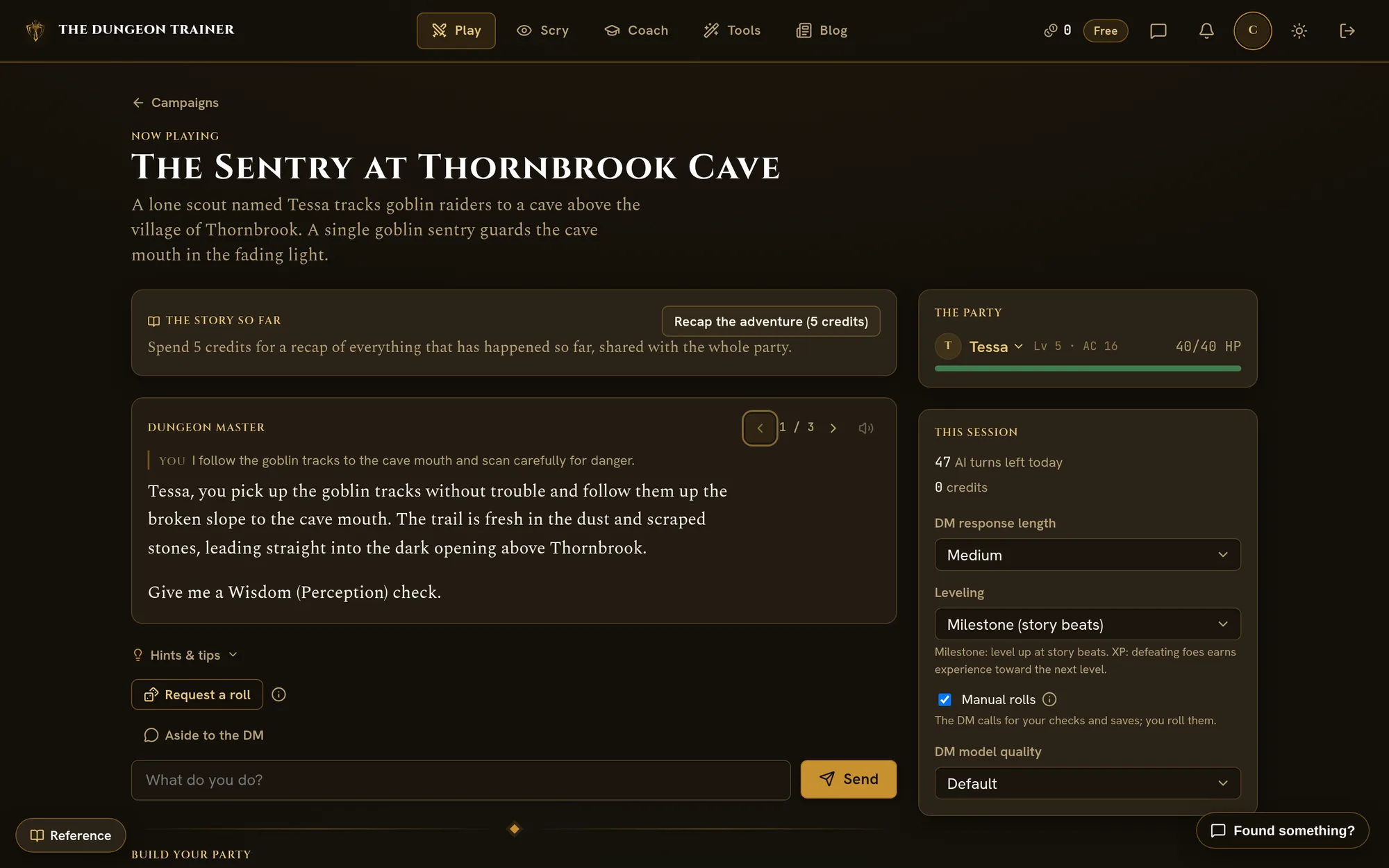
Four questions that shape every session
Where do the rules live?
Here, checks, attacks, saves and damage resolve in code, and each result is shown with the roll behind it. The AI tells the story; the engine decides the numbers.
Does it remember the campaign?
Hit points, quests and NPCs live in structured records, and the AI Dungeon Master keeps a rolling summary that brings back details from earlier sessions.
Who can run the table?
The optional AI Dungeon Master or a human one, chosen when you create the campaign. The host can hand the chair over mid-campaign.
Can you play alone and with friends?
Both. Start a solo adventure at any hour, or invite your group: multiplayer is included on every plan, the free one too.
Three steps to the table
Rank what matters to you
Rules accuracy, memory, who runs the game, friends, your own model, cost. Decide your order before you compare.
Try a free session
Make an account in a minute, no card required, and play a scene.
Check the answers in play
Watch the rolls, the character sheet and what the story remembers next session.
Before you sit down
Can I use my own AI model?
Yes. Bring your own Anthropic, OpenAI or Google API key, or connect your own Ollama-compatible endpoint that our servers can reach over the public internet.
What does it cost to start?
There is a free tier, no card required, with daily play turns and up to three campaigns. Paid plans raise the daily allowance; see the pricing page for the current numbers.
Which rules does it use?
Character creation, leveling and combat follow the System Reference Document 5.2, the open fifth-edition-compatible ruleset, with validation in code so a sheet stays legal.
Can the AI Dungeon Master make mistakes?
Yes. It is an AI and can get a detail of the story wrong. Dice and character math run in code rather than in the model, and the AI transparency page explains what the model does and does not decide.
Find the table that fits
Ask the questions at the table.
Create your free table and see how each answer holds up in play.