Hit Points Across Systems: Comparing How Different RPGs Handle Damage and Survival
Hit points are not universal. Comparing how different tabletop RPG systems handle damage, survival, and attrition reveals design choices that shape play in distinct ways.
Hit points define how characters withstand damage in 5E-compatible play. They also define the pace of combat, the stakes of injury, and the narrative tone of physical conflict. But hit points are not universal. Different tabletop RPG systems handle damage, survival, and recovery in fundamentally different ways, each choice shaping the experience at the table.
Understanding these differences helps you run your current system with clarity and consider alternatives when your table needs a different tone. This article compares how major tabletop RPG systems model damage and survival, examines the design principles behind those choices, and offers practical guidance for choosing or adapting hit point systems to support your fiction.
What Hit Points Represent in Different Systems
The current 5E-compatible rules define Hit Points as "a measure of how difficult it is to kill or destroy a creature or an object" (Wizards of the Coast, 2025), and the game's first Dungeon Masters Guide credited their growth to "skill in combat," a "sixth sense," and "sheer luck" rather than a body that absorbs more wounds (Gygax, 1979, p. 82). On that reading, a fighter with 50 hit points is not necessarily more physically tough than one with 30; they are better at turning lethal blows into glancing strikes, fatigue, or near misses.
Other systems define their equivalents differently. Call of Cthulhu gives investigators small hit point totals that barely change over a career, and a single heavy blow can cause a major wound. At zero hit points an investigator falls unconscious and may die. There is no leveling layer protecting ordinary people from bodily harm.
Traveller has no separate hit point pool at all: damage comes off a character's physical characteristics, and losing them leaves the character unconscious or dead. The system models attrition as degradation of capability, not a separate buffer.
Torchbearer tracks harm largely through conditions, which characters pick up from the grind of exploration and from failed tests (Olavsrud & Crane, 2013). Damage creates narrative and mechanical consequences before death becomes a risk.
These differences are not cosmetic. They define what damage means at your table, how players engage with risk, and what kind of stories the mechanics support.
5E-Compatible Rules: Attrition Through Abstraction
The 5E-compatible rules use hit points as an abstraction layer. Characters gain hit points as they level, representing not just toughness but competence, experience, and the ability to avoid catastrophic harm. A 10th-level fighter with 84 hit points does not have thicker skin than a 1st-level fighter with 12; they are harder to kill because they know how to roll with punches, dodge fatal strikes, and keep fighting through exhaustion.
This design supports heroic fantasy. Characters can survive multiple sword strikes, fireball blasts, and falls from moderate heights without permanent injury. The abstraction allows for cinematic action without forcing narration into literal interpretations of every attack.
Recovery in the current rules is generous. A one-hour Short Rest lets characters spend Hit Point Dice to regain hit points, and a Long Rest restores all lost Hit Points and all spent Hit Point Dice (Wizards of the Coast, 2025). This supports a model where characters recover quickly between encounters, enabling dungeon crawls, extended exploration, and multi-encounter adventuring days.
The trade-off is that hit point loss rarely carries narrative weight until a character approaches zero. Taking 20 damage when you have 60 hit points left is mechanically significant but often narrated as a glancing blow or a stumble. This works well for tables that prioritize momentum and action but can feel disconnected from the fiction when injury should matter.
Call of Cthulhu: Fragility and Consequence
Call of Cthulhu models damage as direct physical harm, and its hit point totals are small. Weapons deal rolled damage that does not scale with the attacker's experience, and serious injuries happen quickly.
A major wound is damage equal to or greater than half an investigator's maximum hit points from a single blow; it requires a Constitution roll to avoid falling unconscious. Damage equal to or greater than the maximum in a single blow kills outright. At zero hit points an investigator falls unconscious and may die: without a major wound they will not die, but with one they are dying and must keep succeeding at Constitution rolls to survive (Chaosium Inc., n.d.). A fall of ten feet onto grass deals 1D6, so even a modest drop can matter.
This fragility reinforces the horror tone of the system. Investigators are not heroes; they are ordinary people confronting forces beyond their comprehension. Combat is dangerous and often avoidable. The mechanics encourage investigation, evasion, and negotiation over direct confrontation.
Recovery is slow. Without a major wound, an investigator naturally heals 1 hit point per day; with one, healing comes from a weekly roll that restores 1D3 hit points, or 2D3 on an extreme success (Chaosium Inc., n.d.). The system models consequences that matter beyond a single session.
For Game Masters running Call of Cthulhu, hit points serve as a pacing mechanism. Low totals and slow recovery create tension and make every violent encounter feel consequential. For players, fragility encourages careful planning and risk assessment.
Traveller: Characteristic Damage and Degradation
Traveller uses a different model entirely. Characters have three physical characteristics (Strength, Dexterity, Endurance) that absorb damage directly. After armor, damage comes off Endurance first and then off Strength or Dexterity. A character with two of those characteristics at zero is unconscious, and one with all three at zero is dead.
This system models attrition as functional degradation. A character who has lost Endurance is exhausted; one who has lost Dexterity is sluggish; one who has lost Strength is weakened. The mechanics create narrative hooks automatically, and recovery is a matter of restoring lost characteristic points rather than abstract hit points.
Recovery in Traveller is relatively fast with medical care but requires rest and treatment. Natural healing is slower, and serious injuries can impose long-term consequences. The system supports science-fiction settings where medical technology exists but injuries still matter.
For Game Masters running Traveller, characteristic damage creates a built-in pacing tool. Characters degrade over the course of a session, and their declining capabilities signal when retreat or rest is necessary. For players, the system rewards tactical thinking and resource management.
Torchbearer: Conditions Over Numbers
Torchbearer tracks harm mainly through a grind and conditions. Characters accumulate conditions such as Hungry and Thirsty, Exhausted, Injured, and Sick, one every few turns of exploration and others from failed tests (Olavsrud & Crane, 2013). These conditions impose mechanical penalties and narrative consequences, and clearing them requires specific actions during camp or town phases (Olavsrud & Crane, 2013).
Damage in Torchbearer is not a pool to deplete but a state to manage. Taking a serious injury imposes the Injured condition, which reduces effectiveness and requires treatment to clear. Death is possible, but it comes from losing a kill conflict or from failing a dangerous test while already Injured or Sick, not from a single unlucky damage roll.
This design supports dungeon-crawling campaigns where resource management and recovery are central. Conditions accumulate over the course of an expedition, creating pressure to retreat, rest, and resupply. The system models the grind of long-term exploration better than abstract hit points.
For Game Masters running Torchbearer, conditions provide clear signals for pacing. A party carrying multiple conditions is nearing their limits; a fresh party can press forward. For players, the system rewards planning, careful action selection, and knowing when to retreat.
Comparing Recovery Models
Recovery mechanics define how often characters can engage in dangerous activity and how much downtime your campaign requires. The 5E-compatible rules assume frequent recovery; a Long Rest resets most resources, enabling an adventuring day with multiple encounters. Call of Cthulhu expects weeks of downtime after serious injury, creating campaigns punctuated by recovery periods. Traveller and Torchbearer fall between these extremes, requiring rest and treatment but not necessarily weeks of inactivity.
These differences shape campaign structure. 5E-compatible play supports dungeon crawls, hexcrawls, and extended exploration because characters recover quickly. Call of Cthulhu supports investigative scenarios with dangerous climaxes because combat is rare and injuries linger. Torchbearer supports expeditions with clear delve and recovery phases.
For Game Masters choosing or adapting a system, recovery mechanics should align with your intended pacing. Faster recovery supports higher encounter frequency; slower recovery supports consequence and downtime.
Lethality and Player Expectations
Lethality varies sharply across systems. 5E characters, especially at higher levels, can survive enormous punishment. A 10th-level barbarian with more than 100 hit points can absorb multiple critical hits and keep fighting. Call of Cthulhu investigators can die from a single heavy blow that equals their maximum hit points. Traveller characters fall somewhere between, durable enough for a firefight but not invincible.
These lethality levels set player expectations. 5E players learn to take risks, knowing that healing and recovery are readily available. Call of Cthulhu players learn caution, knowing that violence often leads to death or serious injury. Traveller players learn tactical thinking, knowing that recklessness is dangerous but competence provides protection.
Managing expectations is critical, especially when switching systems or introducing new players. A table accustomed to 5E durability may struggle with Call of Cthulhu's fragility unless you clarify the difference during a session zero. A table accustomed to Call of Cthulhu's caution may feel frustrated by 5E's expectation of frequent combat.
For Game Masters running any system, communicate lethality clearly. Explain how hit points (or their equivalent) function, what recovery looks like, and what kind of risks the system expects players to take.
Narrative Tone and Mechanical Support
Hit point systems (or their alternatives) reinforce the narrative tone of a game. The 5E abstraction supports heroic fantasy where characters perform impossible feats and survive dramatic battles. Call of Cthulhu's fragility supports cosmic horror where ordinary people face overwhelming threats. Traveller's characteristic damage supports gritty science fiction where injuries matter but competence provides an edge. Torchbearer's condition system supports expedition-focused fantasy where attrition is the primary challenge.
These mechanical choices are not arbitrary. Each system models what its designers want players to experience. When you choose a system, you choose the kind of story the mechanics will support.
For Game Masters adapting systems or homebrewing hit point variants, consider what tone you want at your table. If you want 5E play to feel more dangerous, reduce hit point scaling or slow recovery. If you want Call of Cthulhu to feel less lethal, increase starting hit points or speed recovery. If you want Traveller to emphasize endurance, add a buffer before characteristic damage begins.
Every adjustment shifts the experience. Test changes with your table and adjust based on feedback.
When to Switch Systems
Sometimes the hit point system you are using does not support the story you want to tell. A table running a gritty, low-magic 5E campaign may find the system's generous hit points and fast recovery undermine the intended tone. A table running a pulp action Call of Cthulhu campaign may find the fragility frustrating.
Switching systems is an option, but it is not the only one. Houseruling recovery, adjusting starting hit points, or introducing consequences for injury can adapt a system to your needs. The key is ensuring that the mechanics support the fiction you and your players want to create.
For Game Masters considering a switch, communicate the change clearly and explain why the new system better supports the campaign. Run a one-shot or short arc in the new system before committing to a long campaign. Gather feedback and adjust as needed.
Example: The Collapse of the Iron Span
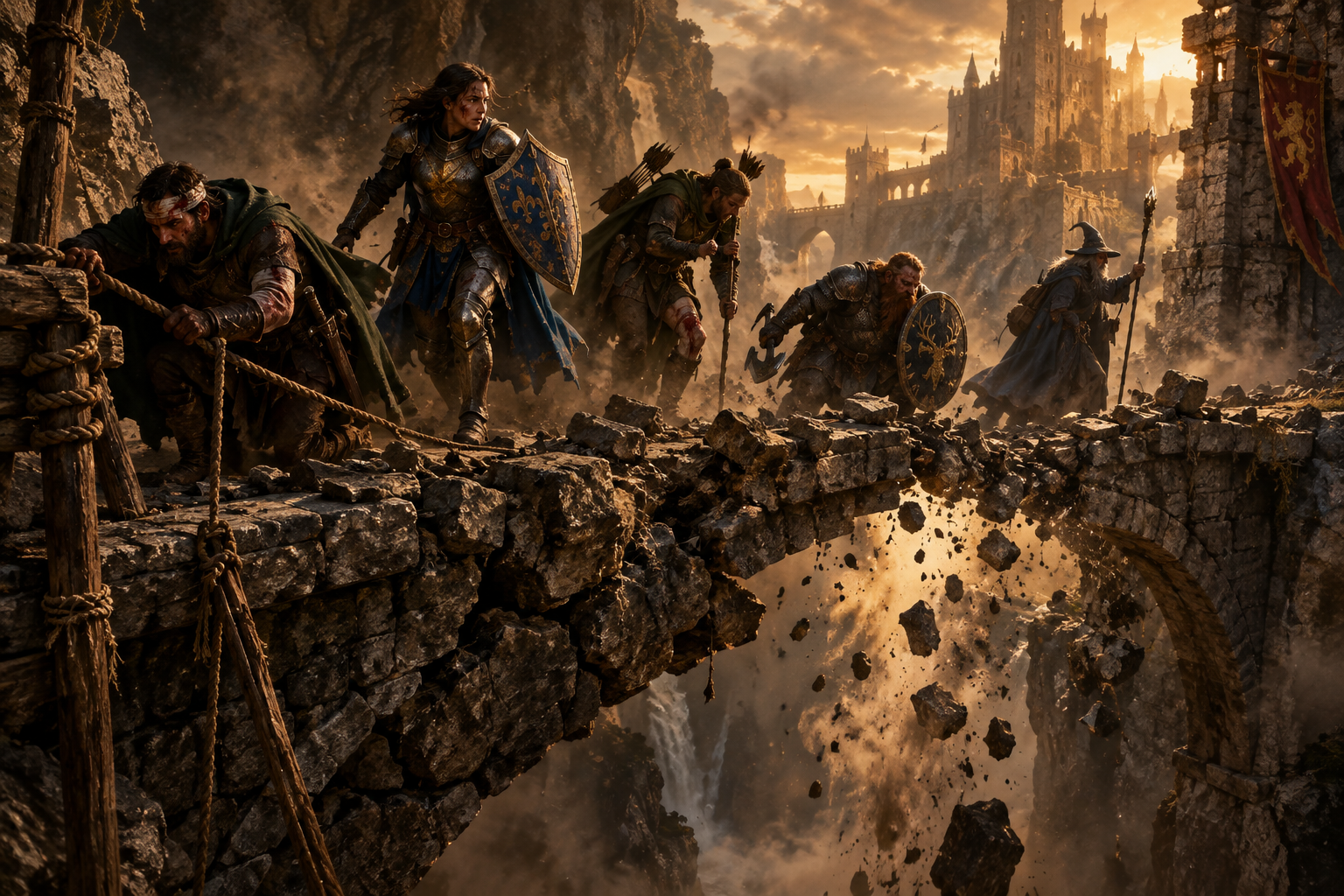
The Iron Span, this week's recurring illustrative scenario, is a bridge over a river chasm that collapses during a skirmish, forcing characters to navigate falling debris, combat, and injury simultaneously. How this scenario plays depends entirely on which hit point system you use.
Under the 5E-compatible rules, a 5th-level party falling twenty feet takes 2d6 damage, 1d6 per 10 feet (Wizards of the Coast, 2025), loses some hit points, and continues fighting. A cleric casts cure wounds, the fighter uses Second Wind, and the party presses on. The collapse is dramatic but not campaign-ending. Narration focuses on near misses, bruises, and quick recoveries.
In Call of Cthulhu, the same twenty-foot fall onto the grassy bank deals 2D6 to investigators with 12 hit points. One investigator takes 8 damage in that single blow, which is half their maximum or more, so it is a major wound and they must make a Constitution roll to stay conscious. Another takes 5 damage, hurt but still functional. The group retreats, abandoning the fight to seek medical attention. Narration focuses on broken bones, bleeding, and the immediate need for treatment.
In Traveller, the fall's damage comes off Endurance first and then Strength or Dexterity. A character who loses all of their Endurance and some Dexterity is exhausted and limping. Their effectiveness drops, but they can still act. The group continues cautiously, knowing that another injury could incapacitate someone. Narration focuses on functional degradation and tactical adaptation.
In Torchbearer, the collapse imposes the Injured condition on one character and advances the grind for the group. The injury reduces effectiveness and requires treatment during the next camp phase. The group debates whether to press on or retreat. Narration focuses on accumulating stress and the decision to continue or withdraw.
Each system produces a different experience from the same event. The 5E version is heroic and kinetic. The Call of Cthulhu version is fragile and consequential. The Traveller version is tactical and degrading. The Torchbearer version is resource-focused and strategic.
For Game Masters running the Iron Span, the system you choose defines the story your table tells. Choose deliberately.
Adapting Hit Point Systems for Your Table
You do not need to switch systems entirely to change how hit points function at your table. Small adjustments can shift tone, pacing, and player behavior.
To make 5E play more lethal, reduce hit point scaling by using lower Hit Point Dice (d6 for fighters instead of d10, for example) or capping hit points at a certain level. Slow recovery by limiting long rests to once per week of in-game time or requiring medical attention to restore full hit points.
To make Call of Cthulhu less fragile, increase starting hit points or allow investigators to gain a small buffer as they advance. Speed recovery by allowing medical care to restore more hit points per day or reducing the time required for natural healing.
To add narrative weight to Traveller injuries, impose longer-term consequences for reaching zero in any characteristic. Require downtime or impose lingering penalties even after characteristics are restored.
To reduce Torchbearer's grind, allow conditions to clear faster or reduce the number of conditions imposed by certain actions. To increase it, impose additional conditions for risky choices or failed rolls.
Every adjustment changes the experience. Communicate changes clearly, test them in play, and adjust based on feedback.
Choosing the Right System for Your Campaign
When planning a campaign, consider what kind of story you want to tell and what kind of pacing you need. If you want heroic action with frequent combat and minimal downtime, 5E-compatible or similar systems work well. If you want investigative horror where violence is rare and dangerous, Call of Cthulhu or similar systems work better. If you want tactical science fiction where injuries matter but competence provides protection, Traveller or similar systems fit. If you want expedition-focused fantasy where resource management drives the story, Torchbearer or similar systems excel.
No system is objectively better. Each supports different play styles and narrative tones. The best system for your table is the one that supports the story you want to tell together.
For Game Masters running a long-term campaign, the system you choose shapes every session. Choose deliberately, communicate your reasoning, and adjust as your table's needs evolve.
Hit Points as Design Philosophy
Hit points are not just a number on a character sheet. They represent a design philosophy about what damage means, how characters survive, and what kind of risks the game expects players to take. Understanding these philosophies helps you run your current system with confidence and consider alternatives when your table's needs change.
5E models heroic resilience through abstraction. Call of Cthulhu models fragile mortality through direct harm. Traveller models functional degradation through characteristic damage. Torchbearer models accumulating stress through conditions. Each choice creates a different experience.
For Game Masters, understanding these differences helps you choose systems, adapt rules, and communicate expectations. For players, understanding these differences helps you engage with the fiction the mechanics create.
Hit points are a tool. Use them deliberately.
Tracking Hit Points at a 5E Table
For 5E-compatible games, The Dungeon Trainer tracks hit points, conditions, and initiative in code, alongside character sheets and dice, whether a human or its optional AI Dungeon Master runs the table. For the other systems in this article, use the tools built for them.
Sources and Further Reading
Chaosium Inc. (n.d.). Call of Cthulhu Keeper Rulebook (7th ed.).
Gygax, G. (1979). Dungeon Masters Guide. TSR.
Olavsrud, T., & Crane, L. (2013). Torchbearer. Burning Wheel Headquarters. https://www.torchbearerrpg.com/
Wizards of the Coast. (2025). System Reference Document 5.2.1.
This work includes material from the System Reference Document 5.2.1 ("SRD 5.2.1") by Wizards of the Coast LLC, available at https://www.dndbeyond.com/srd. The SRD 5.2.1 is licensed under the Creative Commons Attribution 4.0 International License, available at https://creativecommons.org/licenses/by/4.0/legalcode.
Play 5E at your own table
Dice and character math run in code, and an optional AI Dungeon Master can run the game for you. Free to start, no card required.
Related reading
- Hit Point Reference: Essential Charts and Quick Tables for Combat
Combat moves faster when you have the right information at hand. These reference charts, condition thresholds, and quick-lookup tables help you track hit points, adjudicate damage, and narrate outcomes without breaking your table's momentum.
- Designing Hit Point Systems That Support Your Table's Fiction
Hit points work differently at every table because they serve the fiction you create together. Understanding design choices behind hit point systems helps you run them with confidence and customize them when your game needs it.
- Narrating Hit Point Loss: Techniques for Describing Damage at the Table
Hit point totals drive combat, but your descriptions make them meaningful. Learn practical techniques to narrate damage that respects the fiction, supports player engagement, and keeps combat moving.