When Players Should Split the Party and When They Shouldn't
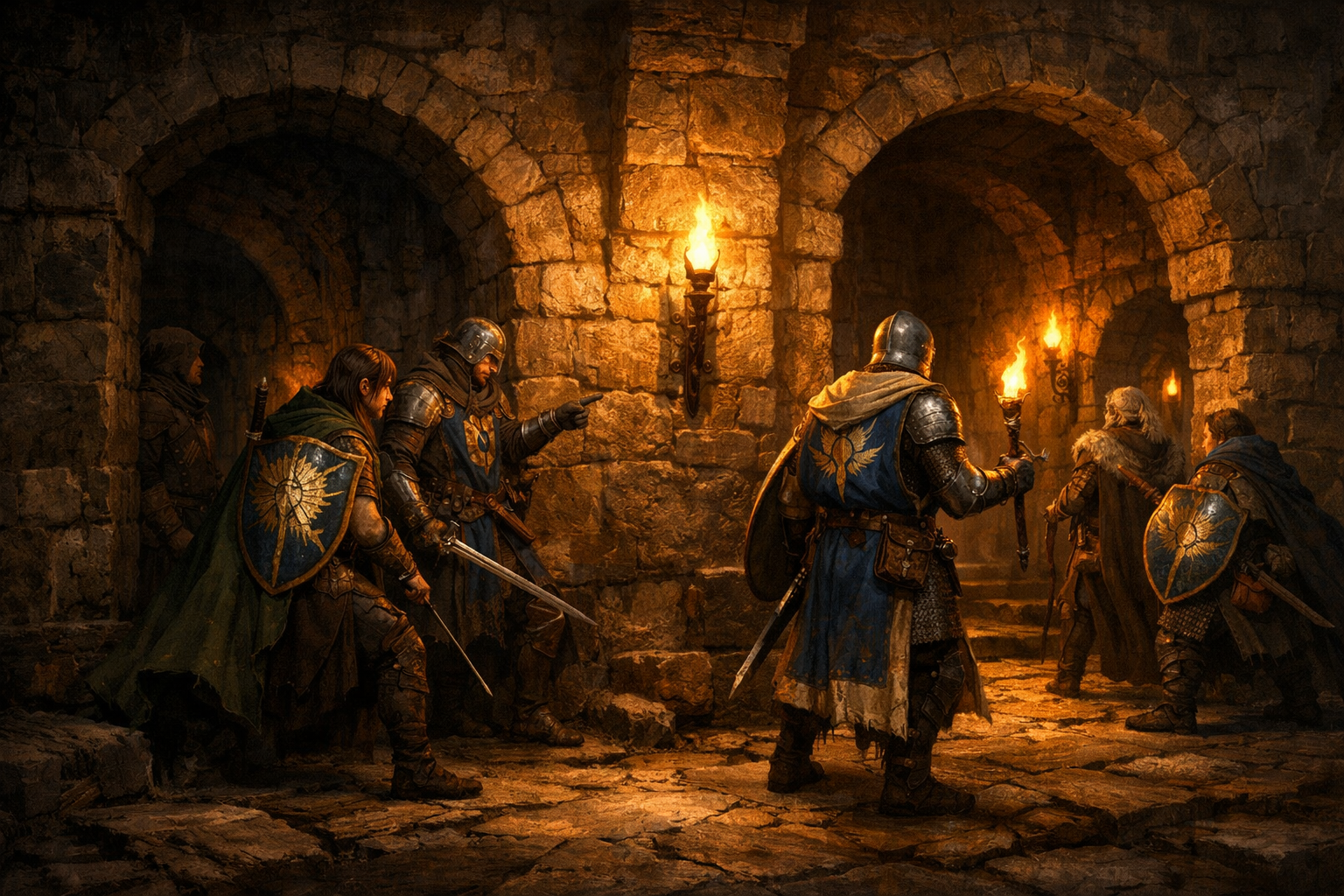
Conventional wisdom says never split the party, but this advice oversimplifies tactical and narrative possibilities. Learn when dividing the group creates better gameplay.
The phrase "never split the party" has become gospel in tabletop RPG communities, repeated so frequently that players often avoid dividing their group even when doing so would make perfect sense. This blanket prohibition oversimplifies the complex tactical, narrative, and practical considerations that should inform the decision.
Splitting the party creates both opportunities and risks. Understanding when division serves the game and when it hinders play helps both dungeon masters and players make better strategic choices.
Why the Convention Exists
The traditional warning against splitting parties emerged from valid concerns:
Combat vulnerability. Divided groups lose their action economy advantage. Enemies facing half the party get better odds of success. A single powerful enemy that the full party could handle easily might overwhelm a smaller group.
Resource inefficiency. Support characters cannot aid allies in different locations. The cleric's healing and the wizard's buff spells only help nearby party members. Splitting reduces the synergy that makes parties effective.
Table time management. Running simultaneous scenes for separated groups creates downtime. While the dungeon master focuses on half the party, the other half waits.
Information fragmentation. Different groups discover different clues, potentially missing connections that would be obvious if everyone experienced all scenes.
These concerns are legitimate, but they don't apply equally to all situations.
When Splitting the Party Makes Tactical Sense
Exploration and Reconnaissance
When the Brightmarsh Company reached a fork in the abandoned fort's passages, they faced a common dilemma: both paths required investigation, but exploring sequentially would waste time. Splitting into two pairs allowed them to scout both routes simultaneously.
Dividing during low-risk exploration provides several advantages:
- Covers more ground in the same narrative time
- Allows specialized characters to use their skills effectively
- Creates natural character development moments in smaller groups
- Maintains narrative momentum
The key factor is threat assessment. If the party has reason to believe both paths are relatively safe, splitting makes sense. If danger lurks ahead, staying together provides better survival odds.
Stealth and Infiltration
Some scenarios specifically reward smaller groups. Infiltrating a guarded compound works better with two rogues than with six people including a cleric in plate armor. Large groups create noise, leave obvious tracks, and struggle to hide effectively.
In these situations, capable characters scout ahead while others provide backup at a safe distance or create diversions. This division of labor reflects realistic tactical thinking.
Time-Sensitive Multiple Objectives
Adventures sometimes present simultaneous challenges:
- Cultists performing rituals at two locations simultaneously
- A burning building with victims on different floors
- Diplomatic missions requiring presence at multiple meetings
- Coordinated attacks against enemy positions
These scenarios punish parties that try to handle everything sequentially. Splitting becomes the only viable solution, though it requires accepting increased risk.
Roleplaying and Character Development
Some of the most memorable roleplaying occurs in smaller groups. Characters reveal different aspects of themselves in intimate conversations than in full party settings. A player whose character feels overshadowed might flourish in a smaller group dynamic.
Deliberate temporary splits create space for:
- Character relationships to develop naturally
- Quieter players to participate more actively
- Personal character goals to receive attention
- Different party dynamics to emerge
When Splitting the Party Creates Problems
High-Danger Environments
If the party knows dangerous enemies patrol the area, splitting reduces survival chances significantly. The action economy principles that favor parties over individual enemies apply here. A group of four adventurers can handle encounters that would devastate two separate pairs.
When the Brightmarsh Company heard goblins in the fort's barracks area, they wisely regrouped. The confirmed presence of multiple enemies made staying together essential.
Limited Communication Options
Fantasy parties often lack reliable long-distance communication. Without sending stones or similar magic items, separated groups cannot coordinate, call for help, or share discovered information.
This limitation becomes critical when:
- One group discovers urgent information the other needs
- A group encounters overwhelming force and needs backup
- Plans require coordination between groups
- The situation changes rapidly
Complex Combat Scenarios
Some encounters specifically require coordinated full-party responses:
- Enemies with area effects that threaten multiple party members
- Puzzles or challenges requiring diverse character abilities
- Boss fights designed around specific party compositions
- Encounters with multiple phases or reinforcements
Attempting these challenges split reduces effectiveness dramatically.
Table Management Issues
The practical concern of keeping all players engaged matters tremendously. If one player waits thirty minutes while the DM runs scenes for separated groups, that player's enjoyment suffers regardless of in-game strategic benefits.
Consider table management capacity before allowing splits:
- Can you efficiently run parallel scenes?
- Do both groups have roughly equal spotlight time?
- Are waiting players engaged as observers?
- Does your session have enough time for separate scenes?
Strategic Considerations for Players
Assessing the Risk-Reward Balance
Before splitting, parties should evaluate:
Known threats. Have you fought enemies in this area? What challenge rating do they represent? Can partial groups handle likely encounters?
Environmental hazards. Traps, difficult terrain, or magical effects might threaten smaller groups disproportionately.
Objectives. Does splitting achieve goals faster enough to justify the risk?
Resources. Do separated groups have healing, utility magic, and problem-solving capabilities?
Establishing Clear Protocols
Smart parties establish procedures before splitting:
Predetermined regrouping points. "We meet back here in one hour."
Fallback locations. If something goes wrong, where do people retreat?
Communication signals. Agreed-upon sounds, magical signals, or physical markers to warn of danger.
Condition triggers. Clear understanding of what circumstances justify abandoning the current objective to regroup or assist others.
Maintaining Party Synergy
When dividing, consider character complementarity:
Balanced capabilities. Each group should include combat, utility, and healing capabilities if possible.
Leadership distribution. Avoid putting all decision-makers in one group.
Skill coverage. Ensure both groups can handle likely challenges independently.
Guidelines for Dungeon Masters
Encouraging Strategic Splitting
Dungeon masters can create situations that reward intelligent splits without making them mandatory:
- Provide clear information about relative danger levels
- Include time pressures that make sequential approaches costly
- Design objectives that benefit from multi-pronged approaches
- Ensure both groups receive interesting challenges
Avoid punishing players for reasonable strategic decisions. If they split to accomplish reasonable goals after appropriate assessment, don't ambush them with overwhelming force simply because they divided.
Managing Split Party Scenes
Keep separated group scenes engaging for all players:
Cross-cutting rapidly. Don't spend more than 5-10 minutes with one group before switching focus. Television and film use rapid cuts between simultaneous scenes for good reason, they maintain dramatic tension and audience engagement.
Synchronizing dramatic moments. Try to create cliffhangers or decision points that naturally allow switching focus. "The door begins to open, what do you do?" Then switch to the other group.
Allowing observer participation. Players whose characters are in other scenes can help track rules, roll for NPCs, or contribute ideas that enhance the scenes they're watching.
Using timers or structure. Some DMs use fixed time blocks: "We'll spend ten minutes with each group, alternating." This creates predictability and prevents any group from monopolizing attention.
Creating Communication Options
Consider giving parties access to communication magic:
- Sending stones (paired items that allow message transmission)
- Message spells (short-range magical communication)
- Animal messengers (slower but reliable)
- Signal systems (light spells, agreed-upon sounds)
These tools don't eliminate splitting risks but make it more viable by allowing coordination and emergency assistance.
Special Cases and Exceptions
Solo Side Quests
Occasionally a single character has personal business, visiting family, following up on character backstory, or pursuing individual goals. Brief solo scenes can work well if:
- They're scheduled in advance
- They last no more than 15-20 minutes
- Other players are engaged observers
- They advance meaningful character development
After one member of the Brightmarsh Company spent a session's opening investigating a personal matter while others handled shopping and downtime, the group agreed to keep such scenes brief or handle them between sessions.
Planned Parallel Adventures
Some groups deliberately run separate adventures for different party subsets, either alternating weekly sessions or playing different nights. This approach works when:
- Both groups have sufficient players (3-4 minimum)
- Each campaign is self-contained with its own narrative
- Players understand they're essentially in different campaigns that happen to share a setting
This structure avoids most splitting problems because each session focuses on one complete group.
Forced Separations
Sometimes the story or circumstances separate parties against their will:
- Avalanches or cave-ins blocking passages
- Teleportation accidents
- Capture and imprisonment
- Dimensional rifts
These scenarios create drama specifically because parties understand the vulnerability of separation. Handle them with care, ensuring the situation resolves relatively quickly and doesn't leave characters helpless for extended periods.
Conclusion
The absolute prohibition against splitting the party oversimplifies tactical reality. While staying together provides significant advantages in dangerous situations, intelligent temporary division serves exploration, stealth, time-sensitive objectives, and character development.
The decision to split should involve:
- Honest threat assessment
- Clear communication protocols
- Balanced group capabilities
- Understanding of table management implications
Dungeon masters should neither punish reasonable splits nor force them inappropriately. Instead, create scenarios where splitting offers genuine advantages while ensuring both groups receive engaging content.
Players benefit from understanding both the risks and rewards. "Never split the party" works as a default guideline for dangerous situations, but blanket adherence prevents tactical flexibility and interesting narrative possibilities.
The best approach recognizes that sometimes the greatest danger lies not in dividing the party but in rigidly following conventional wisdom when circumstances call for adaptation.
Sources and Further Reading
- Dungeon Master's Guide, Wizards of the Coast, 2014 - Adventure design principles
- Return of the Lazy Dungeon Master by Mike Shea, 2018 - Flexible game management approaches
- The Monsters Know What They're Doing by Keith Ammann, 2019 - Tactical combat considerations
- Eureka: 501 Adventure Plots to Inspire Game Masters by Martin Ralya, 2011 - Scenario structures requiring party coordination
Related reading
- One Year as a Dungeon Master: Lessons Learned from Running a Campaign Start to Finish
Running a tabletop campaign from session one to campaign conclusion teaches lessons no amount of preparation can anticipate. Discover what one year behind the screen reveals about pacing, player investment, and sustainable game mastering.
- Solo Dungeon Master vs Co-DMing: Which Approach Works Best for Your Table?
Dungeon Masters can run campaigns alone or share responsibilities with a co-DM. Each approach offers distinct advantages for preparation, storytelling, and table management.
- Essential Dungeon Master Tools and Resources Every Game Master Should Have
The right tools help Dungeon Masters run smoother sessions and focus on storytelling. Discover the essential physical and digital resources that improve preparation, organization, and gameplay.