The Session Pacing Toolkit: Checklists, Templates, and Table-Side Aids
Written with AI. An AI model drafted this article. How we use AI
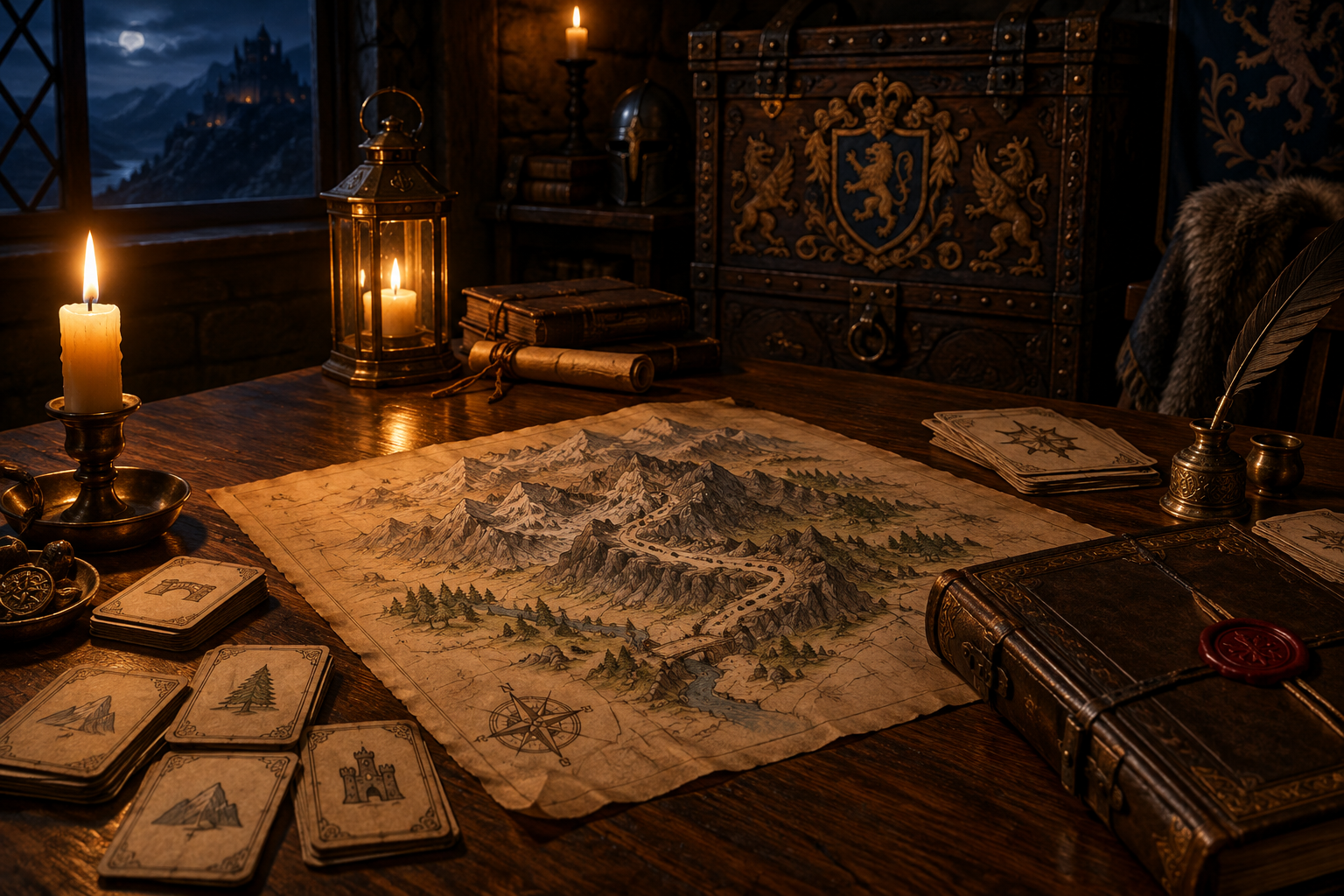
A practical toolkit of pacing aids for game masters: a scene ledger, a beat map, a timing grid, and table-side prompts for keeping a session's rhythm without overthinking it.
Much of the pacing advice available is explanation rather than ready-to-use aids. This article is a different kind of resource: a toolkit. It collects small, reusable aids that a game master can print, copy into a notebook, or keep open in a note app, each one aimed at a specific moment in the life of a session. There is something for prep, something for the table, and something for the debrief afterward.
None of these tools are rules of any game system. They are working aids, and you should expect to modify them. Where a claim leans on someone else's writing, it is cited. Where something is table preference, it is labeled as such.
What this toolkit is for
In this article, "pacing" means the rhythm of a session: how tension, release, and rest are spread across the evening, and how long each stretch lasts. Several writers treat pacing as a craft skill that can be examined and practiced. Alexander (2013) discusses pacing as an art with identifiable parts, and Shea (2022a) offers a short set of ideas for improving it. The toolkit below does not replace that reading. It turns some of the common ideas into things you can fill in.
A good toolkit has three properties:
- Small. Each aid fits on a card or a half page. In our view, a pacing aid that takes twenty minutes to use is unlikely to survive a busy week.
- Optional. You can use one tool and ignore the rest.
- Honest. Tools that give a false sense of precision can be worse than none, so each one below says what it cannot do.
Tool 1: The scene ledger
The scene ledger is the simplest tool in the kit. It is a list of the scenes you expect, with three short notes beside each.
| Scene | Intensity (low, medium, high) | Rough length | What the players do |
|---|---|---|---|
| | | | |
The columns are deliberately crude. "Intensity" is a gut sense of how much tension the scene should carry. "Rough length" is a guess in minutes, and a wide guess is fine. "What the players do" is a verb: talk, search, fight, decide, argue, rest.
Once the ledger is filled in, read down the intensity column. Three highs in a row, or five mediums with no low anywhere, tells you something before the session starts. This is a structural reading of the plan, on the view that the order and spacing of scenes can matter as much as their content. Alexander (2013) comes at pacing from the table side instead, as cutting the 'empty time' between one meaningful choice and the next.
What the ledger cannot do: it cannot predict how long a scene will actually run. Players can turn a planned ten-minute scene into an hour, or dispatch a planned hour in ten minutes. Treat the lengths as a rough budget, not a schedule.
Tool 2: The beat map
Where the ledger lists scenes, the beat map shows shape. Draw a horizontal line for the evening and mark your planned scenes along it. Above the line, put a small peak for each high-intensity scene. Below the line, put a small dip for each lull.
The point is not artistic quality. A beat map exists so you can see, at a glance, whether the evening is flat, spiky, or building. A few things worth looking for:
- A long stretch with no dip at all.
- A long stretch with no peak at all.
- Two peaks sitting side by side with nothing between them.
- The biggest planned moment sitting at the very start, with nothing larger after it.
The Angry GM (2016b) argues that players experience each session, rather than each adventure, as the episode. So each session needs its own shape: a clean start, a variety of play, and an ending on a strong story beat. The beat map is a lightweight, visual way to check that shape. Whether you draw it, write it, or just picture it is table preference.
Tool 3: The timing grid
The timing grid is for the session as a whole. Divide your expected play time into blocks and label what each block is for.
| Block | Purpose |
|---|---|
| Opening | Recap, re-establish stakes, a quick hook |
| First third | Setup, exploration, or a low-stakes challenge |
| Middle | The main pressure, with at least one lull inside it |
| Final third | Escalation toward the planned peak |
| Close | A short landing and a clear thread for next time |
This grid is a prompt, not a formula. Different games and different tables want different shapes, and there is no single correct arrangement. Alexander (2023a) addresses pacing for beginning game masters, with concrete advice on when to end a scene, how to start the next one, and how to speed up combat. It is a useful read if you are still building your instincts.
What the grid cannot do: it cannot tell you how long your particular group takes to settle in, argue about a plan, or find a snack. Your first few uses will be rough. Adjust the blocks as you learn your table.
Tool 4: The release checklist
Release can be an easy part of rhythm to forget, because it can feel like nothing is happening. A release scene is any stretch where tension drops and players can breathe, talk, plan, or enjoy the fiction.
Before a session, ask:
- Is there at least one planned release before the biggest tense moment?
- Does each release give the players something to do, even something small, such as a conversation, a choice, or a bit of in-character reflection?
- Is the release short enough that nobody wonders whether the game has stalled?
- Could a release scene double as a way to deliver information, so it is not dead air?
The last question matters because a release that does nothing can feel like padding. Releases that carry a bit of story, a relationship beat, or a quiet decision can feel more purposeful, though how much a table wants from a lull is table preference.
Tool 5: The cut list
Some pacing problems start as prep problems: too much planned for the time available. The cut list is a tool for deciding, in advance, what to drop.
After drafting your scenes, mark each one as one of three kinds:
- Core. The session needs it.
- Flexible. It would be good to include, but can be shortened or merged.
- Spare. It can be dropped, delayed, or saved for another session without harming the evening.
If everything is marked core, that may be a sign of over-planning. A session with a clear spare category can be easier to steer, because when time runs short you already know what goes first. This echoes a broader idea in prep writing: prep time is limited, so focus it on what matters most for your game (Shea, 2024d).
Tool 6: Table-side prompts
The tools above are for prep. These are for the table, where you have seconds, not minutes. Keep them on a card.
The three questions. When the energy in the room shifts, ask yourself quickly:
- Has the current scene already delivered what it was for?
- Is anyone checking their phone, going quiet, or drifting?
- Is the next scene meant to be higher or lower in intensity than this one?
If the first answer is yes, you can usually move on. If the second is yes, that is a signal, not a verdict. It might mean the scene has run long, or it might mean someone is tired, and you cannot tell which from the outside. Reading the room is a skill, not a formula.
Quick levers for speeding up. These are options, not obligations:
- Narrate the outcome of a low-stakes action instead of calling for a roll.
- Cut to the next meaningful decision.
- Offer a time skip and summarize it.
- Move a spare scene's content into a short line of description.
Quick levers for slowing down.
- Ask a player how their character feels about what just happened.
- Add a sensory detail that lets the moment land. Alexander (2017) has a short piece on evocative descriptions that is a good starting point.
- Let the players discuss without interrupting, if the conversation is productive.
- Give a lull a visible edge, such as camp, a meal, or a night's rest.
The Angry GM (2025) writes about when to stop narrating, an approach he calls 'tab stop narration': narrate up to the next point where the players' input is needed, then stop and hand the moment back to them.
Tool 7: The post-session debrief card
Reflection is one way to improve pacing. After a session, spend two minutes with four questions:
- Where did the energy peak?
- Where did it dip, and was that dip planned?
- Which scene ran longer than expected, and why?
- What would I move, shorten, or cut next time?
Write one line per answer. Over several sessions, patterns emerge: perhaps your openings run long, or your finales get squeezed. That information is far more useful than a general rule, because it is about your table.
If your group is comfortable with it, you can also ask the players a single question: "Was there a moment tonight where you wished we had moved faster or slower?" Whether to ask this directly, and how, is table culture. Some groups enjoy it, and others prefer feedback to stay informal.
Assembling a one-page kit
If you want a compact version, combine the tools on a single sheet:
- Top third: the scene ledger.
- Middle third: a small beat map line.
- Bottom third: the release checklist, the cut list tags, and a space for the debrief.
Print it or recreate it by hand. A kit this small is more likely to get used than one that needs a manual.
Some game masters prefer digital tools, and the options are broad. Notes apps, spreadsheets, and campaign tools all work, and none is required. For a broader look at what to bring to a table, see The Dungeon Trainer's piece on essential game master tools (The Dungeon Trainer, 2026c). For rhythm inside a dungeon specifically, there is a related article on pacing and flow in dungeon sequences (The Dungeon Trainer, 2026e).
Example: The Lantern Road Company
The following is an illustrative scenario, not a report of a real game. It shows the toolkit in motion.
Imagine a game master preparing an evening for the Lantern Road Company, four characters escorting a wagon of lamp oil along a rain-slick mountain road to a besieged border keep. The prepared challenges are a rockslide that blocks the road, a negotiation with wary toll-keepers at a ruined bridge, an ambush by hired raiders in a narrow pass, and a tense arrival at the keep, where the garrison captain may or may not be trustworthy.
The ledger. The game master fills in the scene ledger first. The rockslide is medium intensity, about fifteen minutes, and the players mostly solve a problem. The toll-keeper negotiation is medium, about twenty-five minutes, and the players talk. The ambush is high, about thirty minutes, and the players fight. The keep arrival is high, about thirty minutes, and the players decide whom to trust.
Reading down the intensity column, the game master sees four scenes with no low anywhere. That is a flag before play has even started.
The beat map. Drawn out, the line is a plateau that climbs at the end. There is nowhere for the table to breathe before the ambush.
The release checklist. The game master adds a short camp scene between the toll-keepers and the ambush. It is low intensity, about ten minutes, and its purpose is conversation: the characters can voice what they fear about the keep. It also quietly delivers a rumor about the captain, so it is not dead air.
The cut list. The rockslide is tagged flexible, since it can shrink to a vivid paragraph and a single check. The negotiation and ambush are core. The camp scene is core, because it provides the release. Nothing is marked spare yet, which tells the game master the plan is slightly full, so the rockslide is the first thing to compress.
At the table. During play, the toll-keeper negotiation runs long because the players enjoy it. The game master checks the three questions, decides the scene has delivered what it was for, and uses one of the quick levers: a short time skip to the evening camp. The ambush then arrives after a real lull, and the keep arrival lands with fresh tension.
The debrief. Afterward, the game master writes one line per question. The energy peaked at the ambush, the negotiation ran over, and next time the rockslide should be cut to a paragraph from the start.
Notice that nothing about the content changed. The same four challenges were prepared. The toolkit simply made the spacing, duration, and release visible before and during play.
Common misuses of pacing tools
Tools can become crutches. A few things to watch for:
- Over-scheduling. Keeping an eye on the clock is useful, but running the session against it like a stage manager is something players may feel. The ledger is a plan, not a script.
- Treating a dip as a failure. A quiet scene is not a problem if it is doing a job. The goal is intention, not constant intensity.
- Ignoring the players. If the table is clearly delighted by a scene, letting it run is often the right call, whatever the ledger says. Pacing serves the table, and not the other way around.
- Copying someone else's rhythm. What feels right for one group may drag for another. Treat any template, including these, as a starting point.
Using The Dungeon Trainer with this toolkit
If you want a shared table for your group, The Dungeon Trainer lets a human game master run the campaign while the platform tracks shared state such as character sheets, dice, initiative, transcripts, and campaign continuity. It also offers an optional AI Dungeon Master for groups that choose it. This runs separately from human-run campaigns, and when a human runs the table no AI Dungeon Master is required. Nothing in this toolkit depends on the platform. A notebook and a pencil work fine.
Quick reference
- Before the session: fill in the ledger, sketch the beat map, check the release list, tag your cuts.
- During the session: ask the three questions, and reach for a lever only when you need one.
- After the session: answer the four debrief questions in a line each.
Pick one tool to try for your next session. Rhythm improves by noticing, and noticing is easier when you have something to write on.
Sources and Further Reading
- Alexander, J. (2013). The Art of Pacing. The Alexandrian. https://thealexandrian.net/wordpress/31509/roleplaying-games/the-art-of-pacing
- Alexander, J. (2017, September 4). Random GM Tip: Evocative Descriptions. The Alexandrian. https://thealexandrian.net/wordpress/39227/roleplaying-games/random-gm-tips-evocative-descriptions
- Alexander, J. (2023a, May 30). Pacing for the Beginning GM. The Alexandrian. https://thealexandrian.net/wordpress/49547/roleplaying-games/pacing-for-the-beginning-gm
- Shea, M. E. (2022a). Improving Pacing. Sly Flourish. https://slyflourish.com/pacing.html
- Shea, M. E. (2024d, June 3). High Value Prep. Sly Flourish.
- The Angry GM. (2016b, June 8). When episodes ain't episodes: How to structure a session. The Angry GM.
- The Angry GM. (2025, July 31). When to stop narrating. The Angry GM.
- The Dungeon Trainer. (2026c). Essential Dungeon Master Tools: What You Actually Need at the Table. https://thedungeontrainer.com/blog/essential-dungeon-master-tools-what-you-actually-need-at-the-table
- The Dungeon Trainer. (2026e). Pacing and Flow: Designing Dungeon Sequences That Keep Players Engaged. https://thedungeontrainer.com/blog/pacing-and-flow-designing-dungeon-sequences-that-keep-players-engaged
Play 5E at your own table
Play with friends or solo, run your own campaign, and keep the dice and character math in code. An optional AI Dungeon Master can run the game when you want one. Free to start, no card required.
Related reading
- Linear, Clustered, or Looping: Three Ways to Shape a Session's Rhythm
Three ways to lay out a session's scenes, using working labels, produce three very different rhythms. This comparison weighs linear, clustered, and looping structures and when each one tends to fit.
- Designing Rhythm Into a Session: A Design Perspective on Tension, Release, and Spacing
Rhythm is a design decision, not a happy accident. This design-perspective essay looks at intensity, contrast, duration, and placement as materials a game master can shape before play begins.
- Pacing a Session Plan: Practical Steps for Building Rhythm Before You Sit Down
Good rhythm can be built into prep. This practical guide walks through sequencing scenes, setting durations, and planning release, so a session has shape before it begins.