What Is Sandbox Play in D&D and How Does It Actually Work?
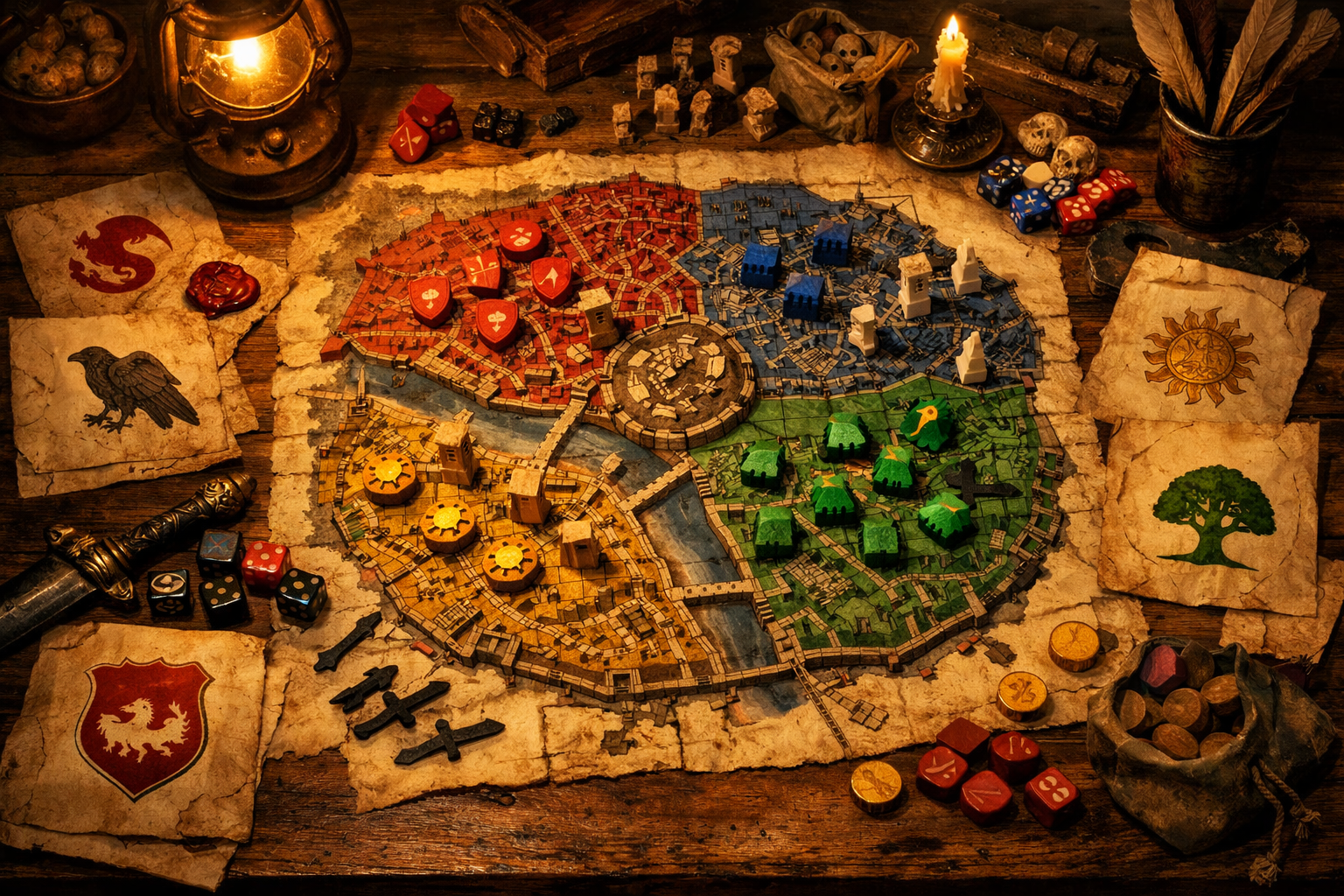
Sandbox play gives players freedom to pursue their own goals without a predetermined plot. Learn what defines true sandbox campaigns, how they differ from open-world and railroad adventures, and practical techniques for running tables where player agency drives the story.
Sandbox play represents one of the most discussed yet frequently misunderstood approaches to running tabletop RPG campaigns. Players arrive at the table with different expectations about agency, choice, and narrative structure. Game Masters hear the term "sandbox" applied to everything from open-world exploration to complete improvisational chaos. Understanding what sandbox play actually means, and how it functions in practice, helps both players and Game Masters set realistic expectations and build campaigns that deliver genuine player-driven experiences.
This article examines the core principles of sandbox play, how it differs from other campaign structures, the mechanics that support it, and practical techniques for implementing sandbox elements at your table.
Defining Sandbox Play
Sandbox play refers to a campaign structure where players have meaningful freedom to pursue their own goals without following a predetermined plot path. The modern tabletop label "sandbox" appears to have become common after similar terminology was established in video games, but the underlying style of play is much older. Early D&D campaigns and open-ended settings, including Judges Guild's Wilderlands of High Fantasy (1977), used many of the same principles before "sandbox" became common tabletop terminology (Maliszewski, 2011).
In tabletop RPGs, sandbox play means the Game Master prepares a setting with active factions, locations, conflicts, and opportunities rather than a required sequence of scenes. Players choose which threads to pursue, which conflicts to engage with, and which goals to prioritize. The campaign develops from the interaction between player decisions and the setting rather than advancing through a predetermined narrative arc.
A functional sandbox usually depends on three foundational elements:
Prepared environment: The Game Master creates a region, city, or world with established locations, NPCs, factions, and conflicts that exist independently of player action. These elements have their own motivations and will change over time whether or not players interact with them.
Player agency: Players make meaningful choices about where to go, what to investigate, and which conflicts to engage. The campaign structure supports multiple valid paths rather than funneling players toward specific outcomes.
Emergent narrative: Stories develop from the intersection of player choices and the prepared environment rather than from a pre-written plot. The Game Master responds to player actions by determining how the world reacts, but does not steer players toward specific story beats.
These elements distinguish sandbox play from other campaign structures that may feel open but operate on different underlying principles.
Sandbox vs. Railroad vs. Open World
The vocabulary around campaign structure can create confusion because terms get applied inconsistently across different tables. Understanding how sandbox play relates to other approaches helps clarify what makes it distinct.
Railroad Campaigns
Railroad campaigns are highly directed campaigns in which a predetermined plot sequence takes priority over player-directed changes to that sequence. At the heavily railroaded end of the spectrum, player decisions might change details without substantially changing the planned progression or major outcomes.
Railroads exist on a spectrum. Some railroads offer cosmetic choices (which NPC delivers information, which route players take to the dungeon) while maintaining a fixed plot. Others use soft techniques like making plot-relevant locations always appear "just down the next road" or having NPCs persistently redirect players toward the intended story.
Sandbox play inverts this structure. Rather than preparing a sequence of scenes, the Game Master prepares a situation and lets players determine which aspects interest them.
Open-World Campaigns
Open-world campaigns give players freedom to explore a large geographic area. Players can travel to different regions, visit various locations, and encounter different challenges based on where they choose to go. This creates a sense of exploration and discovery.
However, open-world structure does not automatically create sandbox play. An open-world campaign might still railroad players through predetermined plots that activate when they visit specific locations. The freedom is geographic rather than narrative.
An open-world campaign becomes more sandbox-like when geographic freedom is paired with meaningful agency. Players can explore the world, and their choices about which situations to engage with help determine what stories develop. The world responds to player action rather than simply presenting pre-scripted content when players arrive at a location.
Structured Episodic Campaigns
Many campaigns use episodic structure where each session or short arc presents a discrete adventure. The Game Master might offer several adventure hooks, players choose one, and the group plays through that scenario. After resolution, the cycle repeats with new options.
This approach shares some sandbox elements (player choice between options) but typically operates at a different scale. Sandbox play extends player agency into how situations develop and resolve, not just which pre-designed scenario the group engages with.
Episodic structure works well for many tables, particularly those with scheduling challenges or players who prefer contained stories. Recognizing the difference helps Game Masters set appropriate expectations rather than promising sandbox freedom while actually running structured episodes.
Campaign Tools That Support Sandbox Play
Sandbox campaigns benefit from specific campaign tools and procedures. Without clear information, responsive world state, and usable preparation, apparent freedom can collapse into either paralysis (players are unsure what to do) or hidden railroads (the Game Master repeatedly steers players toward the only content that has been prepared).
Dynamic Faction Systems
Factions represent groups with their own goals, resources, and methods. In sandbox play, factions act according to their motivations whether or not players intervene. They pursue objectives, compete with rivals, and respond to changing circumstances.
Effective faction systems include:
Clear motivations: Each faction wants something specific. The thieves' guild wants to expand its territory. The city watch wants to suppress crime. The merchant consortium wants profitable trade routes. These goals create predictable behavior.
Resources and limitations: Factions have assets (members, gold, political influence, magic) and constraints (rivalries, legal restrictions, limited information). These factors determine what factions can actually accomplish.
Active timelines: Factions advance their goals on a schedule. If players spend two weeks investigating a haunted manor, the thieves' guild might bribe three more council members while the merchant consortium signs a treaty with a rival city. The world continues.
Faction systems provide the engine for emergent narrative. Players encounter faction activities, choose which factions to support or oppose, and create ripple effects that change the political landscape.
Information Networks
Sandbox play requires players to make informed choices about where to go and what to do. This means they need access to information about opportunities, threats, and situations developing in the world.
Effective information networks include:
Rumor systems: Players can gather information through investigation, social interaction, or purchasing intelligence. Rumors might be accurate, outdated, or deliberately misleading. Players must evaluate information quality and decide which leads to pursue.
Observable consequences: When factions act or situations develop, players see evidence. Merchants complain about unsafe roads. Refugees arrive from a destroyed village. Guard patrols increase in a district. These observable details suggest opportunities for player action.
Multiple information sources: Different NPCs, factions, and investigation methods reveal different information. The thieves' guild knows about crime and political corruption. Scholarly contacts know about ancient history and magical phenomena. Local residents know about neighborhood changes and gossip.
Information systems solve the "blank map problem" where players have freedom but no idea what their options actually are. With functioning information networks, players can make strategic choices about which situations interest them.
Consequence Systems
Player choices only matter if they create meaningful consequences. Sandbox campaigns need reliable systems for determining how the world responds to player action.
Consequence systems track:
Faction reactions: When players help or oppose a faction, that faction's attitude and behavior changes. The thieves' guild remembers who disrupted their operations. The merchant consortium rewards those who protect their caravans. These reactions create ongoing relationships rather than one-time interactions.
Cascading effects: Player actions create ripple effects. Disrupting the thieves' guild might let a rival gang expand into that territory, which affects local businesses, which influences the economy, which shapes future opportunities. These chains of consequence make the world feel responsive and dynamic.
Time-based developments: When players choose to pursue one situation, other situations continue developing. The Game Master tracks what happens elsewhere based on faction timelines. This creates urgency without artificial deadlines and makes player prioritization meaningful.
Consequence systems usually require deliberate state tracking, but they do not necessarily require more total preparation than a linear campaign. Situation-based preparation can be reused across many possible player approaches, which is one reason "prep situations, not plots" is a common recommendation for open-ended play (Alexander, n.d.).
Practical Techniques for Running Sandbox Campaigns
Theoretical understanding of sandbox principles only helps if you can implement them at the table. These practical techniques address common challenges in sandbox Game Mastering.
Starting Small
New Game Masters attempting sandbox play often create overwhelming preparation burdens by designing entire continents with dozens of factions, hundreds of NPCs, and complex political situations. This leads to burnout and makes the world impossible to run dynamically.
Start with a single city, town, or small region. Develop three to five factions with clear goals and relationships. Create a dozen significant NPCs. Establish current conflicts and tensions. This smaller scope lets you run the world dynamically without tracking too many moving pieces.
As players engage with situations and pursue specific threads, you can expand preparation in those directions. The thieves' guild becomes more detailed when players infiltrate it. The neighboring kingdom gets developed when players travel there. Let player interest guide where you invest preparation time.
Prep Situations, Not Plots
Sandbox preparation focuses on situations (circumstances with inherent conflict and multiple possible outcomes) rather than plots (predetermined sequences of events leading to specific conclusions).
When preparing situations, document:
Current state: What is happening right now? The thieves' guild is preparing to rob the merchant convoy. The city council is debating new trade restrictions. The haunted tower is attracting curious scholars.
Key participants: Who is involved and what do they want? List the main NPCs, their motivations, their resources, and their relationships to other participants.
Likely developments: What will probably happen if players don't intervene? This gives you a baseline trajectory for how situations evolve.
Hooks and entry points: How might players learn about this situation and become involved? Create multiple paths so the situation remains accessible even if players miss specific clues.
This preparation style lets you respond dynamically to player choices while maintaining a coherent, consistent world.
Session Zero Alignment
Sandbox play benefits from explicit player buy-in. Players need to understand that they share responsibility for choosing goals and driving action rather than always waiting for the Game Master to present the next plot development.
The 2024 Dungeon Master's Guide explicitly includes Session 0 as part of campaign setup and uses it to establish expectations and finalize the campaign's starting framework (Wizards of the Coast, 2024). For a sandbox campaign, address these topics in session zero:
Player responsibility for initiative: Explain that players should actively pursue goals rather than waiting for obvious quest hooks. The campaign responds to player choices but does not push players toward specific actions.
Character motivation: Characters need reasons to take action and goals to pursue. "Wandering adventurer waiting for something interesting" creates passive players. "Ambitious mercenary building a reputation" or "scholar investigating ancient ruins" creates proactive engagement.
Information gathering: Players should expect to investigate, ask questions, and seek out opportunities rather than having all relevant information delivered automatically. Encourage proactive information-seeking behaviors.
Failure and consequences: Not every approach will succeed, and player choices have lasting effects. This creates meaningful stakes but requires players to accept that their decisions shape the campaign.
Misaligned expectations can cause major sandbox campaign problems. When players expect a plot to follow and the Game Master expects players to create their own direction, both sides can become frustrated.
Tracking Tools
Sandbox campaigns generate significant tracking demands. You need to monitor faction actions, track time, remember consequences, and maintain consistency across multiple simultaneous situations.
Essential tracking tools include:
Faction status document: Track each faction's current goals, resources, recent actions, and relationship to players. Update this document regularly to reflect campaign developments.
Timeline or calendar: Record significant events and track time passage. When players spend three days traveling, note what happens elsewhere during those three days based on faction timelines.
NPC relationship map: Document how NPCs connect to each other and to player characters. When players meet a new NPC, you can quickly reference their relationships to establish context.
Situation status list: Maintain a running list of active situations, their current state, and next likely developments. Review this list between sessions to determine what changes before players return.
These tools prevent the "Schrödinger's campaign" problem where the world only exists in places players currently observe. Consistent tracking creates a world that feels alive and responsive.
The Three-Question Session Start
Many sandbox sessions begin with awkward silences as players wait to see what happens and the Game Master waits to see what players choose to do. Break this pattern with a structured session opening.
At the start of each session, after quick recaps, ask players three questions:
What did your character think about during downtime? This prompts players to reflect on recent events and consider implications.
What does your character want to accomplish in the near future? This surfaces immediate goals and helps players articulate priorities.
What's your first action as we start today? This creates immediate forward momentum and breaks the "waiting to see what happens" stall.
These questions shift players into proactive mode and give you immediate information about what interests them. You can then frame the session opening around their stated intentions rather than trying to guess what will engage them.
Example: The Millbrook Consortium
The party has established themselves as independent operators in Millbrook, a trade city where three factions vie for influence. The players have already completed several jobs for different employers and established reputations.
The Merchant Consortium wants to secure exclusive trade rights with the dwarven holds to the north. They have money and political influence but lack adventuring capabilities.
The Riverwalk Compact (a coalition of smugglers and river traders) wants to break the Consortium's monopoly and open trade to independent merchants. They have street-level connections and knowledge of secret routes.
The City Council wants stability and tax revenue. They are politically divided, with some members supporting the Consortium and others favoring open trade.
Current situation: A Consortium caravan carrying gold to bribe dwarven clan leaders has disappeared in the northern hills. The Consortium has hired the party to investigate. However, the party's contact in the Riverwalk Compact suggests the caravan was carrying something more valuable than gold, possibly leverage material on Council members.
The party must choose their approach:
Investigate straightforwardly: Track the caravan, determine what happened, report findings to the Consortium. This fulfills their contract but might miss deeper implications.
Investigate with hidden agenda: Track the caravan but look for the rumored leverage material. This risks alienating the Consortium if discovered but could reveal valuable intelligence.
Double-deal: Contact both factions and play them against each other for maximum profit. This creates significant risk but potentially high reward.
Pivot completely: Ignore the caravan job and pursue something else entirely. Maybe investigate rumors about goblin movements in the hills, or follow up on that haunted lighthouse situation.
The Game Master has prepared:
Caravan location and state: The caravan was ambushed by goblins, but the attack was unusually organized. Investigation reveals evidence suggesting someone tipped off the goblins about the route and timing.
Leverage material: The caravan was carrying letters implicating three Council members in Riverwalk Compact smuggling operations. The Consortium planned to use these for blackmail.
Faction timelines: While players investigate, the Consortium is quietly bribing City Guard captains. The Riverwalk Compact is spreading rumors about Consortium corruption. The Council is debating new trade regulations that would affect both factions.
Consequence branches: Different player choices lead to different outcomes. Returning the letters to the Consortium strengthens their political position. Giving them to the Riverwalk Compact weakens the Consortium. Exposing them publicly destabilizes the Council. Destroying them removes a point of leverage but doesn't solve the underlying conflict.
This example demonstrates sandbox principles in action. The situation has inherent conflict, multiple factions with clear motivations, several possible player approaches, and branching consequences. The Game Master has prepared the situation's components without determining which path players will choose or how events will resolve.
Common Challenges and Solutions
Sandbox campaigns can make certain challenges especially visible, even though many of them can also appear in more structured campaign formats. Recognizing these patterns helps you address problems before they derail your campaign.
Analysis Paralysis
When players have too many options and insufficient information to evaluate them, decision-making stalls. Players debate endlessly about which path to choose or freeze because every choice might be wrong.
Solutions:
Provide clear information about consequences: When players understand likely outcomes of different choices, decisions become easier. "If you refuse the Consortium's offer, they'll probably hire different mercenaries and you'll lose a valuable patron" gives players something concrete to evaluate.
Set time pressure externally: Rather than arbitrary deadlines, create time pressure through faction timelines. "While you're debating, you notice increased guard patrols. The Consortium must be moving ahead with their bribery plan." This pushes players to act rather than plan indefinitely.
Offer NPCs who will take action: If players can't decide, have an NPC make a choice and invite players to join. "Your Riverwalk contact says she's going after the caravan tonight with or without you. Are you coming?" This breaks paralysis while preserving player agency about whether to participate.
The Quest Board Problem
Some Game Masters implement sandbox play as a literal quest board where NPCs offer discrete jobs. Players choose which quest to accept, complete it, return for reward, and choose the next quest. This creates player choice at a surface level but misses deeper sandbox dynamics.
The problem: This structure makes the campaign feel like a series of disconnected episodes rather than a dynamic world where player choices matter. Each quest is self-contained with minimal consequences for broader situations.
Solutions:
Connect quests to factions: Every opportunity should relate to faction goals. The quest isn't just "kill goblins for gold" but "the Consortium needs goblin raids stopped to protect their trade route." This connects discrete tasks to broader situations.
Create cascading consequences: Completing one task changes the situation in ways that create new opportunities or complications. Stopping goblin raids might destabilize the balance of power between factions, leading to new conflicts.
Let players generate their own objectives: Rather than only choosing from offered quests, encourage players to pursue their own goals. "I want to gain the Consortium's trust to eventually steal their trade secrets" creates player-driven narrative beyond presented options.
Unbalanced Preparation
Game Masters often over-prepare situations they find interesting and under-prepare situations players actually engage with. This creates frustration when players bypass elaborate preparation to pursue something you considered minor.
Solutions:
Prepare systems, not specifics: Rather than fully detailing every location and NPC, create systems for generating content dynamically. Have methods for quickly generating NPC personalities, improvising faction responses, and creating reasonable consequences on the fly.
Follow player interest: Between sessions, expand preparation in directions players demonstrated interest. If they asked detailed questions about the dwarven holds, develop that region. If they ignored the haunted lighthouse, let it remain a sketch until it becomes relevant.
Expect some preparation to go unused: Players will ignore some hooks, locations, and NPCs. Keep unused material modular so it can remain in the world, evolve in the background, or be repurposed later. Situation-based preparation reduces the need to fully build every possible branch in advance.
When Sandbox Play Works Best
Sandbox structure suits specific player preferences and campaign goals better than others. Understanding when sandbox play is appropriate helps you choose campaign structures that match your table.
Sandbox play works well when:
Players enjoy self-direction and strategic decision-making: Sandbox campaigns give players room to set priorities, pursue personal goals, and think about faction dynamics, long-term positioning, and consequence chains. Players who enjoy choosing their own direction often thrive in this structure.
The group prioritizes player agency: Tables that value making meaningful choices over experiencing crafted stories will appreciate sandbox freedom. If "my choices matter" is a core priority, sandbox structure delivers that experience.
The campaign gives consequences room to develop: Longer campaigns naturally provide more time for faction actions, relationships, and second-order consequences to accumulate. Shorter sandbox campaigns can still work well when the scope is tight and consequences develop quickly.
Game Master enjoys responsive improvisation: Running sandbox campaigns requires comfort with improvisation and dynamic response to player choices. Game Masters who prefer detailed preparation of specific scenes may find sandbox play stressful.
Sandbox play may not suit tables where:
Players prefer strong narrative arcs: Some players want to experience a well-crafted story with dramatic moments and satisfying narrative payoff. Emergent narrative may feel loose or aimless by comparison.
Scheduling limits allow only episodic play: Groups that meet infrequently or have frequent player absences may benefit from more contained episodic structure rather than ongoing faction dynamics.
Players want more initial guidance: Some new players, and some experienced players, prefer clearer short-term objectives while learning a system, setting, or group dynamic. A campaign can begin with guided scenarios and gradually widen the available choices as the group becomes comfortable.
Hybrid Approaches
Many campaigns blend sandbox elements with other structures rather than committing to a pure sandbox. These hybrid approaches can preserve meaningful player agency while also providing clearer pacing, stronger framing, or more predictable session structure.
Sandbox with Story Arcs
Provide overall narrative arcs (the ancient evil is awakening, the kingdom is heading toward civil war) while giving players freedom in how they engage with these arcs. The major conflict provides direction and stakes while player choices determine how situations develop and resolve.
Regional Sandbox
Use sandbox structure within a defined region while maintaining more directed structure for campaign-level plots. Within the city of Millbrook, players have complete freedom to pursue goals and engage with factions. The campaign's overall arc (stopping the lich's return) provides longer-term direction.
Rotating GM Authority
Some tables rotate Game Master responsibilities, with different players running sandbox segments focused on their interests. This can distribute preparation burden, but it is not a requirement of sandbox play and works best when the group uses shared continuity notes for factions, locations, and unresolved consequences.
Seasonal Structure
Alternate between sandbox "seasons" where players pursue their own goals and more directed "event seasons" where major campaign developments occur. This provides variety while respecting different player preferences.
Measuring Success
Sandbox campaigns succeed when players feel their choices matter and the world responds meaningfully to their actions. That makes responsiveness and player initiative useful measures of success alongside more general measures such as enjoyment, challenge, and story satisfaction.
Indicators of successful sandbox play:
Players initiate action: Rather than waiting to see what happens next, players proactively pursue goals, investigate opportunities, and take initiative.
Players discuss consequences between sessions: When players talk about how their actions affected the world and speculate about future developments, they're engaged with the sandbox dynamic.
Emergent stories surprise everyone: A hallmark of sandbox play is that player choices and world dynamics can combine to create situations no one predicted. These stories feel earned because they arise from play rather than from a predetermined sequence.
Faction dynamics evolve based on player choices: The political landscape, faction relationships, and power structures change in response to player action. The world at session twenty looks different than session one because of what players chose to do.
These indicators suggest players are engaged with sandbox play's core promise: meaningful agency in a responsive world.
Sources and Further Reading
Alexander, J. (n.d.). Don't prep plots. The Alexandrian.
Gygax, G. (1979). Dungeon masters guide. TSR.
Laws, R. D. (2002). Robin's laws of good game mastering. Steve Jackson Games.
Maliszewski, J. (2011, August 31). Retrospective: Wilderlands of High Fantasy. Grognardia.
Wizards of the Coast. (2024). Dungeon master's guide.
Wizards of the Coast. (2025). System reference document 5.2.1. D&D Beyond. https://www.dndbeyond.com/srd
---
This work includes material from the System Reference Document 5.2.1 ("SRD 5.2.1") by Wizards of the Coast LLC, available at https://www.dndbeyond.com/srd. The SRD 5.2.1 is licensed under the Creative Commons Attribution 4.0 International License, available at https://creativecommons.org/licenses/by/4.0/legalcode.
Related reading
- Why Megadungeons Succeed or Fail: Lessons from Forty Years of Play
Megadungeons have persisted since the earliest days of tabletop roleplaying, yet many campaigns abandon them within a few sessions. Learn what structural, pacing, and preparation factors separate sustainable megadungeons from those that collapse, and how to apply those lessons at your own table.
- Understanding the Megadungeon: What It Is and When to Use It
A megadungeon is more than a big dungeon. Learn what defines this sprawling adventure structure, why it persists across decades of play, and when it serves your table better than episodic adventures.
- Running Sandbox Campaigns: Six Months with The Millbrook Consortium
Sandbox campaigns promise player-driven freedom but demand different preparation and facilitation techniques. This case study examines six months of running The Millbrook Consortium, a merchant-focused sandbox, to identify practical lessons about faction management, player agency, and sustainable open-world play.