What Is a Dungeon Master? Roles, Responsibilities, and What to Expect
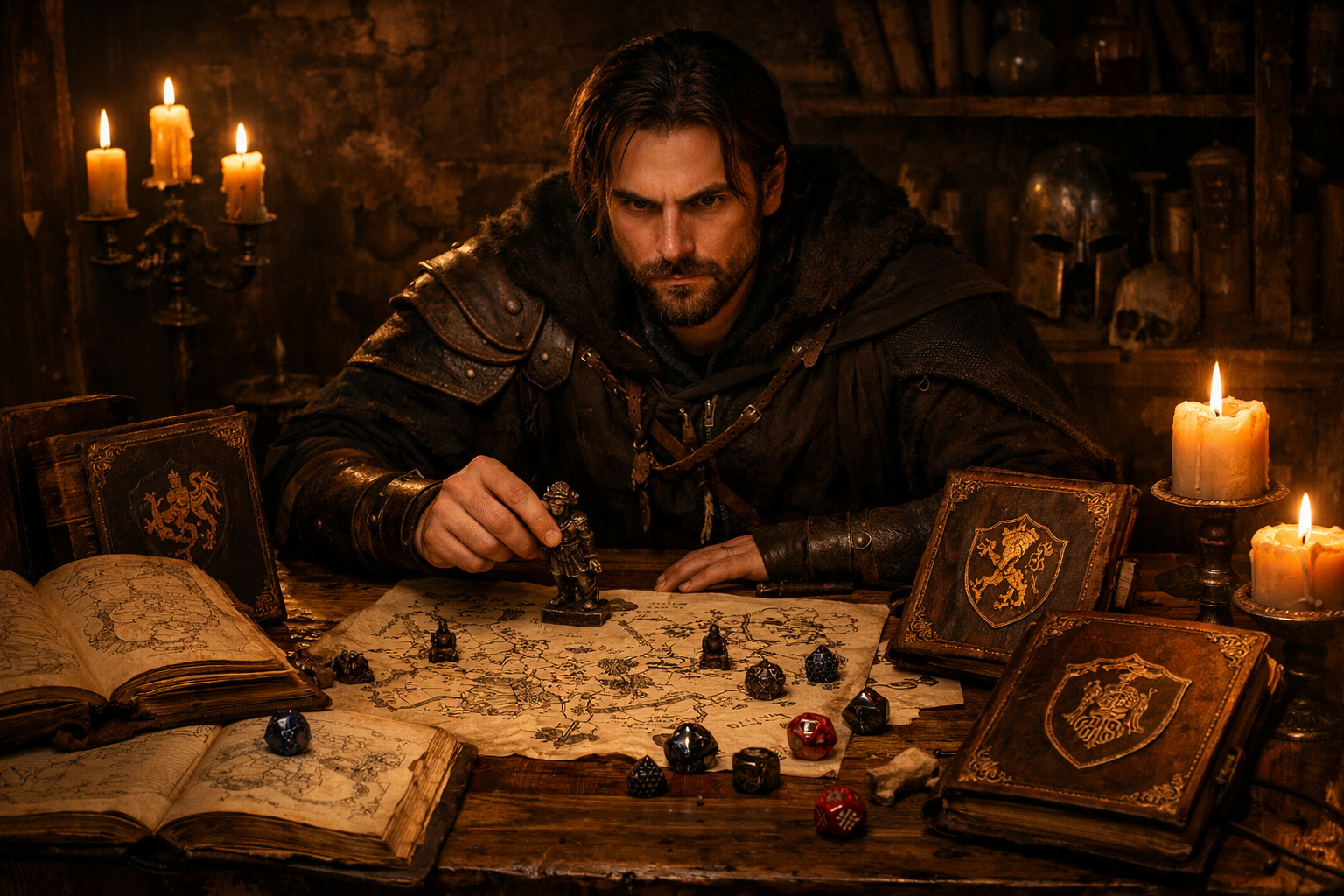
The Dungeon Master guides the game, interprets rules, and creates memorable experiences. Learn what a DM does, how they prepare, and what makes the role essential to tabletop RPGs.
If you have heard about Dungeons & Dragons or other tabletop role-playing games, you have likely encountered the term Dungeon Master. The role stands at the center of a typical D&D campaign, but what does a Dungeon Master actually do?
Whether you are considering running your first session or simply want to understand how tabletop role-playing games work, learning the Dungeon Master’s responsibilities helps explain the collaboration between rules, improvisation, and shared storytelling.
This guide explains the Dungeon Master role, its common responsibilities, practical preparation methods, important boundaries, and what makes running a game both challenging and rewarding.
Defining the Dungeon Master Role
A Dungeon Master, often abbreviated as DM, is the participant who facilitates a game of Dungeons & Dragons.
In a typical game, the other players each control one primary player character. The Dungeon Master presents the world, portrays non-player characters and creatures, adjudicates the rules, describes the consequences of player decisions, and maintains the game state. Some groups also use sidekicks, companions, rotating characters, or shared responsibilities, so the exact division of work can vary.
The Dungeon Master is not supposed to compete against the other participants. The DM presents situations, runs characters and creatures according to their goals, applies the rules, and helps create conditions in which everyone can contribute to the game.
Other tabletop role-playing games use different titles for related roles. Pathfinder generally uses Game Master, abbreviated GM. Call of Cthulhu uses Keeper of Arcane Lore, commonly shortened to Keeper. World of Darkness games commonly use Storyteller.
These roles overlap, but they are not identical in every system. Different games assign different levels of authority, preparation, narration, and rules responsibility to the person facilitating play.
In D&D, the Dungeon Master commonly serves as referee, narrator, scenario designer, and representative of the world.
A typical exchange follows three steps:
- The Dungeon Master describes the situation.
- The players explain what their characters attempt.
- The Dungeon Master determines and describes the results, using the rules and dice when the outcome is meaningfully uncertain.
When characters enter a new location, the DM explains what they can perceive. When they speak with a merchant, guard, or monster, the DM portrays that character’s response. When combat begins, the DM manages enemies and environmental effects while the group tracks initiative, conditions, and other relevant information.
Core Responsibilities of a Dungeon Master
World-Building and Preparation
Before a session, the Dungeon Master prepares enough material to present the next situation confidently.
Preparation may involve:
- Reading a published adventure
- Reviewing relevant rules
- Creating or adapting maps
- Establishing important NPC motivations
- Preparing likely creatures or hazards
- Identifying clues and objectives
- Reviewing previous session notes
- Considering several plausible developments
The scope varies considerably.
Some Dungeon Masters enjoy developing extensive histories, cultures, maps, and political relationships. Others use concise notes and improvise most details during play. Neither method is automatically superior. Preparation is useful when it helps the DM respond consistently without creating unnecessary work.
Consider a recurring example used throughout this article: a caravan traveling through the Thornwood needs guards after several recent bandit attacks.
A Dungeon Master preparing this scenario might sketch the route, identify several places where trouble could occur, prepare the bandit leader and a few travelers, and decide what the bandits want.
The bandits may be stealing supplies because a harsh winter damaged their settlement. That motivation creates several possible resolutions, including combat, negotiation, deception, assistance, or a decision to continue protecting the caravan without addressing the larger problem.
Effective preparation emphasizes situations and reusable components rather than predicting a required sequence of player actions.
Players often make choices the DM did not anticipate. A DM who understands the important characters, locations, motives, and consequences can adapt more easily than one who depends on a predetermined plot.
Narration and Description
During the session, the Dungeon Master communicates what the characters perceive and how the world responds.
Useful descriptions establish:
- The immediate environment
- Important sensory information
- Obvious threats
- Potential routes
- Interactive objects
- Changes caused by earlier actions
- Details the characters would reasonably notice
The amount of detail matters.
Too little information can leave players uncertain about their options. Too much uninterrupted description can obscure the most important details and slow the session.
A practical approach is to begin with the most obvious and actionable information, then provide additional detail when players investigate or ask questions.
Instead of describing every tree along the Thornwood road, the DM might establish the scene with a few useful details:
“The road narrows between steep, wooded slopes. A wagon has stopped ahead, one wheel broken. You can hear movement in the brush above the eastern embankment.”
The players now understand the terrain, the obstruction, and a possible threat.
The DM also portrays NPCs, from the caravan master to the bandit scout and the innkeeper at the next town. These portrayals do not require theatrical accents or elaborate performances.
Differences in vocabulary, priorities, posture, tone, or speaking rhythm can make characters recognizable without requiring professional acting.
Rules Adjudication
The Dungeon Master interprets and applies the rules when the outcome of an action is uncertain.
When a player wants to intimidate a guard, leap across a chasm, identify a symbol, or use a spell in an unusual way, the DM determines which rule or procedure applies.
In D&D, a check is generally appropriate when an action has both a meaningful chance of failure and an interesting consequence. If an action is clearly possible and failure would add nothing, the DM can allow it to succeed without a roll. If an action is impossible under the established circumstances, a high roll does not necessarily make it possible.
No Dungeon Master remembers every rule.
When a question arises, the group has several reasonable options:
- Check the rule immediately when it is central or likely to recur
- Ask a knowledgeable player to locate the rule
- Make a temporary ruling and verify it after the session
- Record a house rule when the group intentionally wants a different procedure
Temporary and house rulings should be communicated clearly. Consistency matters, but correcting a mistaken ruling later is preferable to preserving an error indefinitely.
Creative player ideas should receive fair consideration.
Creativity may change the approach, eliminate uncertainty, reduce a difficulty, create advantage, or produce a different consequence. It does not require the DM to discard the rules whenever an idea sounds dramatic.
The goal is to apply the game’s procedures consistently while leaving room for approaches the rules do not describe in detail.
Challenge Design and Pacing
The Dungeon Master prepares and presents challenges that support the campaign’s intended experience.
Challenges may include:
- Combat
- Negotiation
- Investigation
- Exploration
- Puzzles
- Environmental hazards
- Resource decisions
- Moral or strategic dilemmas
Not every challenge needs to be balanced for direct confrontation.
Some threats are meant to be avoided, negotiated with, studied, delayed, or confronted after the party gains more information. When a danger significantly exceeds the characters’ likely capabilities, the DM should provide enough information for players to recognize that risk and make an informed decision.
In the Thornwood caravan scenario, the first bandit encounter might begin as an ambush. Surviving bandits could retreat, surrender, or lead the party toward their camp.
The players might then:
- Track them
- Question a prisoner
- Continue escorting the caravan
- Negotiate with the bandit leader
- Alert local authorities
- Investigate why the attacks began
The DM develops consequences from those choices instead of requiring one intended route.
Pacing is also part of facilitation.
When a scene no longer produces meaningful choices or information, the DM can summarize it and move forward. When players are deeply engaged in a conversation, mystery, or tactical problem, the DM can give the scene space to develop.
Pacing is not solely about speed. It is about spending table time on the parts of the game the group finds meaningful.
Managing the Table
The Dungeon Master often helps facilitate communication and expectations, but the health of the table is a shared responsibility.
The DM may help:
- Make space for quieter players
- Clarify whose turn it is to speak or act
- Resolve rules disagreements
- Reinforce established table expectations
- Pause when confusion or discomfort develops
- Check whether the group wants to continue a scene
- Keep discussion focused when necessary
Scheduling, hosting, note-taking, food, conflict resolution, and campaign administration do not have to belong to the DM. These tasks can be distributed among the group.
A session zero gives participants an opportunity to discuss:
- Campaign premise
- Expected tone
- Character creation
- Rules options
- Scheduling
- Attendance
- Player-versus-player conduct
- Content boundaries
- Safety and check-in procedures
Tools such as Lines and Veils, the X-Card, Open Door policies, and other check-in systems can help a group communicate boundaries. No single tool fits every table, and safety procedures should be discussed collaboratively rather than imposed without explanation.
The DM may facilitate these conversations, but every participant is responsible for respectful conduct.
What a Dungeon Master Does Not Do
Understanding the role also requires recognizing its boundaries.
The Dungeon Master does not ordinarily decide a player character’s voluntary thoughts, beliefs, choices, or emotional reactions.
The DM can describe frightening circumstances and explain mechanical effects that influence a character. Certain spells, conditions, supernatural effects, or system procedures may impose fear, charm, compulsion, or other limitations.
Outside those established effects, the player decides how the character interprets and responds to what happens.
The Dungeon Master also does not play against the players.
The DM may portray intelligent enemies who use effective tactics, retreat, negotiate, deceive, or pursue their own objectives. Running adversaries credibly is different from using unlimited authority to defeat the party.
The DM knows information the enemies do not, controls far more pieces, and can alter the world. Using that authority as a competitive advantage undermines fair play.
The Dungeon Master also does not need to shoulder every creative responsibility.
Players contribute through character histories, decisions, questions, theories, and descriptions. Some groups deliberately share world-building or invite players to define details connected to their characters.
A player asking, “Is there a chandelier I could swing from?” does not automatically establish that one exists. The question can nevertheless prompt the DM to consider whether a chandelier fits the location and whether adding one would create a useful opportunity without contradicting established facts.
Collaboration works best when contributions remain consistent with the setting and the group understands who has authority over which decisions.
Skills That Strengthen DM Performance
Improvisation
Even thorough preparation cannot predict every player decision.
Dungeon Masters improvise when players question an unplanned NPC, investigate an overlooked location, combine abilities unexpectedly, or pursue a goal the DM did not anticipate.
Improvisation does not require inventing everything from nothing.
Useful preparation can include:
- Name lists
- NPC motives
- Short location descriptions
- Portable clues
- Encounter complications
- Faction goals
- Setting-specific details
- Consequences that follow from established events
The DM can recombine these elements while preserving continuity.
Improvisation becomes easier when the DM understands why characters and factions act rather than memorizing a script for what they must do.
Active Listening
Effective Dungeon Masters listen to player questions, discussions, theories, and reactions.
This attention helps reveal:
- What interests the group
- Which facts they misunderstood
- What objectives they believe are important
- Which NPCs attracted their attention
- Where the pace is slowing
- Whether someone has been excluded from the conversation
- Which consequences the players expect
Listening also includes noticing nonverbal communication when playing in person or on video.
A quiet player may be thinking, tired, uncomfortable, distracted, or simply content to observe. Instead of immediately forcing that player into the spotlight, the DM can offer an opening or check in privately when appropriate.
Organization
Dungeon Masters may track:
- NPC names and motives
- Locations
- Faction relationships
- Active threats
- Character-specific hooks
- Established world facts
- Unresolved objectives
- Session continuity
- Enemy and environmental state
Players should normally manage their own character sheets, abilities, and personal resources unless the group has agreed otherwise.
The DM’s organizational system can be digital, physical, or hybrid.
Possible methods include:
- A notebook
- Index cards
- A campaign document
- A wiki
- A spreadsheet
- Virtual tabletop notes
- A session recap template
The best system is one the DM can maintain and search during play. A complicated system that is never updated provides less value than a small, consistent set of notes.
Flexibility and Adaptability
A Dungeon Master’s plans should respond to player choices.
If the characters bypass a prepared fight by bribing the guards, the bribe should matter. The guards may accept, refuse, report the attempt, demand more, or become future contacts depending on their motives and the circumstances.
The goal is not to force the party back toward unused preparation.
Unused maps, encounters, and NPCs can be saved for another situation when they fit naturally.
Adaptability also applies to tone.
A serious scenario may contain humor, and a comedic scene may produce an unexpectedly emotional moment. The DM can follow the group’s energy while protecting the campaign’s agreed boundaries and overall identity.
Learning the Role
Becoming a Dungeon Master requires no certification.
Many people learn by running a small scenario, reflecting on what happened, and improving through practice. Previous experience as a player can help, but it is not a prerequisite.
A manageable first session might include:
- One clear objective
- One or two important NPCs
- A small location
- A few meaningful decisions
- One primary threat
- A natural stopping point
Published adventures can reduce the amount of original scenario design required. They do not remove the need to understand the rules, review the material, and adapt it to the group.
A short starter adventure may be easier to learn than a large campaign book because the DM can focus on a limited number of locations, characters, and procedures.
Actual-play programs, videos, podcasts, and streams can demonstrate pacing, description, improvisation, and table communication. They may also be edited, performed for an audience, supported by professional production, or run by highly experienced participants.
Use them as examples and inspiration, not as the minimum standard for a home game.
Rulebooks, game-mastering guides, communities, and practice can all help. The central learning process still occurs by running sessions, observing the results, and making deliberate adjustments.
The Rewards of Being a Dungeon Master
Many people find running tabletop games creatively and socially rewarding.
The Dungeon Master gets to build situations and then discover how the players transform them. A carefully prepared problem may produce a solution nobody anticipated. A minor NPC may become a beloved ally. A dangerous encounter may become memorable because of a single decision or die roll.
The DM also helps create a recurring social activity.
Shared jokes, tense decisions, unexpected failures, and earned victories can become stories the group remembers long after the campaign ends.
Running games can also provide practice in skills such as:
- Verbal communication
- Improvisation
- Creative problem-solving
- Group facilitation
- Conflict de-escalation
- Planning
- Information management
- Adaptive decision-making
The degree to which these skills transfer beyond the game depends on the person and context, but the role gives the DM repeated opportunities to exercise them.
Common Challenges for Dungeon Masters
Preparation Overwhelm
New and experienced Dungeon Masters can spend too much time preparing details that never affect play.
Preparation becomes inefficient when it attempts to predict every possible player action or fully develop distant parts of the setting before they matter.
Focus first on the next session:
- What is happening now?
- What do the important NPCs want?
- What locations are likely to appear?
- What information can the players discover?
- What threats or complications may develop?
- What previous choices must the world remember?
Expand only when additional detail will improve upcoming play or when world-building is itself an enjoyable hobby.
Player Conflict
Rules disputes, mismatched expectations, character disagreements, and interpersonal problems require different responses.
A disagreement between characters can be productive role-playing when the players remain comfortable and collaborative.
A disagreement between players may require pausing the game and speaking directly.
The Dungeon Master can facilitate, but is not automatically the group’s sole mediator or authority over interpersonal conduct.
When a problem is significant:
- Pause the game.
- Separate the fictional disagreement from the real one.
- Let the affected people explain their perspectives.
- Refer to previously established expectations.
- Agree on a practical next step.
- Revisit the campaign structure or group membership when the issue cannot be resolved safely.
Some problems should not be solved with an in-game ruling.
Creative Blocks
Every Dungeon Master occasionally runs short of ideas.
Useful sources of inspiration include:
- Published adventures
- Mythology and folklore
- History
- Public-domain works
- Art
- Music
- Nature
- Architecture
- Other games
- Player backstories
- Unresolved campaign consequences
Drawing inspiration from existing material is common creative practice.
When publishing, streaming, selling, or publicly distributing material, avoid copying protected text, artwork, maps, characters, or other distinctive expression without permission. Use original, licensed, or public-domain material and provide attribution when required.
Balancing Fun and Challenge
Challenge is not measured only by whether characters lose hit points or how many rounds combat lasts.
A short encounter can be satisfying when it creates a meaningful decision or lets the party demonstrate growth. A difficult encounter can be frustrating when the danger was impossible to anticipate or the players had no meaningful options.
When evaluating challenge, consider:
- Whether the stakes were clear
- Whether players could make informed choices
- Whether multiple approaches were possible
- Whether failure changed the situation
- Whether the encounter supported the campaign’s intended tone
- Whether players understood why the result occurred
- Whether the experience remained engaging
Adjust future encounters based on actual play rather than relying only on difficulty formulas.
Tools and Resources for Dungeon Masters
Dungeon Masters can draw from official rulebooks, published adventures, game-mastering guides, online communities, and digital or physical tools.
Useful digital tools may include:
- Virtual tabletops
- Character and encounter managers
- Campaign notes
- Shared maps
- Initiative trackers
- Random generators
- Voice and video platforms
- Rules references
- Accessibility tools
Physical tools may include:
- Dice
- Tokens or miniatures
- Maps
- Index cards
- Condition markers
- Reference sheets
- Notebooks
The specific tools matter less than whether they reduce friction and support the table’s preferred style.
The Dungeon Trainer provides optional AI-assisted preparation, coaching, campaign organization, and play tools. A group can use an AI Dungeon Master, constrain AI to supporting roles, or use a human-DM mode in which the person running the table retains narration and adjudication authority.
AI-generated material should be reviewed before use. It can assist with organization, brainstorming, retrieval, and repetitive preparation, but it does not replace the human judgment required to understand the group, interpret context, respect boundaries, and decide what belongs in the campaign.
Making the Role Your Own
There is no single correct Dungeon Master style.
Some DMs emphasize tactical combat and detailed rules interaction. Others focus on character relationships, mysteries, exploration, political choices, or improvisational play.
Your style develops through the combination of:
- The game system
- The campaign premise
- Your interests
- Player preferences
- Available preparation time
- The group’s communication style
- Lessons from previous sessions
Remain open to feedback without treating every preference as a command.
After a session, ask targeted questions:
- Which scene was most engaging?
- Was the objective clear?
- Did any ruling feel inconsistent?
- Did everyone have a chance to contribute?
- Where did the session slow down?
- Is there anything the group wants more or less of?
Specific feedback is easier to apply than asking only whether everyone had fun.
Experiment deliberately. Change one or two practices, observe the result, and retain only what improves the game.
Conclusion
The Dungeon Master presents the world, facilitates the rules, portrays its inhabitants, and responds to player choices.
The role combines preparation, communication, improvisation, adjudication, and organization. The DM has substantial authority over the fictional environment, but that authority exists to support a fair and engaging shared game rather than to control the players or defeat their characters.
If you are considering becoming a Dungeon Master, begin with a limited scenario and a group that understands you are learning.
Prepare a clear situation, review the core rules you are likely to use, establish expectations, and run the session. Afterward, identify what worked, what caused difficulty, and what you will change next time.
Every experienced Dungeon Master began with a first session.
The Thornwood caravan still needs guards. You may be the person who describes the forest road, portrays the bandit leader, applies the rules, and discovers how the players change the situation.
Sources and Further Reading
- Alexander, J. (2009, March 23). Don’t prep plots. The Alexandrian.
- Chaosium Inc. (n.d.). Call of Cthulhu Keeper Rulebook (7th ed.).
- Paizo Inc. (2023). Pathfinder GM Core.
- Shaw, K., & Bryant-Monk, L. (2022). TTRPG Safety Toolkit Guide (Version 2.5).
- Shea, M. E. (2018). Return of the Lazy Dungeon Master. Sly Flourish.
- Wizards of the Coast. (2020, December 3). How to run a session 0 for your D&D game. D&D Beyond.
- Wizards of the Coast. (2024). Dungeon Master’s Guide.
---
Ready to run your first campaign? The Dungeon Trainer provides optional tools for preparation, campaign organization, coaching, and live play. Use the support that helps your table while keeping human creativity, player choice, and the Dungeon Master’s judgment at the center of the game.
Related reading
- Learning from Your First Campaign: A Dungeon Master Case Study
Every Dungeon Master's first campaign teaches invaluable lessons. This case study examines what one DM learned from their opening arc, from preparation mistakes to unexpected player choices, and how those insights improve future sessions.
- Dungeon Master vs Game Master: Understanding the Difference
The terms Dungeon Master and Game Master often appear interchangeable, but understanding their distinctions helps you navigate the tabletop RPG community with confidence.
- Essential Dungeon Master Tools: What You Actually Need at the Table
From dice and screens to digital helpers and reference cards, these are the tools that make running sessions smoother and more enjoyable for everyone.