Solo Dungeon Master vs Co-DMing: Which Approach Works Best for Your Table?
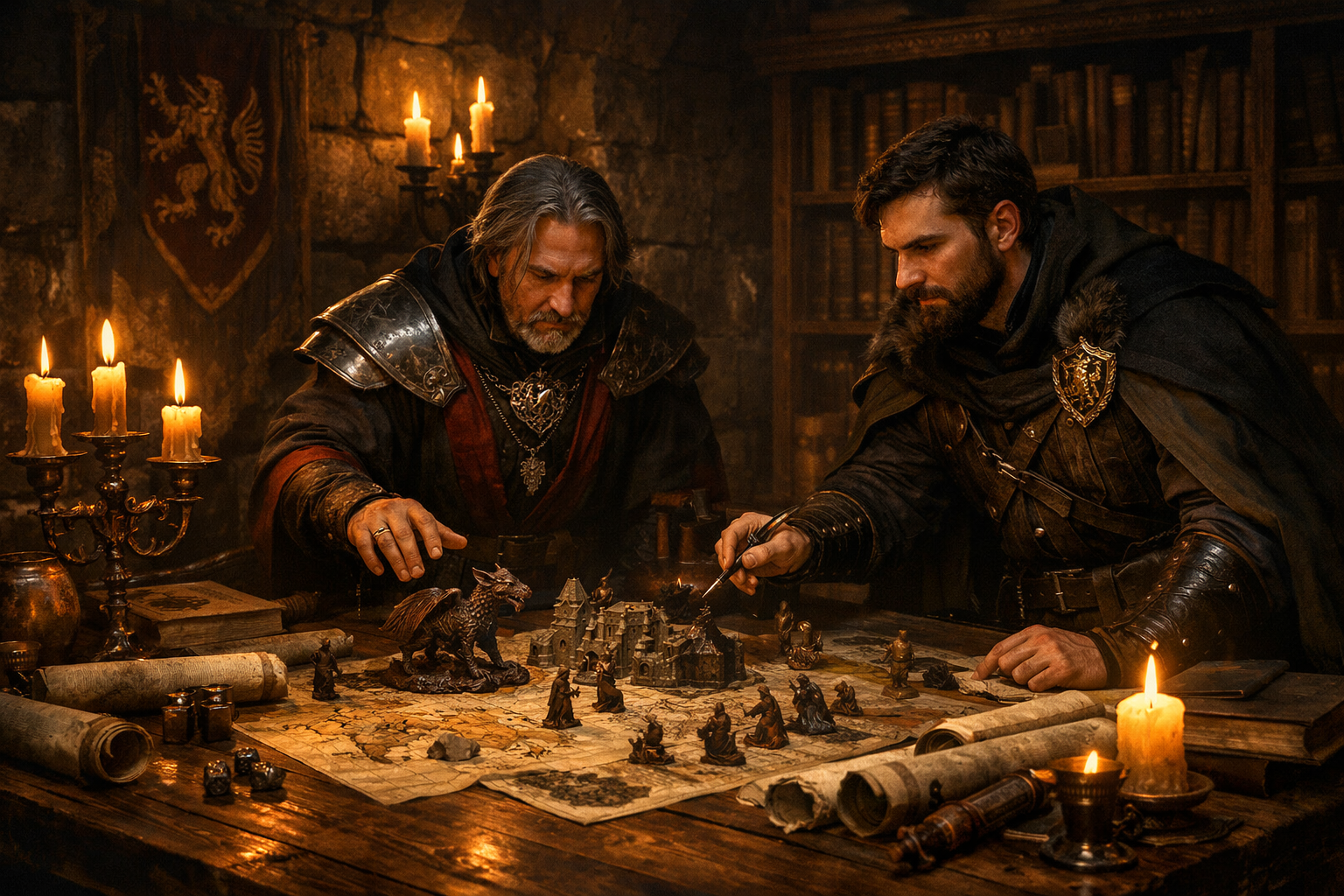
Dungeon Masters can run campaigns alone or share responsibilities with a co-DM. Each approach offers distinct advantages for preparation, storytelling, and table management.
Most tabletop RPG tables operate with a single Dungeon Master guiding the campaign, but co-DMing (sharing Game Master responsibilities between two or more people) has gained recognition as a viable alternative. Each approach offers distinct advantages and challenges depending on your campaign goals, table dynamics, and available preparation time.
Understanding the practical differences between solo and collaborative DMing helps you choose the structure that best serves your players and your creative workflow.
What Solo DMing Means in Practice
A solo Dungeon Master assumes complete responsibility for world-building, rules arbitration, NPC portrayal, encounter design, and session pacing. This traditional model places one person at the center of campaign preparation and execution.
Advantages of Running Solo
Solo DMing offers creative autonomy and narrative consistency. You control every story thread, maintain a unified creative vision, and make immediate decisions without negotiation. Your players interact with a single storytelling voice, which can strengthen immersion when portraying complex NPCs or managing dramatic reveals.
Preparation happens on your schedule. You decide what to develop in detail and what to improvise, adjusting your prep workload to match your available time without coordinating with another DM.
Consider a Dungeon Master running a political intrigue campaign where the party investigates corruption in a merchant guild. As the sole DM, you track every NPC relationship, every faction motive, and every clue the players uncover. When they pursue an unexpected lead, you improvise consequences that align with your established world logic without pausing to consult another DM.
Challenges of the Solo Approach
Solo DMing concentrates all preparation and performance demands on one person. Between sessions, you handle encounter design, map creation, NPC development, rules research, and story planning. During sessions, you simultaneously track initiative, adjudicate rules, portray multiple characters, describe environments, and respond to player choices.
This workload can lead to burnout, particularly in long campaigns or during busy life periods. If you become unavailable due to illness or scheduling conflicts, the entire game stops.
Solo DMs also lack real-time creative collaboration. When you face a challenging rules question or need to improvise a complex scenario, you resolve it alone. Some DMs thrive under this pressure; others find it isolating.
How Co-DMing Partnerships Function
Co-DMing distributes Game Master responsibilities between two people who share world-building, rules arbitration, and session management. Unlike guest DMs who run occasional sessions, co-DMs actively collaborate throughout the campaign.
Common Co-DM Models
Most co-DM partnerships adopt one of several structural approaches. In the divided responsibility model, each DM claims specific domains: one might handle combat encounters and dungeon design while the other manages social interactions and political storylines. Players know which DM to address for different situations.
The alternating session model assigns each DM complete control during their scheduled sessions, with both contributing to overarching story planning. This approach works well when both DMs have strong but different creative styles.
The simultaneous facilitation model places both DMs at the table during every session, with one typically taking lead while the other provides support, portrays secondary NPCs, or manages tactical elements. Responsibilities shift organically based on scene requirements.
In our merchant guild investigation scenario, co-DMs might divide work by having one DM develop the guild's internal politics and legitimate business operations while the other designs the criminal network behind the corruption. During sessions, one portrays guild leadership while the other handles street-level contacts and combat encounters.
Advantages of Shared DMing
Co-DMing distributes preparation workload, allowing both DMs to invest time in areas matching their strengths and interests. If one DM excels at tactical encounter design while the other enjoys developing NPC personalities, each can focus their preparation accordingly.
During sessions, co-DMs provide mutual support. When one struggles with a complex rules interaction or needs time to consider consequences of an unexpected player choice, the other maintains momentum by describing environments, handling secondary NPCs, or engaging players in character-focused roleplay.
The collaborative dynamic also enriches creative development. Discussing story directions, debating NPC motivations, and brainstorming solutions to player choices generates ideas neither DM might develop alone. This creative partnership can prevent stagnation in long campaigns.
Co-DMing offers continuity advantages as well. If one DM faces scheduling conflicts or personal emergencies, the other can run solo sessions without canceling the game.
Challenges of Partnership DMing
Co-DMing requires significant coordination. Both DMs must align on tone, house rules, mechanical interpretations, and narrative direction before introducing content to players. What one DM considers an appropriate challenge might feel unfair to the other, requiring negotiation.
Scheduling becomes more complex when coordinating three or more people (both DMs plus players). Finding session times that accommodate everyone can prove difficult.
Some co-DM partnerships struggle with inconsistent rulings or tonal shifts. If one DM runs lighthearted sessions while the other prefers gritty realism, players experience dissonance that undermines immersion. Clear communication about campaign tone and mechanical standards becomes essential.
Player confusion can emerge when DM responsibilities overlap. If both DMs answer rules questions during the same scene with different interpretations, players feel uncertain about how mechanics function. Establishing clear domains or a primary arbitrator prevents this issue.
Factors That Influence Which Approach Works Better
Campaign Scope and Complexity
Large-scale campaigns with multiple simultaneous storylines, extensive world-building, or intricate political systems benefit from shared preparation workload. If your campaign features several player factions pursuing different goals across a continent, co-DMing distributes the preparation required to make each storyline compelling.
Focused campaigns with clear narrative throughlines and limited geographic scope work well with solo DMing. If your entire campaign takes place in a single city with one central mystery, a solo DM can maintain tight narrative control without overwhelming preparation demands.
Table Size and Player Experience
Larger tables (six or more players) benefit from co-DMing's additional attention capacity. While one DM manages combat initiative and monster tactics, the other can engage quieter players, handle side conversations, or prepare upcoming encounters. Solo DMing large groups often results in some players feeling overlooked.
Smaller tables (three to five players) rarely need multiple DMs for attention management, making solo DMing more straightforward. However, co-DMing still offers preparation relief even at smaller tables.
DM Availability and Energy
If you have limited preparation time or manage demanding work schedules, co-DMing distributes the workload that might otherwise lead to burnout or inconsistent session quality. Two people each investing four hours of prep often produce better results than one person forcing eight hours alone.
DMs with flexible schedules and strong improvisational skills may find solo DMing more efficient, eliminating coordination overhead while maintaining creative control.
Creative Compatibility
Successful co-DMing requires compatible creative visions and communication styles. If you and a potential co-DM share similar preferences for tone, pacing, and player agency, collaboration enhances both DMs' work. Mismatched visions create friction that undermines session quality.
Solo DMing avoids creative compromise entirely. Your vision drives every decision without negotiation or adjustment for another DM's preferences.
Practical Considerations for Implementing Either Approach
Making Solo DMing Sustainable
Solo DMs benefit from sustainable preparation habits. Use published adventures or setting sourcebooks to reduce world-building workload. Develop reusable NPC templates, encounter frameworks, and location descriptions that adapt to multiple situations.
Build buffer sessions into your campaign schedule. If you prepare three sessions ahead, temporary life disruptions don't force immediate cancellations. Consider planning natural campaign breaks (between story arcs or after major narrative beats) where missing one session causes minimal disruption.
Tools like initiative trackers, random tables, and digital campaign managers reduce mental load during sessions. The Dungeon Trainer offers organizational features and optional AI assistance that help solo DMs manage complex campaigns without additional human support.
Establishing Effective Co-DM Partnerships
Before launching a co-DMed campaign, discuss tone expectations, house rules, and mechanical interpretations with your partner. Document your agreements about how to handle common situations: death saves, critical hit tables, skill check difficulty classes, and social encounter resolution.
Define clear communication channels for between-session planning. Whether through shared documents, regular video calls, or messaging apps, establish how you'll coordinate preparation and share information about player choices or story developments.
Agree on a final authority structure for rules disputes during sessions. Either designate one DM as primary arbitrator or commit to deferring all mid-session rules debates until after the game, using the simplest reasonable interpretation to maintain momentum.
Schedule regular co-DM check-ins separate from game sessions. Discuss what's working, what needs adjustment, and where each DM feels supported or overwhelmed. These conversations prevent small frustrations from becoming partnership-breaking problems.
Can You Switch Between Approaches?
Many campaigns start with one approach and evolve based on practical experience. A solo DM facing burnout might invite a trusted player or friend to co-DM specific story arcs. Co-DM partnerships sometimes transition to alternating campaigns where each runs solo games on different schedules.
When transitioning mid-campaign, communicate clearly with players about how the change affects game structure. If introducing a co-DM to an established campaign, have them join as a world-building collaborator first (developing regions, factions, or NPCs the party hasn't encountered) before sharing active session management.
Transitioning from co-DMing to solo running requires absorbing or concluding your former partner's storylines. Either wrap up their narrative threads before the transition or discuss how to integrate their planned developments into your solo vision.
Special Cases and Hybrid Approaches
Rotating DM Campaigns
Some groups rotate the DM role across multiple short campaigns, with each person running three to six sessions before passing to the next DM. This differs from co-DMing because each campaign stands alone rather than collaborating on a continuous story. Rotating DMing prevents burnout while letting everyone experience both sides of the screen.
Guest DMs and One-Shot Integration
Inviting guest DMs to run occasional standalone sessions or side quests within your campaign provides creative refreshment without full co-DMing commitment. The primary DM maintains overall campaign control while guest DMs explore specific scenarios, locations, or timeframes.
DM and Narrator Splits
Some experimental tables separate mechanical adjudication (the DM handling rules, combat, and dice resolution) from narrative description (a narrator who describes environments, portrays NPCs, and delivers story information). This highly specialized approach works for tables prioritizing specific creative dynamics but requires exceptional coordination.
Making Your Decision
Choose solo DMing when you value creative autonomy, have sustainable preparation capacity, and run focused campaigns for smaller tables. This approach offers complete narrative control and eliminates coordination overhead.
Choose co-DMing when you want to share preparation workload, have a compatible creative partner, or run complex campaigns with multiple simultaneous storylines. The collaboration enriches your creative work and provides continuity insurance.
Neither approach is inherently superior. The best choice depends on your specific circumstances, available partners, campaign scope, and personal DM style. Many experienced Dungeon Masters try both approaches across different campaigns, applying lessons from each to improve their overall craft.
The goal isn't finding the objectively best structure but identifying what helps you run engaging, sustainable games for your specific table. Whether you run solo or collaborate with a partner, focus on what keeps both you and your players excited to return session after session.
Sources and Further Reading
Colville, Matthew. Running the Game video series, MCDM Productions. Extensive discussion of DM workload management and campaign preparation strategies.
Crawford, Jeremy, et al. Dungeon Master's Guide, Wizards of the Coast, 2014. Official guidance on running D&D campaigns, applicable to various DM structures.
The Alexandrian (Justin Alexander). Blog series on campaign management, particularly "The Art of Pacing" and preparation techniques for sustainable DMing.
Sly Flourish (Mike Shea). Return of the Lazy Dungeon Master, SlyFlourish.com, 2018. Practical frameworks for reducing prep workload in solo DMing.
Reddit communities: r/DMAcademy and r/DnDBehindTheScreen. Active discussions of co-DMing experiences, challenges, and practical implementation strategies.
Related reading
- Learning from Your First Campaign: A Dungeon Master Case Study
Every Dungeon Master's first campaign teaches invaluable lessons. This case study examines what one DM learned from their opening arc, from preparation mistakes to unexpected player choices, and how those insights improve future sessions.
- Dungeon Master vs Game Master: Understanding the Difference
The terms Dungeon Master and Game Master often appear interchangeable, but understanding their distinctions helps you navigate the tabletop RPG community with confidence.
- Essential Dungeon Master Tools: What You Actually Need at the Table
From dice and screens to digital helpers and reference cards, these are the tools that make running sessions smoother and more enjoyable for everyone.