Reclaiming a Stalled Dungeon: Practical Recovery Techniques
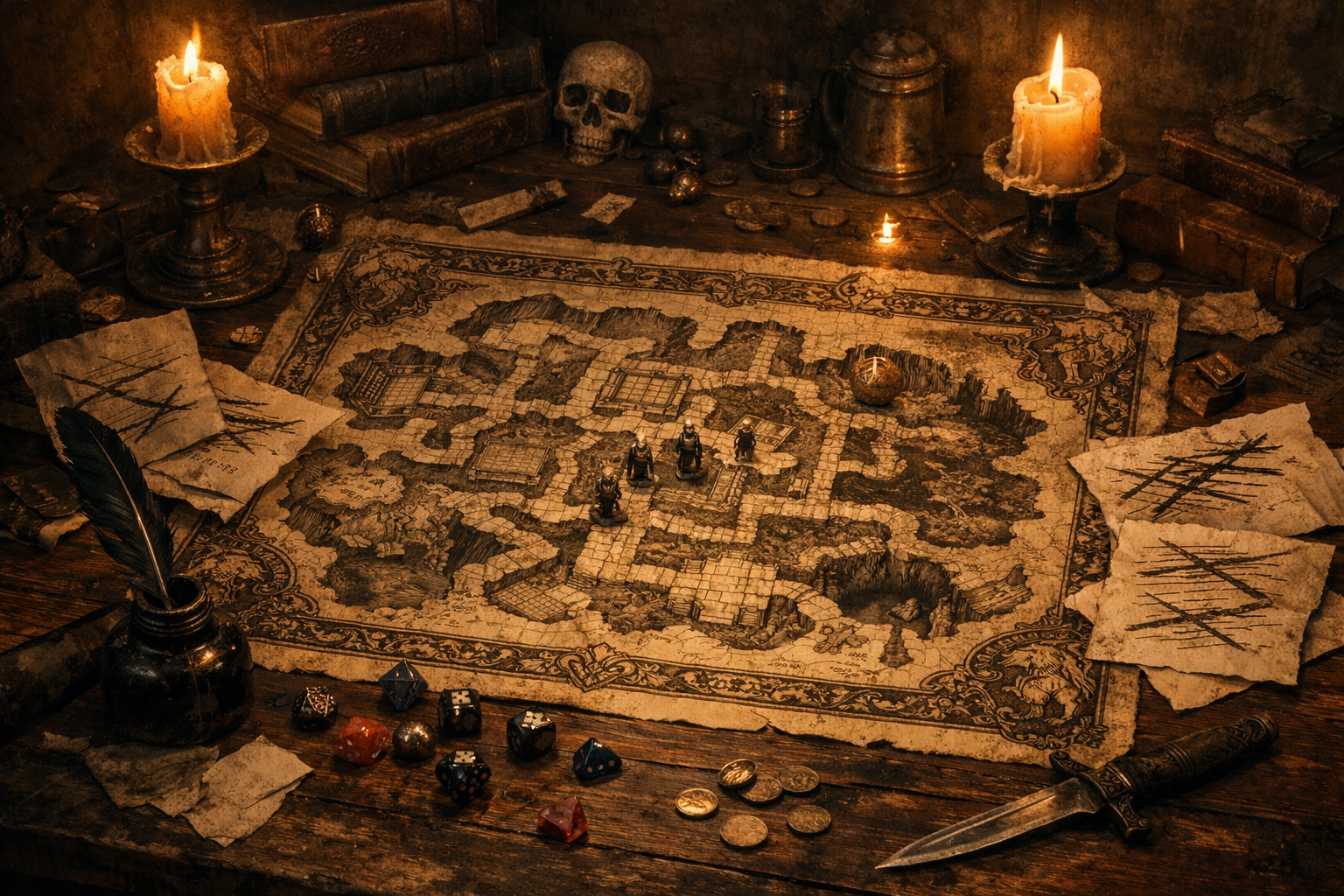
When dungeon exploration grinds to a halt, specific recovery techniques can restore momentum and re-engage your players. Learn practical methods to salvage stalled sessions and rebuild excitement.
Many game masters eventually face a session where dungeon exploration grinds to a halt. Players check their phones, conversations drift to unrelated subjects, and meaningful progress slows to a crawl. Rather than immediately abandoning the dungeon or forcing the group toward an unsatisfying conclusion, targeted recovery techniques can restore momentum and rebuild interest.
This guide provides practical methods for diagnosing why a dungeon has stalled and offers concrete steps for improving player engagement during the same session or between game nights.
Understanding Why Dungeons Stall
Before applying a recovery technique, identify the likely cause of the problem. For this guide, stalled dungeons are divided into four useful diagnostic categories. These categories are not exhaustive, and more than one may affect the same session.
Mechanical Gridlock occurs when players become trapped in repetitive combat encounters, trap-checking routines, or resource-management calculations. The game begins to feel like a repeated mechanical procedure rather than an evolving adventure.
Navigation Confusion happens when players lose their mental map of the dungeon, forget why they entered, or cannot determine which direction to explore next. This can create analysis paralysis and repetitive discussions.
Player Fatigue can develop after too many demanding or high-stakes encounters without adequate variation. Players often need discoveries, victories, lower-intensity scenes, or moments of levity to remain engaged over several hours.
Missing Context leaves players uncertain about the stakes, their objectives, or the dungeon's connection to the broader campaign. Without a clear purpose, exploration can begin to feel aimless.
Consider the Ravenstone Catacombs example: midway through the third session exploring these tombs, the players spend twenty minutes debating whether to continue down a corridor or backtrack. They have forgotten why they entered the catacombs, grown tired of similar undead encounters, and lost track of which areas they have already explored.
The party originally entered to recover a stolen relic, but that objective has disappeared beneath several sessions of room-by-room exploration. The dungeon has not stalled because of one isolated problem. Navigation confusion, repetitive encounters, fatigue, and missing context are all contributing to the loss of momentum.
Immediate In-Session Recovery Techniques
When you notice momentum weakening during active play, the following techniques can restore engagement before the session ends.
The Revelation Drop
Introduce a significant discovery that changes how the players understand their previous exploration. This works especially well when the group has lost sight of the dungeon's purpose.
Place a mural, journal, vision, captured enemy, or dying NPC that reveals important information. The discovery might explain the dungeon's original purpose, identify its builder, expose an enemy's plan, or connect the location to a player character's history.
The revelation should not replace player investigation or invalidate earlier decisions. It should give existing clues greater meaning and provide a renewed reason to care about what happens next.
In the Ravenstone Catacombs, the players might discover a fresco showing that the relic they seek is also a key to a sealed vault beneath the complex. Recovering it now matters for more than completing a retrieval assignment.
The Urgent Decision Point
Break analysis paralysis by introducing an event that demands a timely response.
The ceiling begins collapsing in the current chamber. A rival expedition approaches through a nearby corridor. Water starts flooding the lower level and gradually changes which routes remain accessible.
These events can turn an abstract debate into a concrete decision with visible consequences.
Urgency should create meaningful pressure rather than eliminate player agency. Telegraph the danger clearly, preserve more than one reasonable response when possible, and use this technique sparingly. Repeatedly forcing movement through sudden disasters can make players feel railroaded rather than challenged.
The Consolidation Break
Call for a brief in-character pause where the party organizes its discoveries, updates its map, reviews its objective, and discusses its next step while the characters catch their breath.
This technique addresses navigation confusion by giving players explicit permission to examine what they know, what they still need, and which areas remain unexplored.
During the break, answer reasonable clarifying questions about previously described locations or discoveries. Players should not be penalized because several real-world weeks have passed since their characters entered a room only hours earlier.
A consolidation break can remain in character, but it does not have to. When the table needs clarity, a brief out-of-character review is often more effective than forcing all discussion through character dialogue.
The Encounter Pivot
Break mechanical repetition by introducing an encounter that operates differently from the challenges the party has recently faced.
After several combat encounters, present a negotiation, puzzle, investigation, environmental obstacle, or meaningful discovery. After extensive trap-checking, introduce creatures that do not immediately behave as enemies. After several complex puzzles, provide a direct physical challenge with an obvious objective.
In the Ravenstone Catacombs, the party might encounter a ghost who agrees to answer three questions if the characters help recover the name that was removed from her burial marker.
This encounter uses different player skills, changes the pace, and provides information that can accelerate the remaining exploration.
Between-Session Recovery Techniques
When a session ends with the dungeon clearly stalled, use the time before the next gathering to restructure the remaining material.
The Ruthless Edit
Review the remaining dungeon and eliminate, combine, or simplify repetitive content.
If eight remaining rooms contain minor treasure and nearly identical encounters, reduce them to three stronger locations with combined rewards and more varied challenges.
Cutting prepared material can feel wasteful, but preparation does not become valuable merely because it exists. Material that no longer supports player choice, pacing, atmosphere, or the central objective does not need to remain in the adventure.
Useful concepts, enemies, puzzles, and locations can also be saved and adapted for a later session rather than forced into the current dungeon.
The Time Jump
Begin the next session after an assumed period of continued exploration.
You might open with:
"After another hour searching the western catacombs, you clear the remaining burial chambers and reach the sealed vault door. Along the way, you find evidence that another group passed through recently, but the search consumes two of your torches and several healing supplies."
Summarize repetitive exploration and resume play at the next meaningful decision.
A time jump should preserve important costs, risks, information, and consequences. Do not automatically treat skipped encounters as victories or award experience, treasure, or resources unless that outcome fits your game's rules and the events being summarized.
Before using a substantial time jump, make sure the players understand what is being condensed. Ask for any broad approach or precautions that might materially affect the outcome.
This technique works best when the skipped material offers little meaningful choice, uncertainty, or story development.
The Objective Escalation
Introduce a new complication that makes completing the dungeon more urgent or meaningful.
A rival reaches the relic first and attempts to escape. An important NPC becomes endangered. A ritual approaches completion. The dungeon begins an unstable transformation that will permanently alter parts of the complex.
In the Ravenstone Catacombs, the party might learn that the faction that hired them intends to use the recovered relic in a destructive ritual before sunrise.
The original retrieval mission becomes a race with broader consequences.
Escalation should build on existing elements whenever possible. A complication connected to previous clues or established factions feels more credible than a completely unrelated emergency introduced only to force faster play.
The Partial Victory Option
Create an acceptable stopping point that allows the party to leave with a meaningful accomplishment even if it has not completed the original objective.
The characters might recover partial information, rescue one of several captives, secure a valuable secondary treasure, disable part of the enemy's plan, or discover the location of the true objective.
A partial victory gives players the agency to decide that they have accomplished enough to withdraw, regroup, or pursue a different path.
You can present this possibility naturally through NPC dialogue, discovered information, or changing circumstances. You can also discuss it directly with the players when the group is clearly no longer enjoying the dungeon.
An out-of-character conversation does not undermine the fiction. It can prevent the group from feeling trapped by content nobody wants to continue.
Rebuilding Momentum Through Pacing Variation
Recovery often requires deliberate variation in the pace and type of the dungeon's remaining challenges.
The Quick-Win Sequence
After identifying a stall, design the next two or three encounters to offer clear opportunities for progress.
Examples include:
- A puzzle with several visible avenues toward a solution
- Enemies vulnerable to abilities the party has not used recently
- A useful discovery protected by a manageable obstacle
- A social encounter where the players possess meaningful leverage
- A shortcut that rewards earlier exploration or careful mapping
Quick wins should still feel earned. The goal is not to remove uncertainty but to create situations where the party's existing strengths, information, and previous decisions can produce visible results.
Success rebuilds confidence and restores the sense that the characters are making progress.
The Setback-Recovery Pattern
Once momentum returns, use a rhythm of meaningful setbacks followed by opportunities for recovery.
The party triggers a trap that separates two characters, then uses the dungeon's layout and previous discoveries to reunite. A difficult encounter consumes important resources, followed by the discovery of a cache containing specific supplies. A rival temporarily gains an advantage, but leaves behind information that exposes its destination.
A setback should change the situation rather than merely delay the players. Recovery should result from decisions, preparation, or earned discoveries rather than appearing automatically.
This creates a satisfying rhythm of tension and release.
The Environmental Storytelling Boost
Replace some planned encounters with discoveries that advance the players' understanding without requiring extensive mechanical resolution.
Examples include:
- Fallen adventurers whose equipment reveals dangers ahead
- Architecture that communicates the builders' culture, fears, or values
- Damaged defenses showing how another faction entered the dungeon
- Natural formations that create memorable landmarks
- Abandoned supplies indicating that an enemy intends to return
- Changes in temperature, sound, or air quality that reveal proximity to another area
These moments provide variety and lower-intensity intervals between demanding encounters. They also help the dungeon feel like a coherent place rather than a sequence of unrelated rooms.
Communication Strategies for Recovery
Sometimes the most effective recovery technique is direct communication with the players.
The Meta Check-In
During a break or after the session, ask what is working and what feels slow.
Frame the conversation as collaborative problem-solving rather than a defense of your preparation.
Useful questions include:
- "Are you enjoying the detailed exploration, or would you prefer to reach the objective more quickly?"
- "Which parts of tonight's session held your attention?"
- "Are you clear about the party's current objective?"
- "Would a shared map or written summary help?"
- "Do you want more combat, fewer combats, or different encounter types?"
Listen for specific problems rather than treating general dissatisfaction as a personal criticism.
The Expectation Reset
A dungeon can feel stalled when the game master's expected scope differs from the players' expectations.
If players expect a one-session delve but the prepared dungeon requires three or four sessions, the mismatch can produce frustration even when the content itself is strong.
Communicate the likely scope honestly:
"This is a larger dungeon that will probably take another two sessions. It contains several major campaign revelations, but I can streamline some of the secondary areas if the group would rather move faster."
This gives players an informed understanding of what lies ahead and an opportunity to shape the pace.
Collaborative Mapping
Invite players to help map the dungeon on a shared whiteboard, sheet of paper, or digital tool.
Collaborative mapping distributes responsibility, keeps players engaged between encounters, and creates a persistent record of the party's progress.
A shared map can reduce the confusion that stalls exploration, but it will not solve every navigation problem. Clearly distinguish between what the characters know, what the players remember, and which routes remain uncertain.
The goal is not perfect cartographic accuracy. The goal is to preserve enough spatial information for players to make meaningful choices.
Preventing Future Stalls
Although this guide focuses on recovery, each technique also suggests prevention strategies.
Design dungeons with varied encounter types from the beginning. Include natural checkpoints, opportunities for discovery, shifts in intensity, and moments when the party can reassess its progress.
Create clear objectives and reinforce them through clues, NPCs, environmental details, and visible consequences.
Prepare flexible material that can be adapted, relocated, condensed, or omitted depending on player choices and engagement. Focus preparation on the locations, characters, threats, and information most likely to improve the next session.
Most importantly, watch the players rather than focusing exclusively on your notes. Their energy, questions, conversations, and decision-making pace provide important information about whether the session needs an adjustment.
When to Abandon Rather Than Recover
Some stalled dungeons should not be recovered.
If the players actively dislike the dungeon's central concept, repeated recovery techniques may feel like attempts to force them through content they want to leave behind.
If the dungeon no longer supports the campaign's direction, completing every prepared room may consume time that would be better spent elsewhere.
Abandoning or restructuring a dungeon is not automatically a failure.
Provide an off-ramp that preserves campaign continuity and meaningful player choice. The party might discover that the original objective was moved, negotiate for the information it needs, escape through an alternate route, or learn that a more urgent problem requires its attention elsewhere.
Avoid using a collapse, magical barrier, or sudden external event solely to erase choices without warning. When the dungeon closes or changes, the development should follow from the fiction and leave the players with meaningful consequences or new options.
In the Ravenstone Catacombs, the party might find evidence that the relic was removed days earlier and taken to a ruined observatory. The characters can leave without clearing the remaining tombs while carrying information that advances the campaign.
Implementation Framework
When you recognize a stalled dungeon, use the following framework:
- Identify the most likely cause, such as mechanical gridlock, navigation confusion, player fatigue, missing context, or another issue identified by the group.
- Choose an immediate recovery technique if the session is still underway, or a between-session technique if the session has ended.
- Adjust the pacing and encounter variety of the remaining content.
- Apply the chosen technique while monitoring player response.
- Continue, revise, or replace the technique based on whether engagement improves.
- Discuss an alternate route or abandonment option if recovery attempts do not solve the problem.
This structure helps prevent impulsive decisions that could worsen the stall or remove meaningful player choices.
Conclusion
Stalled dungeons are often recoverable through accurate diagnosis and targeted intervention. The techniques in this guide provide tools for restoring momentum, whether you need an immediate in-session adjustment or have time to restructure the dungeon between sessions.
The goal is not perfect preparation. The goal is responsiveness.
By observing your players, varying the pace, maintaining clear objectives, and remaining willing to change prepared material, you can turn a stalled dungeon into a more focused and memorable adventure.
Review your current dungeon and identify one location where momentum could weaken. Choose a recovery technique that addresses that specific risk and prepare it as a contingency for your next session.
Ready to keep your adventures moving? Sign up for The Dungeon Trainer newsletter for practical guidance on dungeon design, session pacing, and running memorable tabletop adventures.
Sources and Further Reading
- Alexander, J. (2010, May 27). Node-based scenario design: Part 1, the plotted approach. The Alexandrian.
- The Angry GM. (2016, March 23). Keeping pace. The Angry GM.
- The Angry GM. (2025, July 31). When to stop narrating. The Angry GM.
- Shea, M. E. (2018). Return of the Lazy Dungeon Master. Sly Flourish.
- Wizards of the Coast. (2014). Dungeon Master's Guide (5th ed.), Chapter 3: Creating Adventures and Chapter 5: Adventure Environments.
This work includes material from the System Reference Document 5.2.1 (“SRD 5.2.1”) by Wizards of the Coast LLC, available at https://www.dndbeyond.com/srd. The SRD 5.2.1 is licensed under the Creative Commons Attribution 4.0 International License, available at https://creativecommons.org/licenses/by/4.0/legalcode.
Related reading
- Why Megadungeons Succeed or Fail: Lessons from Forty Years of Play
Megadungeons have persisted since the earliest days of tabletop roleplaying, yet many campaigns abandon them within a few sessions. Learn what structural, pacing, and preparation factors separate sustainable megadungeons from those that collapse, and how to apply those lessons at your own table.
- Understanding the Megadungeon: What It Is and When to Use It
A megadungeon is more than a big dungeon. Learn what defines this sprawling adventure structure, why it persists across decades of play, and when it serves your table better than episodic adventures.
- What I Learned Running My First Dungeon Crawl: A Game Master Reflection
A candid reflection on lessons learned from running a first dungeon crawl, including what worked, what failed, and how these insights improved future sessions.