Pacing and Flow: Designing Dungeon Sequences That Keep Players Engaged
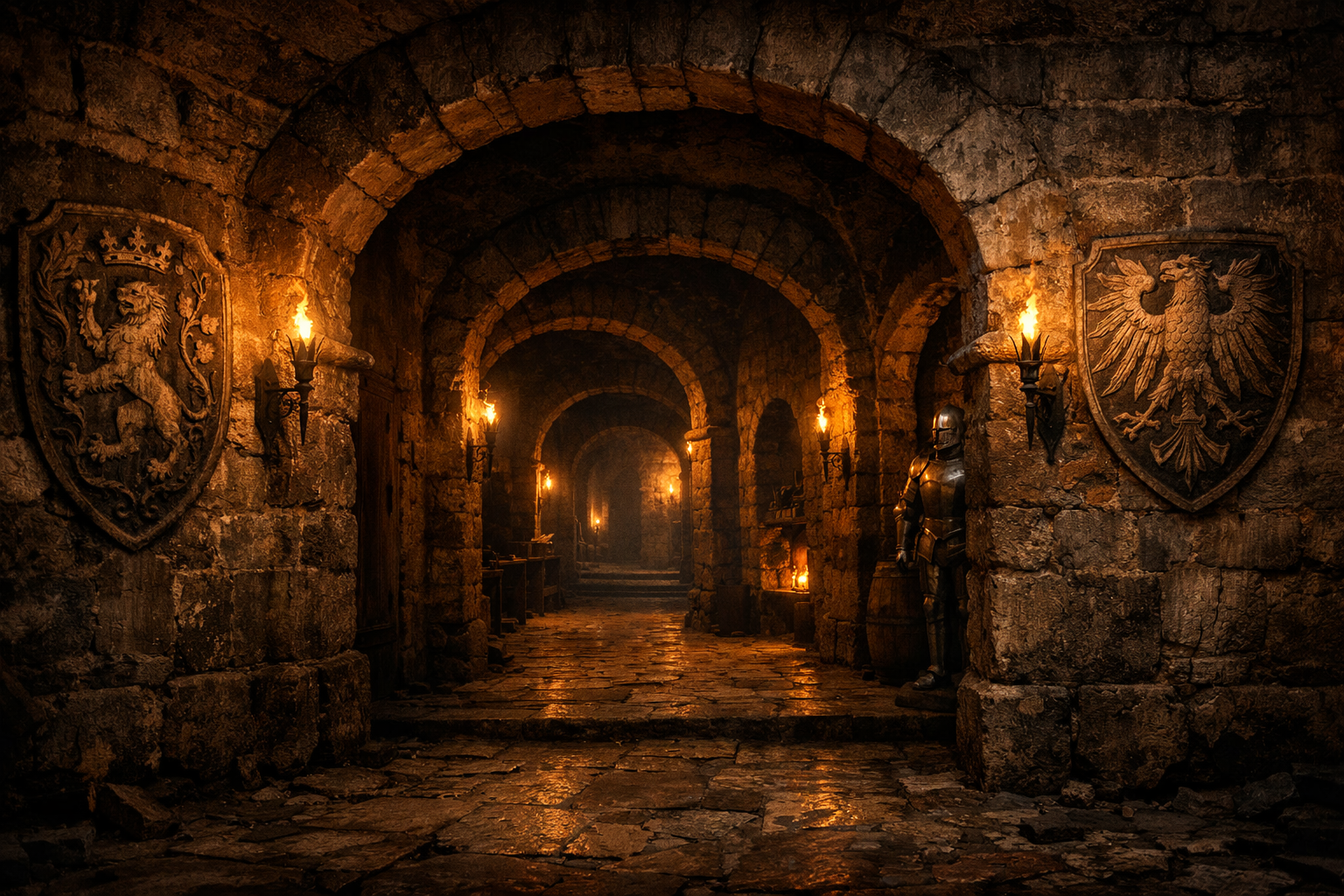
Dungeon pacing controls tension, energy, and player satisfaction throughout your adventure. Master the rhythm of encounters, rest, and discovery to create engaging underground experiences.
A dungeon can contain excellent monsters, memorable rooms, clever puzzles, and meaningful discoveries and still feel slow at the table.
The missing ingredient may be pacing.
Pacing is not simply how quickly the party moves through rooms. It is the changing speed, pressure, attention, information, and decision-making that players experience during play.
Sometimes a room deserves twenty minutes because the players are fascinated by what they found.
Sometimes three prepared chambers should take thirty seconds to summarize because nothing meaningful remains to decide.
Sometimes a combat that looked like the centerpiece of the evening ends immediately because the players found a brilliant way around it.
Good pacing is therefore less about forcing the dungeon through a predetermined rhythm and more about recognizing where meaningful play is happening.
The practical question is:
When should we stay here, and when should we move forward?
That makes pacing an active Game Master skill rather than something solved entirely during dungeon design.
For broader guidance about arranging rooms and managing pressure across the dungeon itself, see Room Purpose and Pacing in Dungeon Design.
Pacing Is Not the Same as Speed
Fast play is not automatically well-paced play.
Slow play is not automatically badly paced.
Imagine two scenes.
In the first, the party spends forty minutes questioning a captured cultist. Everyone is engaged. Players compare evidence, test the cultist's story, argue about whether to trust them, and finally make a difficult decision about an alliance.
That scene is long.
It may still be perfectly paced.
In the second, the party spends ten minutes crossing an empty corridor because every five feet generates another description, check, clarification, and repeated question.
That scene is shorter.
It may feel much slower.
Pacing depends on whether the time being spent is producing something the table values.
That might be tension, discovery, decision-making, roleplay, tactical play, humor, character development, or anticipation.
When none of those are developing, the scene may be ready to move.
Think in Terms of Meaningful Questions
A useful way to evaluate dungeon pacing is to ask what question the current situation is answering.
For example:
Can the party cross the collapsing bridge?
Will the goblins reveal the hidden route?
Can the characters open the vault before the patrol returns?
Do they risk continuing with limited resources?
What caused the destruction in this chamber?
As long as the answer remains uncertain and players are actively engaging with it, the scene has purpose.
Once the answer becomes obvious, settled, or irrelevant, continuing to play every detail can slow the session.
Suppose the party has defeated every hostile creature on one dungeon level, opened the important doors, and decided to return to the entrance.
If nothing meaningful has changed along the route, you probably do not need to narrate every corridor again.
You can say:
"You retrace your route through the cleared level and reach the entrance without further trouble."
That is not skipping the game.
It is skipping material that no longer contains an interesting question.
Dungeon Pacing Emerges From Different Kinds of Decisions
Combat, exploration, puzzles, social interaction, navigation, resource choices, and discovery all ask players to think differently.
Changing the kind of decision can refresh attention.
That does not mean a well-paced dungeon must rotate through encounter categories mechanically.
A fortress under assault might contain several combats close together.
A ruined archive might contain extended exploration with no combat at all.
An underground settlement might spend most of a session on negotiation.
The important question is whether the current sequence continues producing distinct and meaningful decisions.
Three combats in a row can work if each one asks something different.
One might involve holding a gate.
Another might be an ambush during a retreat.
The third might require preventing an enemy from reaching an alarm.
The category remains combat, but the decisions change.
Conversely, three technically different encounters can still feel repetitive if each ultimately asks:
"Make the obvious check and continue."
Variety matters more at the level of decisions than labels.
The Blackwater Catacombs
Consider an example dungeon: the Blackwater Catacombs beneath an abandoned temple.
The party enters because recent disturbances suggest something has awakened below.
The Dungeon Master has prepared skeletal guardians, burial chambers, a trapped passage, a ruined shrine, branching tombs, and a powerful guardian near the deepest crypt.
On paper, that sounds like a sequence.
At the table, however, players determine its actual rhythm.
They may avoid the skeletons.
They may spend much longer investigating the burial chamber than expected.
They might discover a shortcut.
They might retreat before reaching the guardian.
They might approach the final creature socially instead of fighting it.
The map provides structure.
It does not provide a guaranteed pace.
Start With Enough Momentum to Create a Decision
Dungeon sessions generally benefit from reaching meaningful play quickly.
That does not require starting every game with combat.
Suppose last session ended outside the catacombs.
A weak restart might spend twenty minutes revisiting information everyone already remembers.
A stronger restart could be:
"You stand before the opened crypt stair. Cold air rises from below, carrying the smell of wet stone. Someone has disturbed the dust since you were here yesterday. Fresh tracks lead down. What do you do?"
The scene establishes where the characters are, what changed, and what decision is available.
If the last session ended halfway through a dungeon, restart even closer to the action.
"The scratching behind the northern door has stopped. From the corridor behind you, torchlight suddenly appears."
Players immediately have something to respond to.
Mike Shea's strong-start approach is useful here. The beginning should give the session momentum without requiring the rest of the session to follow a script.
Know When Exploration Is Producing Play
Dungeon exploration often requires careful attention.
Players may inspect architecture, compare routes, search for evidence, listen at doors, study tracks, manipulate mechanisms, and build a mental model of the location.
That should not automatically be accelerated.
If the players are actively forming theories and using information, exploration is doing its job.
The problem appears when procedure continues after meaningful uncertainty disappears.
Imagine the party enters an ordinary abandoned dormitory.
You describe broken beds, a cracked washbasin, dust, and two exits.
They search it.
There is nothing concealed.
If the characters have the time and appropriate circumstances, you can resolve that efficiently.
You do not need to manufacture another obstacle simply because the room seemed too quick.
Some rooms should be quick.
Contrast gives important rooms more weight.
Use Description to Support Pace
The current D&D rules emphasize giving players enough information to understand the situation and their options.
That is also good pacing advice.
Describe what matters first.
Additional details can emerge through interaction.
Instead of delivering a long architectural inventory:
"This rectangular chamber is forty feet north to south and thirty feet east to west. There are six pillars, eight statues, four tapestries, two benches..."
focus attention:
"Six stone pillars divide the chamber. Every statue between them faces the sealed northern door, except one whose head has been turned toward the western wall."
Now players know what is visually important.
If they inspect the tapestries later, describe them then.
This is not withholding the room.
It is controlling information density.
Information Flow Controls Tension
Pacing is partly the rate at which players learn what is happening.
Reveal everything immediately and mystery disappears.
Reveal too little and players cannot make informed decisions.
Good information flow gives the party enough to act while preserving questions worth investigating.
In Blackwater, the characters might first discover that graves were recently opened.
Later they find inscriptions identifying the dead as servants of an ancient funerary order.
Farther inside, warnings indicate that the order was guarding something rather than worshiping it.
By the time the party reaches the deepest crypt, they may understand that the supposed "tomb guardian" was actually a jailer.
Each revelation changes the meaning of what came before.
That creates forward momentum without requiring another fight.
Foreshadowing Works Best When It Can Affect Decisions
Foreshadowing is more useful in a dungeon when it gives players information they can act upon.
Suppose they find enormous claw marks.
That may simply create dread.
Add a shattered stone door that appears to have been struck from the inside, and players might begin planning for a physically powerful creature.
Later they find a chamber deliberately narrowed with old barricades.
Now they can infer that previous inhabitants were trying to control its movement.
The foreshadowing has become tactical information.
Players may change spells, choose another route, build a trap, or retreat.
Anticipation becomes gameplay.
Resting Is Part of Dungeon Pacing
Rest mechanics have a major effect on how current D&D feels.
Under the current rules, a Short Rest is a 1-hour period of downtime. A Long Rest lasts at least 8 hours, and characters must wait at least 16 hours after finishing a Long Rest before beginning another.
The Dungeon Master does not normally declare:
"This is a Short Rest room."
The players decide whether they want to attempt to rest.
The environment determines whether that is practical.
A cleared chamber with a sturdy door may look promising.
The party might barricade it and spend an hour recovering.
Whether that works depends on what else is happening.
Are enemies searching for them?
Is something hunting through the catacombs?
Is the door actually secure?
Does the party have an urgent objective?
A rest is therefore both a mechanical recovery choice and a pacing decision.
Do Not Treat Rest as a Scripted Reward
The original Blackwater example assumed the party would reach a specially placed shrine, take a Short Rest, and then proceed toward the climax.
Players may do something completely different.
They might rest earlier.
They might never rest.
They might barricade the shrine and attempt a Long Rest.
They might leave the dungeon entirely.
They might decide that spending an hour is too dangerous.
Prepare the environment rather than the expected rest schedule.
For example:
The ruined shrine has one heavy stone door and no visible secondary entrance. The old consecration has no generic rules effect on undead, but the chamber is structurally intact and easier to secure than the surrounding corridors.
Now the players decide what to do with that information.
If this specific shrine has a magical effect that prevents certain creatures from entering, establish that as an actual property of the location rather than assuming all consecrated ground works that way.
Long Rests Need Consequences Only When the Fiction Supports Them
An eight-hour Long Rest is a major passage of time.
Sometimes that matters.
Enemies might reorganize.
A ritual might advance.
A prisoner may be moved.
A rival group could explore more of the dungeon.
Sometimes none of those things happen.
Do not invent punishment merely because the players chose to rest.
Ask:
What would the inhabitants and situation actually do during eight hours?
That is the consequence.
If nothing changes, nothing changes.
If an intelligent faction knows intruders are inside, eight hours may matter enormously.
Resource Pressure Should Create Choices, Not Predetermined Outcomes
Dungeon pacing often interacts with Hit Points, Hit Point Dice, spell slots, consumables, limited-use features, and other resources.
The goal is not to guarantee that the party reaches the final chamber at exactly 30 percent strength.
Players control many of those decisions.
They may conserve resources brilliantly.
They may spend everything early.
They may discover an advantage you did not anticipate.
They may retreat.
That variability is part of play.
Resource pressure becomes interesting when players ask:
"Do we spend this now or save it?"
"Can we handle another encounter?"
"Is continuing worth the risk?"
"Do we lose something important if we leave?"
That is enough.
You do not need to engineer a predetermined depletion curve.
Time Pressure Changes the Meaning of Every Decision
A deadline can dramatically accelerate a dungeon.
Examples include a ritual approaching completion, flooding spreading through lower levels, reinforcements moving toward the dungeon, or an enemy preparing to relocate.
But not every dungeon needs a countdown.
Without explicit time pressure, the dungeon can still change because inhabitants move, resources matter, or retreat has costs.
And sometimes relaxed exploration is exactly the experience the table wants.
The important thing is clarity.
If time matters, give players enough information to reason about it.
"The ritual begins at midnight."
is actionable.
"You feel like you should hurry."
is much less useful unless the characters have some reason to understand the danger.
Use Soft Pressure Carefully
A situation can change over time without having a precise countdown.
Suppose prisoners held in Blackwater are sick.
The characters know their condition is deteriorating but do not know an exact hour when someone will die.
That creates pressure without turning the dungeon into a stopwatch.
Likewise, a faction may gradually reinforce its positions once it realizes intruders are present.
The goal is not to trick players with an invisible deadline.
It is to let the world move.
Navigation Gives Players Control Over Pace
Dungeon structure affects pacing because route choice affects what players encounter and when.
A linear location gives the Dungeon Master more influence over encounter order.
An interconnected dungeon gives players more influence over it.
Neither structure is inherently superior.
A linear crypt may fit a short one-shot.
A sprawling ruined fortress may benefit from loops, shortcuts, alternate entrances, and multiple levels.
The important distinction is that linearity does not guarantee pacing.
Players can still:
Retreat, negotiate, stop to investigate, bypass encounters, rest, or find solutions the Dungeon Master did not anticipate.
Likewise, a branching dungeon does not automatically create better pacing.
Too many indistinguishable routes can produce decision paralysis.
Choices become stronger when players have information that helps differentiate them.
"Three identical corridors leave the room."
offers less useful agency than:
"The western passage contains boot prints. Warm air and forge smoke come from the south. The eastern stairs descend into darkness."
Now route choice reflects information.
Use Shortcuts to Change the Dungeon's Tempo
Shortcuts are powerful pacing tools because they change the cost of movement.
The first trip through Blackwater may require navigating six dangerous areas.
Later, the party discovers a hidden stair connecting the entrance to the lower tombs.
That changes future expeditions.
Returning is faster.
Retreat becomes easier.
The lower dungeon feels closer to safety.
The players earned control over the location's pacing through exploration.
That is more interesting than simply declaring later travel faster because the GM wants to skip content.
Do Not Force Every Prepared Encounter
One of the fastest ways to damage pacing is insisting that everything you prepared must appear.
Suppose the party has already uncovered the crucial information, resolved the faction dispute, and found the route to its objective.
You still have two optional guard encounters written.
You do not need to insert them elsewhere merely because you spent time preparing them.
Save them.
Reuse parts later.
Or discard them.
Preparation is a resource for the Game Master.
It is not an obligation for the players.
The Middle of a Dungeon Needs Development, Not Just More Rooms
The “grinding middle” usually appears when players feel that their understanding, options, or situation have stopped changing.
The problem is not simply being halfway through the map.
A middle section stays engaging when something develops.
Perhaps:
A new faction appears.
An earlier assumption is overturned.
The characters discover a shortcut.
An environmental condition changes.
The dungeon reacts to their presence.
A new objective becomes possible.
A resource or ally changes what they can attempt.
The adventure now feels different from when they entered.
That sense of development is often more important than simply alternating encounter categories.
Change Pressure, Not Just Encounter Type
Suppose Blackwater has several exploration-heavy rooms.
You do not automatically need to insert combat.
You can change pressure while remaining in exploration.
One chamber may be calm archaeological investigation.
The next contains a rapidly flooding passage.
The next presents two routes with incomplete information.
The activity remains exploration, but the emotional and decision-making rhythm changes.
Likewise, social play can shift from a relaxed conversation with a prisoner to a tense negotiation with an armed faction leader.
Pacing is multidimensional.
Do Climax Encounters Have to Be the Hardest Fight?
No.
A climax is the point where the adventure's central tension or question reaches a major resolution.
It might be combat.
It might be negotiation.
It might be escape.
It might be solving a mechanism while everything collapses.
It might be deciding whether to release what the dungeon was built to imprison.
The most important quality is significance, not necessarily numerical difficulty.
The party may also bypass what you expected to become the climax.
If they discovered a way to seal the tomb guardian permanently without fighting it, that may become the climax.
Do not force the boss battle merely because the stat block is prepared.
Avoid False Climaxes by Managing Significance
An earlier encounter can be harder than the final encounter and still work.
The issue is whether the final sequence resolves something important.
Suppose the hardest battle occurs halfway through Blackwater against a powerful gate guardian.
The final chamber contains the ancient entity the guardian was imprisoning.
The party does not fight it.
Instead, they must decide whether to renew its prison, bargain with it, or free it.
The mechanical challenge is smaller.
The narrative and strategic significance is larger.
That can be an excellent climax.
Resolution Does Not Always Need a Quiet Treasure Room
After an intense climax, players often enjoy time to:
Recover, investigate, discuss what happened, gather rewards, resolve NPC relationships, or decide what comes next.
But a dungeon does not always need a decompression chamber.
Sometimes the climax ends with:
"The entire complex begins collapsing."
Now the escape is part of the resolution.
Sometimes the best session ending occurs at the moment the vault opens.
Sometimes you end immediately before the final battle and use it as next session's strong start.
Pacing depends on the table and available time.
Do not force a universal dramatic shape.
Learn to Cut Forward
One of the strongest real-time pacing tools is simply moving to the next meaningful moment.
Suppose the party spends ten minutes discussing whether to search an obviously empty room.
You answer the relevant questions.
They conduct the search.
Nothing else happens.
Move forward.
"After thoroughly checking the chamber, you're confident nothing else is hidden here. Which route do you take next?"
Likewise, if a defeated enemy poses no meaningful threat and surrender is plausible, you do not necessarily need to play several more rounds solely to remove the final Hit Points.
Resolve the fiction appropriately.
The goal is not to accelerate everything.
It is to avoid spending table time after the interesting decision has already been made.
Let Players Linger When They Are Engaged
The opposite mistake is rushing because your notes say another encounter should happen soon.
The players discover a mural.
They become fascinated.
They connect it to clues from six sessions earlier.
They start theorizing.
That is not a pacing problem merely because you expected the room to last five minutes.
If everyone is engaged, the room is working.
Let the game breathe.
Your prepared guardian fight can happen later.
Reading the Table Helps, but Ask Instead of Assuming
Player behavior provides useful clues.
People may become quiet, distracted, repetitive, or indecisive when energy drops.
But body language is not a perfect engagement detector.
Someone may be:
Thinking.
Tired.
Listening.
Dealing with something unrelated.
Enjoying the scene without speaking much.
If you are uncertain, ask.
"Do you want to keep digging into this chamber, or are you ready to move deeper?"
That is often more accurate than guessing what everyone's posture means.
Adjust Content, Not Player Outcomes
Real-time pacing adjustments are useful.
Secretly weakening opposition solely because players made costly earlier decisions can be more problematic.
If a group arrives depleted because it knowingly spent resources, those choices should usually remain meaningful.
Instead of covertly changing the world, consider pacing adjustments such as compressing redundant travel, cutting an optional encounter that has not been established, letting an enemy surrender when that fits its motives, moving exposition into a more useful location, or ending the session before the next major encounter.
If you need to change something already established, preserve internal consistency.
Pacing should support agency rather than erase consequences.
Enemy Behavior Is a Pacing Tool
Not every combat needs to end with every creature dead.
Intelligent enemies may:
Retreat when losing.
Surrender.
Call for help.
Offer information.
Barricade themselves elsewhere.
Flee with an important object.
That behavior can shorten one fight while creating a new situation.
It is also often more believable than creatures fighting to the last Hit Point without a reason.
Dungeon State Creates Natural Flow
A responsive dungeon generates pacing automatically.
After the characters make noise, nearby guards investigate.
After a faction loses its leader, survivors retreat.
After the party opens a floodgate, lower passages change.
After a successful negotiation, one route becomes safe.
The Dungeon Master no longer needs to manufacture an encounter sequence.
Player actions create the sequence.
That is one of the strengths of situation-based dungeon preparation.
A Revised Blackwater Example
Suppose the party enters Blackwater.
The first chamber contains disturbed graves and two skeletal guardians.
The players notice the guardians before approaching.
They decide to bypass them through a side passage.
Already, the planned opening combat is gone.
In the next burial chamber, they spend significant time decoding funerary inscriptions.
They discover that the tomb guardian is actually keeping something imprisoned.
That revelation becomes the session's first major development.
They then enter a trapped passage, but instead of solving the trap directly, they find an alternate route through a collapsed crypt.
Deeper inside, they encounter a frightened grave robber.
Rather than combat, the scene becomes negotiation.
The grave robber reveals that another expedition entered yesterday.
The party now faces a decision.
Continue toward the guardian?
Search for the rival expedition?
Return to investigate the bypassed skeletal chamber?
Attempt a rest?
The actual sequence bears little resemblance to:
Combat → puzzle → trap → rest → boss.
Yet the session may be better because the pacing grew from player decisions.
A Practical Pacing Review
Before running a dungeon, review it once with pacing in mind:
- Start: Is there a meaningful situation the players can engage with relatively quickly?
- Development: Does the dungeon reveal new information, choices, relationships, threats, or routes as play continues?
- Pressure: Where does pressure rise, and why?
- Relief: Are there plausible lower-pressure moments, even if the players create them rather than finding designated safe rooms?
- Rest: What might happen if characters spend 1 hour or 8 hours here?
- Navigation: Can player route choices meaningfully change sequence or risk?
- Redundancy: Is any required progress trapped behind one encounter or solution?
- Climax: What central question or tension could reach resolution, and could players resolve it differently than expected?
- Aftermath: What happens immediately after success, failure, retreat, or negotiation?
- Cuts: Which material could disappear without harming the adventure if table time becomes tight?
The purpose is not to predict the session.
It is to know where you have flexibility.
Pacing Across Multiple Sessions
Large dungeons may take several sessions.
Do not assume each session needs to begin at the entrance and end at a designated checkpoint.
Instead, preserve enough context that the next game can restart cleanly.
Record:
Where the party is.
What they are doing.
What nearby threats know.
What resources matter.
What decision was pending.
A strong ending point might be:
After resolving a major encounter.
At a route decision.
When a new discovery changes the objective.
Immediately before a major confrontation.
Not every session needs complete dramatic closure.
An unresolved question can create an excellent next-session start.
Use Cliffhangers Selectively
Ending with:
"The vault door opens, and something inside says your name."
can create anticipation.
So can:
"Roll Initiative."
But cliffhangers lose impact if every session ends with one.
Sometimes a calm ending is better.
The party reaches safety.
They examine what they recovered.
They discuss what they learned.
They decide what comes next.
Pacing includes knowing when not to manufacture another spike.
Building Pacing Instincts
No checklist replaces experience.
After a dungeon session, ask what actually happened.
Where did the group become deeply engaged?
Where did discussion loop without progress?
Which encounters ended faster than expected?
Which supposedly minor location consumed half the session?
Did players have enough information to make decisions?
Did they feel pressured in ways that were interesting or frustrating?
Would they have preferred more time to explore?
Then adjust.
Pacing is learned through feedback.
Justin Alexander describes RPG pacing as subjective and difficult to reduce to universal rules.
That is useful reassurance.
You are not trying to discover the mathematically perfect encounter sequence.
You are learning when your particular table wants to stay in a moment and when it wants to move.
How The Dungeon Trainer Can Support Dungeon Pacing
The Dungeon Trainer supports fully human-run campaigns as well as optional AI-assisted preparation and play.
Its tools can support pacing without replacing the Game Master's judgment.
Scry
Scry projects plausible ways an upcoming scene might develop and provides complications and preparation notes.
For pacing, that can expose assumptions such as:
"I expect this encounter to lead directly to the lower crypt."
But players might:
Retreat.
Negotiate.
Search for another path.
Rest.
Follow a different clue.
Scry can help identify those branches before play so the Dungeon Master is less dependent on one expected sequence.
It does not predict what players will actually do.
The Coach
The Coach provides self-contained practice situations with rubric-grounded feedback.
Relevant pacing skills include recognizing when a scene has accomplished its purpose, giving players enough information, responding when a scene stalls, handling unexpected decisions, and balancing momentum with player agency.
Those are table skills rather than encounter-generation problems.
Generators
The Dungeon Trainer can generate monsters, characters, NPCs, magic items, spells, and locations.
That can help when players move somewhere you did not expect.
But generated content should not automatically be inserted simply because the session seems slow.
Ask whether the new material follows logically from the dungeon.
Pacing problems are not always solved by adding another encounter.
Sometimes the correct answer is to move forward.
Human-Run Campaign Tools
A human Dungeon Master can retain narration and adjudication authority while the platform manages shared elements such as character sheets, dice, Hit Points, conditions, rests, Initiative, combat rounds, transcripts, and campaign continuity.
AI is optional.
That is particularly relevant to pacing because the Game Master remains the person best positioned to understand the table's actual energy and preferences.
Optional AI Dungeon Master
The Dungeon Trainer also offers an optional AI Dungeon Master for groups that choose it.
That is separate from human-run campaigns.
When a human is running the table, no AI Dungeon Master is required, and AI can remain limited to optional preparation or training roles.
Pacing Is Ultimately About Attention and Choice
A well-paced dungeon is not one where the Game Master perfectly alternates:
Combat.
Puzzle.
Exploration.
Rest.
Boss.
It is one where the session continues presenting meaningful situations at a rhythm the table enjoys.
Sometimes that means slowing down.
Sometimes it means cutting ahead.
Sometimes it means allowing twenty minutes of unexpected investigation.
Sometimes it means discarding two prepared rooms.
Sometimes it means stopping before the climactic battle because that is the best place to end the evening.
The dungeon provides structure.
The table provides the pace.
Conclusion
Dungeon pacing cannot be solved entirely on the map.
You can design pressure, routes, encounters, discoveries, and opportunities for recovery.
But actual pacing emerges when players interact with them.
Focus on meaningful questions.
Give players enough information to make decisions.
Let discoveries change their understanding.
Allow resource choices to matter.
Use deadlines only when the fiction supports them.
Treat rests as player choices taking place inside a living environment.
Skip material that no longer contains meaningful play.
Stay longer when everyone is engaged.
Let player decisions change the dungeon.
And do not force a predetermined climax simply because that is where your notes say the story should peak.
The Blackwater Catacombs may begin with skeletal guardians and end with an ancient tomb guardian.
Or the players may bypass the skeletons, ally with a grave robber, discover what the guardian is protecting, and decide never to fight it at all.
That is not the pacing plan failing.
That is the game becoming something the table actually played.
Good pacing is the skill of recognizing that difference.
Sources and Further Reading
Alexander, J. (2013). The Art of Pacing. The Alexandrian. https://thealexandrian.net/wordpress/31509/roleplaying-games/the-art-of-pacing
Alexander, J. (2023, May 30). Pacing for the Beginning GM. The Alexandrian. https://thealexandrian.net/wordpress/49547/roleplaying-games/pacing-for-the-beginning-gm
Shea, M. E. (2018). Return of the Lazy Dungeon Master. Sly Flourish.
Shea, M. E. (2021, February 15). Manage Rests. Sly Flourish. https://slyflourish.com/handling_rests.html
Shea, M. E. (2022). Improving Pacing. Sly Flourish. https://slyflourish.com/pacing.html
Wizards of the Coast. (2024). Dungeon Master's Guide. Wizards of the Coast.
Wizards of the Coast. (2024). D&D Beyond Basic Rules: Playing the Game. D&D Beyond. https://www.dndbeyond.com/sources/dnd/br-2024/playing-the-game
The Dungeon Trainer. (2026). Room Purpose and Pacing in Dungeon Design. https://thedungeontrainer.com/blog/room-purpose-and-pacing-in-dungeon-design
Related reading
- Five Weeks in the Sunken Archive: Lessons from a Real Dungeon Crawl Campaign
A five-session dungeon crawl through a flooded library taught valuable lessons about pacing, player agency, and adaptive design. Discover what worked, what failed, and how these insights can improve your own adventures.
- Random Dungeon Generation vs. Hand-Crafted Design: Which Approach Works Best?
Random generation offers speed and surprise while hand-crafted dungeons provide narrative control. Compare both approaches to find the right balance for your table and campaign style.
- Essential Dungeon Master Tools: Your Checklist for Running Better Dungeon Adventures
Running smooth dungeon sessions requires the right preparation and resources. This comprehensive toolkit gives you everything you need to manage exploration, combat, and player engagement.