Essential Tools for Managing Combat Speed and Player Engagement
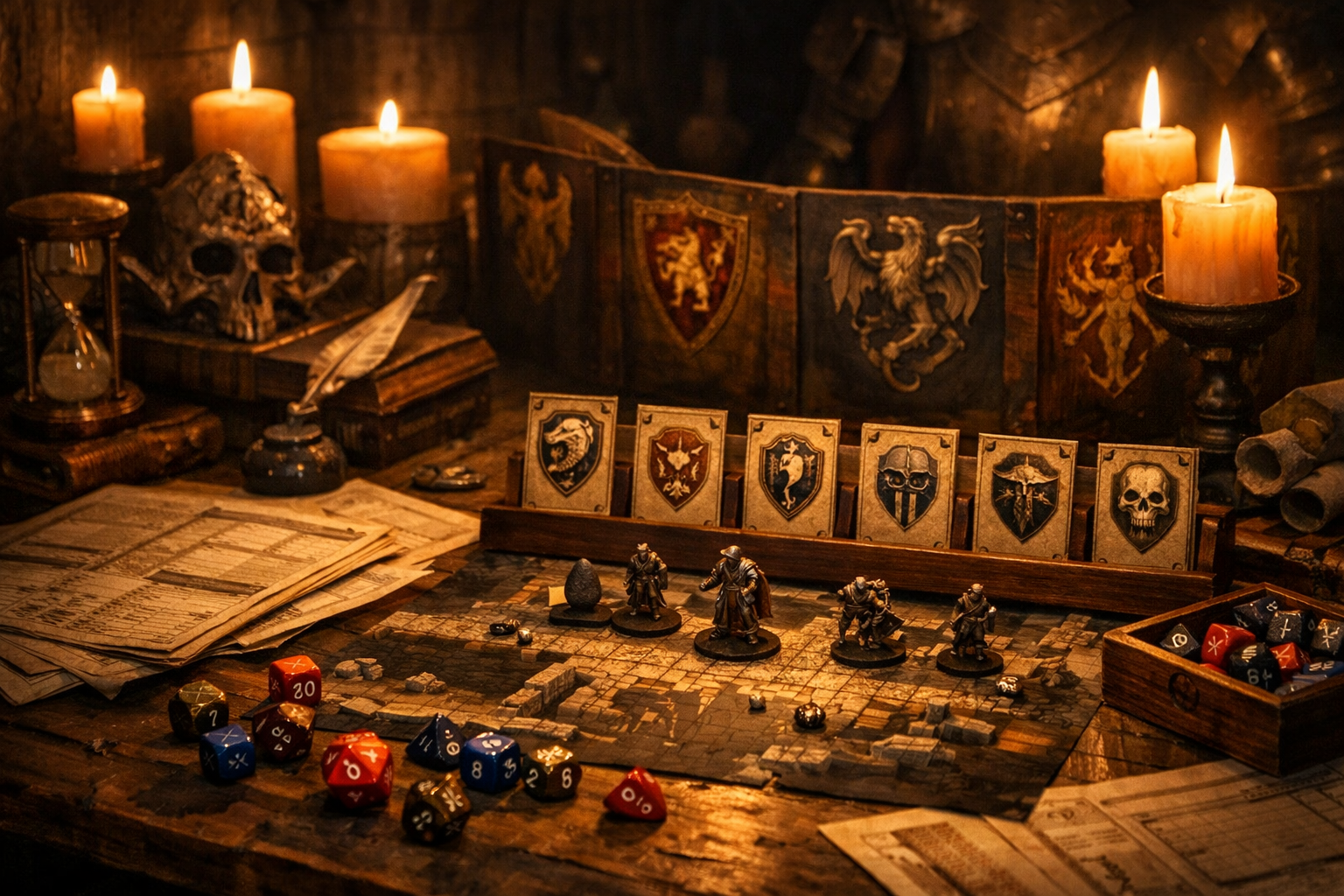
Combat drag slows gameplay and diminishes player engagement. These practical tools help dungeon masters maintain momentum and keep every participant invested at the table.
Combat encounters represent the mechanical centerpiece of many tabletop RPG sessions, yet they frequently become the slowest, most disengaged segments of play. When turns drag on, attention wanes, and what should be dramatic confrontations devolve into tedious arithmetic exercises. Dungeon masters need practical tools to maintain momentum without sacrificing tactical depth or player agency.
This toolkit provides concrete methods for accelerating combat while keeping every participant engaged throughout the encounter.
Understanding Combat Drag
Combat slows when players spend excessive time making decisions, calculating modifiers, searching for information, or waiting for their turn. Each source of delay compounds across multiple participants and rounds.
A party of five players with one action per round creates five decision points before the dungeon master acts. If each player takes three minutes considering options, fifteen minutes pass before enemies respond. Over ten combat rounds, that single inefficiency consumes two and a half hours.
When scouts discover goblin raiders preparing an ambush near the mountain pass, the ensuing battle should feel urgent and dangerous. Instead, lengthy pauses between actions undermine tension while players disengage from the fiction.
Initiative Tracking Systems
Visible Initiative Order
Display initiative order where all players see it throughout combat. Use index cards hung on a screen, magnetic name tags on a whiteboard, or digital displays for remote play. When everyone knows the turn sequence, players prepare actions during others' turns rather than waiting until called.
Reveal enemy names or descriptors in initiative order: "Goblin Archer A," "Worg," "Goblin Chief." Players make tactical decisions based on who acts when.
Rolling Initiative
For groups that consistently experience slow combat, consider alternatives to individual initiative:
- Side initiative: Players roll once as a group, enemies roll once. All players act in any order they choose during their side's turn, then all enemies act. This system reduces bookkeeping and encourages player collaboration.
- Static initiative: Assign fixed initiative values (player Dexterity modifier + 10, for example). No rolling required, combat starts immediately.
- Popcorn initiative: Active player declares who acts next from either side. Creates dynamic pacing but requires careful management to prevent exploitation.
Each system trades traditional structure for speed gains. Test alternatives during one-shot sessions before implementing them in campaigns.
Turn Timer Protocols
Establish clear time expectations without creating pressure that diminishes enjoyment:
Soft Timers
Provide countdown warnings rather than hard cutoffs. "You have about thirty seconds to decide" gives agency while maintaining urgency. Players who regularly exceed reasonable timeframes need direct conversation outside sessions, not in-game penalties.
Action Clocks
Use visible timers for the entire table, not individual players. A three-minute hourglass that resets each turn creates ambient time awareness without singling anyone out. When sand runs low, most players naturally accelerate decisions.
Environmental Urgency
Build time pressure into encounter fiction rather than imposing mechanical limits. Rising water, spreading flames, or approaching reinforcements create narrative reasons to act decisively. When the goblin chief's horn summons additional raiders each round, players self-impose urgency without external timer mechanics.
Pre-Combat Preparation
Action Menus
Provide new or overwhelmed players with quick-reference cards listing common actions: Attack, Cast a Spell, Dash, Disengage, Dodge, Help, Hide, Ready, Search, Use an Object. Include movement reminder and bonus action possibilities.
Experienced players internalize options quickly, but visual references reduce the "what can I do?" paralysis that extends turns unnecessarily.
Spell Cards and Ability References
Encourage players to prepare quick-reference materials for their most-used abilities. Commercial spell cards, custom ability summaries, or bookmarked digital references eliminate the mid-turn rulebook consultation that destroys pacing.
During session zero or character creation sessions, help players organize their most frequent actions for rapid reference during play.
Pre-Rolling Damage
When players declare attacks, have them roll attack and damage dice simultaneously. On hits, damage is already calculated. On misses, ignore the damage die. This simple practice eliminates one sequential step per attack.
For spells or abilities affecting multiple targets, roll all dice together rather than sequentially resolving each target.
Keeping Non-Active Players Engaged
Narrative Involvement
Describe attacks and effects in ways that reference other characters. "The goblin archer's arrow flies past Theron's head as he closes distance" keeps Theron's player engaged during the archer's turn. "The worg snarls at Elena, momentarily forgetting the wounded fighter" maintains Elena's attention during enemy actions.
When the goblin chief rallies his raiders, describe how each party member perceives the renewed threat. Brief character moments between turns prevent mental checkout.
Delegated Tracking
Assign specific tracking responsibilities to players whose turns are distant:
- One player tracks initiative order and announces whose turn is next
- Another monitors enemy hit points for defeated foes
- A third manages area effect durations and environmental conditions
Shared responsibility maintains investment and reduces dungeon master cognitive load.
Collaborative Tactics
Encourage players to discuss tactics during others' turns. "If I move here, can you hit them with your area spell?" maintains engagement while building party coordination. Set boundaries around excessive strategizing, but brief tactical communication enhances both speed and cooperation.
Streamlined Enemy Management
Group Enemy Turns
Creatures of the same type act on the same initiative and resolve actions together when possible. Three goblin archers make attack rolls simultaneously rather than sequentially. This practice dramatically reduces enemy action time while maintaining tactical threat.
Simplified Statblocks
For minor enemies, reduce statblocks to essential information: AC, HP, attack bonus, damage. Complex abilities belong on significant foes, not disposable minions. When scouts encounter goblin raiders, the raiders need only basic combat statistics while the chief retains full mechanical complexity.
Average Damage
Use average damage values from statblocks instead of rolling damage for every enemy attack. Rolling creates variance and excitement for players attacking enemies, but enemy damage rolls primarily extend dungeon master turn length without proportional engagement benefit.
Roll damage for major villains and critical hits, use averages for everything else.
Adjudication Shortcuts
Rules Rulings
When rules questions arise mid-combat, make immediate rulings favoring speed over perfect accuracy. Note the question and research correct interpretation after the session. Stopping combat for rulebook consultation destroys momentum and benefits no one.
Communicate this approach clearly: "Here's my ruling for this combat; we'll verify the actual rule between sessions."
Movement Approximation
Unless positioning is tactically critical, approximate movement rather than counting individual squares. "You can reach that enemy" or "That's too far this turn" maintains spatial awareness without arithmetic delays.
For precise positioning around area effects or hazards, count carefully. For basic movement toward enemies, estimate.
Consistent Precedents
Once you rule on an ambiguous situation, apply that ruling consistently throughout the session. Players learn your adjudication patterns and stop questioning similar situations, accelerating resolution.
Digital Tools for Remote and Hybrid Play
Virtual Tabletops
Platforms like Roll20, Foundry Virtual Tabletop, or Owlbear Rodeo automate initiative tracking, line-of-sight calculations, and distance measurements. Initial setup requires time investment, but automated calculations eliminate many sources of mid-combat delay.
Choose platforms based on your group's technical comfort level and feature requirements.
Shared Initiative Trackers
Standalone initiative tracking tools visible to all players maintain turn awareness in remote play. Many free options exist requiring no account creation or complex setup.
Dice Rolling Bots
Automated dice rolling in chat platforms provides immediate, visible results without players fumbling physical dice. Transparency builds trust while accelerating resolution.
Managing Complex Encounters
Waves and Reinforcements
Rather than placing all enemies simultaneously, introduce creatures in waves. Start with a manageable number and add combatants on specific triggers or initiative counts. This approach prevents overwhelming tactical complexity while maintaining dynamic threat.
When the goblin chief sounds his horn, new raiders arrive on initiative count 10 each round. Players face evolving situations without initial analysis paralysis.
Environmental Interaction
Complex terrain, hazards, or interactive elements add tactical depth but slow combat when poorly implemented. Provide clear mechanical effects: "This area is difficult terrain," "That brazier can be knocked over with an action, creating a burning zone."
Avoid inventing complex environmental systems mid-combat. Plan mechanical effects before the session.
Morale and Surrender
Not every combat continues until all enemies are defeated. Establish clear morale breaking points: when half the force is defeated, when the leader falls, or when specific conditions occur. This practice ends combat naturally while maintaining fictional consistency.
After the party defeats the goblin chief and two of his raiders, the remaining goblins flee. Combat concludes without tediously tracking down scattered survivors.
Building Speed Progressively
Groups develop faster combat through consistent practice, not dramatic overnight changes:
- Implement visible initiative tracking first
- Add pre-rolled damage after players adapt
- Introduce grouped enemy turns once the table feels comfortable
- Experiment with alternative initiative systems after establishing baseline improvements
Each change requires adjustment time. Rushing multiple simultaneous changes creates confusion that paradoxically slows gameplay.
Communicating Expectations
Discuss combat pacing openly with your group. Some tables prioritize tactical depth over speed, accepting longer combats as worthwhile trade-offs. Others prefer rapid resolution that maintains narrative momentum.
Neither approach is universally superior. Align your toolkit choices with shared table preferences rather than imposing external standards.
Practical Implementation
Start your next session with one new tool:
- Display initiative order visibly throughout combat
- Use average damage for minor enemies
- Have players pre-roll damage with attack rolls
- Assign initiative tracking to a player
Observe the impact over several sessions before adding another tool. Incremental refinement produces sustainable improvement.
Sources and Further Reading
- The Angry GM blog provides extensive analysis of combat pacing and initiative alternatives from an experienced dungeon master perspective
- Sly Flourish (Michael Shea) offers practical dungeon master advice focused on preparation and table management efficiency
- The Monsters Know What They're Doing by Keith Ammann explores tactical enemy behavior that creates engaging combat without unnecessary complexity
- Various tabletop RPG core rulebooks include combat timing guidance in their dungeon master sections
---
Ready to create more balanced encounters? Understanding party size variations helps you adjust difficulty appropriately for your group.
Related reading
- One Year as a Dungeon Master: Lessons Learned from Running a Campaign Start to Finish
Running a tabletop campaign from session one to campaign conclusion teaches lessons no amount of preparation can anticipate. Discover what one year behind the screen reveals about pacing, player investment, and sustainable game mastering.
- Solo Dungeon Master vs Co-DMing: Which Approach Works Best for Your Table?
Dungeon Masters can run campaigns alone or share responsibilities with a co-DM. Each approach offers distinct advantages for preparation, storytelling, and table management.
- Essential Dungeon Master Tools and Resources Every Game Master Should Have
The right tools help Dungeon Masters run smoother sessions and focus on storytelling. Discover the essential physical and digital resources that improve preparation, organization, and gameplay.