Building a Sandbox Starting Area: Six Techniques for Strong Foundations
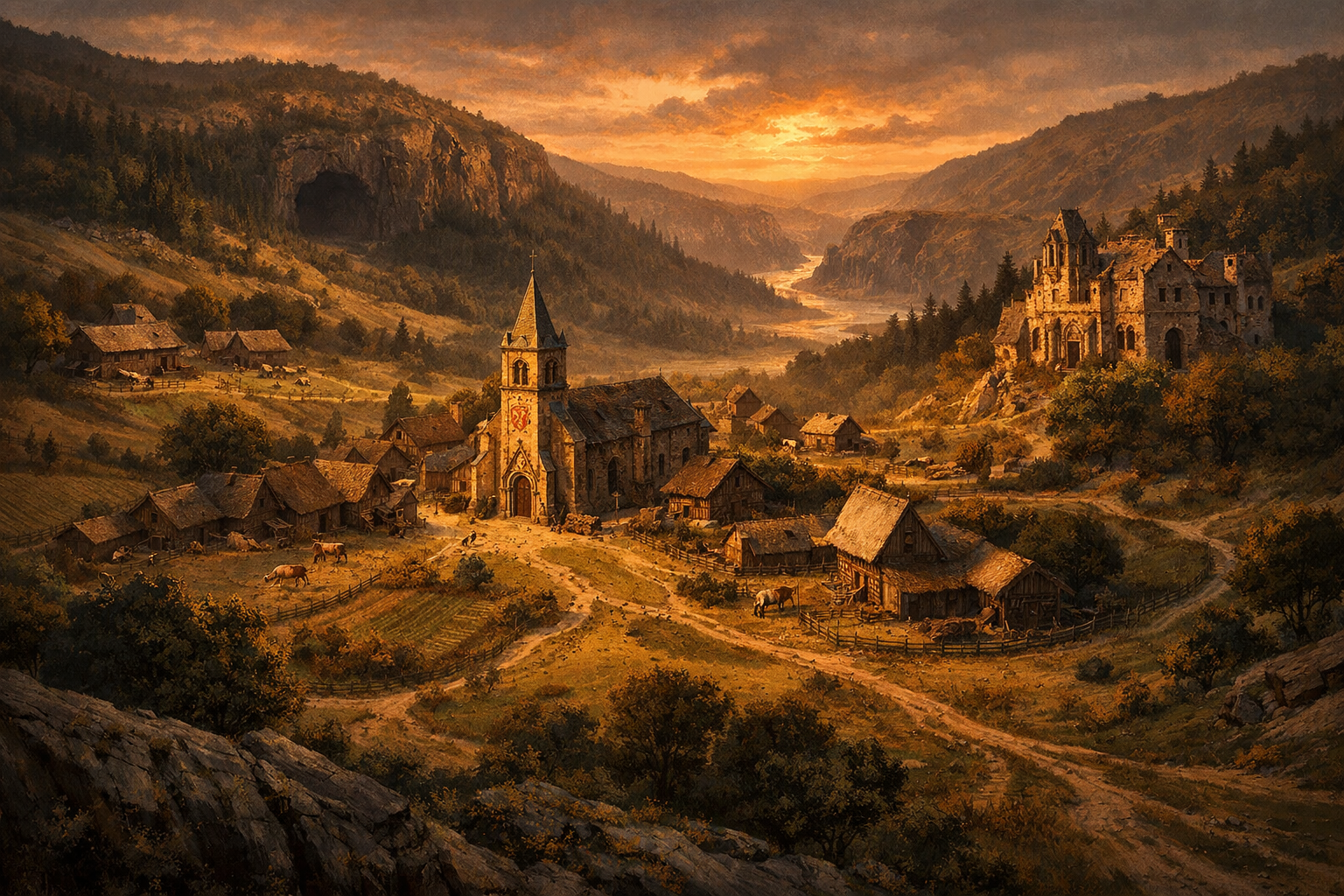
A strong starting area gives sandbox players enough structure to begin exploring without constraining their choices. Learn six practical techniques for designing opening locations that support player agency, provide clear hooks, and sustain momentum through early sessions.
The starting area plays an especially important role in a sandbox campaign. Too much predetermined direction can undermine the freedom the campaign is supposed to provide. Too little information or structure can leave players unsure what their meaningful choices actually are.
A strong starting area gives players enough information to make informed decisions, enough opportunities to pursue different interests, and enough friction to create interesting problems without prescribing how those problems must be solved.
This guide covers six practical techniques for building starting areas that support player-driven sandbox play. They are not rigid requirements. Instead, each technique addresses a common structural challenge, and together they provide a useful framework for creating early campaign momentum without predetermining outcomes.
Why Starting Areas Matter in Sandbox Play
In a tightly plotted campaign, prepared events, objectives, and story developments can provide much of the campaign's initial momentum. Sandbox play shifts more responsibility for long-term direction toward the players, which means they need enough context to make meaningful decisions.
The starting area provides that context.
It introduces locations, factions, problems, opportunities, and relationships at a manageable scale. Players learn what kinds of actions are possible and how the world responds without immediately needing to understand an entire setting.
A well-designed starting area can effectively teach players how this particular sandbox works without telling them what they must do.
Poor starting areas often fall toward one of two extremes.
A barren starting area provides too little information or too few visible opportunities, leaving players waiting for the Game Master to supply direction.
A cluttered starting area presents so many unfamiliar names, factions, locations, conflicts, and hooks at once that players cannot identify what deserves attention.
Both problems can produce the same result: players struggle to understand which choices are meaningful.
The goal is not to create a perfectly balanced number of choices. It is to create an environment players can understand well enough to begin making their own decisions.
Technique One: Define Geographic Boundaries That Create Natural Scope
The first technique addresses scale.
Players entering a sandbox benefit from understanding the immediate play space without feeling artificially trapped inside it. Geographic features can create that scope naturally.
Imagine a starting village in a valley surrounded by hills. The hills are not impassable, but crossing them represents a deliberate journey rather than casual movement.
Within the valley lie:
- The village
- Several farms
- The ruins of an old watchtower
- A limestone cave system
- A small monastery
Players can spend significant time investigating the valley without feeling that the "real" campaign must be somewhere else.
Geographic boundaries work because they correspond to the fictional environment. Hills, rivers, forests, mountain passes, coastlines, deserts, and other terrain features can help players understand the area's scale without requiring an invisible wall.
Keep Boundaries Permeable
A sandbox boundary usually works best when it can eventually be crossed.
The surrounding hills might be difficult but traversable. A river may require a boat or knowledge of a safe ford. A mountain pass might be closed during winter but reopen later.
Crossing the boundary then becomes a meaningful expansion of the campaign rather than the Game Master simply unlocking another area.
Examples include:
- An island in a nautical campaign
- A valley surrounded by mountains
- A settlement beside a large wilderness
- A desert basin bordered by cliffs
- A frontier region separated from settled lands by a river
- A chain of villages along a dangerous road
The important principle is not that every sandbox needs physical walls. It is that players should be able to form a useful mental model of the area currently available to them.
Make the Scope Understandable
Maps, visible landmarks, roads, rivers, settlement names, and travel times all help.
Players do not need perfect geographic knowledge. They should simply understand enough to answer questions such as:
- What places are nearby?
- Roughly how far away are they?
- What routes connect them?
- Which areas appear dangerous?
- Where can we resupply?
- What lies beyond the region we currently know?
That geographic context makes exploration an informed decision rather than a random direction chosen from an empty map.
Technique Two: Populate the Area With Distinct Problem Clusters
The second technique addresses engagement.
A useful starting area contains multiple situations competing for attention. These give players meaningful choices about what they want to investigate or influence.
For many starting areas, roughly three to five visible problem clusters can be a useful design heuristic. This is not a universal rule. Smaller groups, shorter campaigns, or highly focused settings may need fewer. Complex political campaigns may support more.
The important point is variety without overload.
For example:
- Merchants are being attacked on the trade road.
- Livestock are disappearing near old ruins.
- The village council and monastery are arguing over water access.
- Strange sounds come from nearby caves after sunset.
These situations do not need to connect to one master plot.
They can coexist independently and develop according to their own circumstances.
Players might investigate all of them, focus heavily on one, ignore several, combine them in unexpected ways, or invent goals that have little to do with any of them.
Vary the Types of Problems
Different situations should support different kinds of play.
A combat-oriented situation might involve dangerous raiders.
A social situation might involve conflicting land claims.
An exploration problem might center on an abandoned mine.
A mystery might involve unexplained disappearances.
A resource problem might involve access to clean water.
This variety gives different characters and players opportunities to engage through the kinds of decisions they enjoy.
Do Not Hide the Entire Sandbox
Players should generally be able to discover that major situations exist without finding one exact NPC or succeeding on one particular ability check.
That does not mean they receive complete information automatically.
The existence of the abandoned mine can be obvious.
Why people stopped using it may require asking around.
What actually happened underground may require exploration.
This distinction lets players choose what interests them before requiring deeper investigation.
Technique Three: Layer Information at Different Depths
The third technique addresses discovery.
A starting area can reveal itself gradually instead of presenting every faction relationship, historical event, and hidden motive when the characters first arrive.
One useful approach is to divide information into three broad layers.
Surface Information
Surface information is readily observable.
Players might learn that:
- The settlement has a temple, smithy, market, and inn.
- Old ruins stand on the eastern hill.
- A monastery controls land near the river.
- Several farms lie north of town.
- Most travelers enter by the western road.
Characters generally do not need checks to notice basic facts that would be obvious to someone present in the environment.
Shallow Information
Shallow information becomes available through normal interaction.
The blacksmith mentions that metal shipments have become unreliable.
A farmer complains about missing livestock.
Travelers warn about attacks on the northern road.
A local priest explains that relations with the monastery have recently deteriorated.
Players learn these things by talking to people, listening to rumors, observing ordinary activity, or asking straightforward questions.
Deep Information
Deep information requires deliberate investigation.
Perhaps:
- The road attackers are displaced residents from another region.
- The livestock disappearances correspond to a predator's hunting territory.
- The water dispute depends on a questionable land grant.
- The abandoned ruins contain documents relevant to a modern political claim.
This information might require researching records, interviewing specific witnesses, following tracks, exploring dangerous locations, comparing conflicting testimony, or earning someone's trust.
Avoid Gating Essential Context
Deep information can change how players understand a situation, but basic participation should not usually depend on a single fragile clue.
If the party needs to know that caravans are being attacked before they can meaningfully interact with the region, that fact should be reasonably accessible.
If they want to know who is responsible, why the attacks began, or who profits from them, investigation becomes more appropriate.
This approach rewards curiosity without turning one failed check into a campaign bottleneck.
Organize Information for Use at the Table
Justin Alexander's The Art of the Key emphasizes organizing location information so the Game Master can quickly identify what is relevant during actual play.
The same principle can be applied to a sandbox starting area.
For important locations and NPCs, brief notes can distinguish:
- Immediately obvious information
- Information available through conversation or basic investigation
- Information requiring deeper inquiry
The purpose is not to create rigid disclosure rules. It is to make the information easier for the Game Master to use when players approach situations unpredictably.
Technique Four: Include Clear Immediate Opportunities
The fourth technique addresses momentum.
Knowing that a problem exists does not necessarily tell players what they can do about it.
Immediate opportunities give players concrete ways to begin interacting with the setting.
The road attacks are a problem.
The fact that a merchant caravan is leaving tomorrow and needs additional guards is an opportunity.
The abandoned ruins are a location.
The fact that a local historian is paying for artifacts recovered from the site is an opportunity.
The water conflict is a problem.
The fact that both sides will attend a council meeting in two days creates an opportunity to investigate, negotiate, observe, or interfere.
Opportunities Are Not Mandatory Quests
An immediate opportunity should not imply that the party is supposed to accept it.
The caravan leaves whether the characters join it or not.
The council meeting happens whether the party attends.
The ruins remain available even if the characters initially ignore them.
This distinction keeps opportunities from becoming disguised instructions.
Players can:
- Accept the opportunity
- Reject it
- Modify it
- Approach it indirectly
- Investigate the people involved
- Create an entirely different objective
The opportunity provides traction, not obligation.
Telegraph Significant Danger
A sandbox can contain threats that are currently more dangerous than the party can reasonably defeat.
That can reinforce the idea that the world is not scaled entirely around the characters.
However, meaningful agency requires some opportunity to recognize serious danger.
Warning signs might include:
- Experienced hunters refusing to enter an area
- Massive tracks
- Destroyed equipment
- Survivors describing the threat
- Evidence of creatures the characters already know are dangerous
- NPCs recommending preparation or additional help
Players do not need exact challenge ratings or complete tactical information.
They need enough context to make a decision rather than unknowingly walking into a threat that was presented as routine.
Technique Five: Make Consequences Visible
The fifth technique addresses one of the central promises of sandbox play: player decisions should be capable of changing the campaign environment.
The starting area is particularly useful for demonstrating this because consequences can often be seen quickly.
If the players make the road safer:
- Merchant traffic increases.
- The smith receives new materials.
- Travelers return to the inn.
- Certain goods become easier to obtain.
If they negotiate with the attackers instead:
- Trade may resume under different conditions.
- Local authorities might object.
- Refugees or displaced residents may appear in town.
- A political dispute could replace the military problem.
If they do nothing:
- Merchants might change routes.
- Prices might rise.
- Another faction might intervene.
- The situation may stabilize on its own in an unexpected way.
None of these results should exist merely to reward or punish a particular player choice.
They should follow from the people, resources, motivations, and circumstances already established.
Connect Situations Carefully
Interconnections make consequences easier to see.
For example:
- Road security affects trade.
- Trade affects the blacksmith.
- The blacksmith supplies local farmers.
- Farming affects food availability.
- The monastery controls an important water source.
- Historical records in the ruins might influence the water dispute.
This does not mean every situation should secretly be part of the same plot.
They can remain independent while still affecting the same community.
Track Only Consequences That Matter
A living world does not require simulating everything.
If a player insults a random traveler, you probably do not need a six-month timeline describing that person's response.
If the party bankrupts the region's largest merchant, burns an important bridge, exposes a corrupt official, or changes ownership of valuable land, tracking the consequences makes more sense.
Use the degree of impact to determine the amount of tracking.
Technique Six: Provide Tools for Player-Created Goals
The sixth technique addresses the transition from reactive play to proactive play.
Early sandbox sessions often begin with players responding to circumstances the Game Master presents.
Over time, players may begin creating objectives of their own.
A strong starting area gives them things they can use to do that.
Provide Useful Institutions and Resources
A settlement might contain:
- A forge
- A library
- A temple
- A marketplace
- An inn
- A guild
- A local government
- Transportation
- Craftspeople
- Hirelings or specialists
These are not simply background decoration.
They give players ways to pursue plans the Game Master may not have anticipated.
Provide Opportunities for Lasting Investment
Depending on the campaign, players might be able to:
- Establish a base
- Join an organization
- Gain local authority
- Build relationships with important NPCs
- Become recognized explorers
- Start a business
- Restore an abandoned building
- Sponsor an expedition
- Recruit assistance
- Build an information network
Not every campaign needs all of these options.
A wilderness-survival sandbox may have little interest in property ownership.
A political campaign might make reputation and institutional access far more important than treasure.
A nautical sandbox might emphasize ships, ports, crews, and trade relationships.
The important principle is that players should eventually have ways to invest in goals that originated with them.
Make Achievements Matter
Player-created goals are more satisfying when they alter what the characters can do.
If the party restores an abandoned manor as a base, it should function as a base.
If they earn a guild's trust, that relationship should provide meaningful access or assistance.
If they discover a secret route through the mountains, that knowledge should affect future travel.
The reward does not need to be mechanical in the narrow sense. Narrative access, information, relationships, reputation, and strategic options can all carry real weight.
Example: The Thornbrook Valley Starting Area
Consider Thornbrook Valley, a starting area built using these six techniques.
The valley sits in hill country several days from the nearest large city. Low ridges surround it on three sides, with a river gorge marking much of the fourth.
These features define the immediate scope without making the valley impossible to leave.
Within the valley lie:
- The village of Thornbrook
- Four farmsteads
- An abandoned manor
- A small harvest chapel
- The entrance to the Whispering Caves
Distinct Problems
Several situations are already active.
Road trouble: Merchant traffic has declined because travelers have been attacked in the surrounding hills.
Missing livestock: Animals from the northern farms have disappeared, and tracks lead toward the abandoned manor.
The manor dispute: The village council wants to restore the manor for community use, while members of the chapel oppose disturbing the site.
The Whispering Caves: Strange harmonics echo from the caves at night and have recently become louder.
The visiting scholar: A scholar arrived two weeks ago and has been interviewing local elders about the valley's history, particularly the family that once occupied the manor.
The characters do not need to address these situations in any particular order.
Layered Information
At the surface level, the party can quickly learn:
- Thornbrook is a small farming community.
- The manor has been abandoned for roughly twenty years.
- The caves are named for their unusual acoustics.
- The chapel and village council disagree about the manor.
- Travelers consider the hill road less safe than it used to be.
Casual interaction reveals more:
- Road attacks began several weeks ago.
- Livestock disappearances are recent.
- Some chapel members believe the manor should remain untouched.
- The visiting scholar is particularly interested in the manor's final residents.
Deeper investigation might reveal:
- Some road attackers are displaced people from a neighboring region experiencing severe shortages.
- A dangerous predator has begun using the manor grounds as part of its hunting territory.
- The chapel's opposition is connected to an old dispute involving the manor's former owners.
- The strange cave sounds have a natural source but may indicate previously unknown passages.
- Historical documents may affect a modern claim to land in the valley.
These deeper discoveries change how players understand the situations without being required merely to begin interacting with them.
Immediate Opportunities
The players have several concrete options.
- A merchant wants additional protection for a wagon leaving tomorrow.
- Farmers are looking for someone to investigate the missing livestock.
- The village council will discuss the manor in three days.
- The Whispering Caves can be explored at any time.
- The visiting scholar is available at the inn and openly seeks information.
These opportunities provide momentum without determining direction.
The characters could ignore all of them and still decide to hunt, map the valley, seek employment elsewhere, question the local authorities, investigate the chapel, or leave the region.
Visible Consequences
If the party improves road security, merchant traffic may recover.
If they discover why livestock are disappearing, the farmers may change how they protect their animals.
If they influence the manor dispute, ownership or use of the property could change.
If they explore the caves, new routes or resources might become known.
If they investigate the scholar, they may discover connections to political disputes outside the valley.
Because Thornbrook is compact, these changes are easier for the players to notice.
Player-Created Goals
The area also supports ambitions that do not originate as quests.
Depending on campaign tone and circumstances, characters might:
- Attempt to restore the manor as a base
- Build relationships with the council or chapel
- Establish themselves as caravan escorts
- Become regular suppliers or protectors for the farms
- Map the caves
- Investigate historic land claims
- Develop trade connections
- Use information discovered in Thornbrook to pursue opportunities elsewhere
The starting area therefore supports both immediate play and longer-term player-generated objectives.
Common Implementation Mistakes
Even a well-structured starting area can run into problems.
Hiding Crucial Context
Players should not need one successful Investigation check or one specific NPC conversation to discover basic facts required to participate.
Use checks to uncover uncertainty, secrets, hidden motives, obscure history, or difficult evidence.
Do not use them to determine whether players learn that the town has a mayor, caravans have been attacked for weeks, or an abandoned tower is plainly visible from the road.
Connecting Everything to One Secret Plot
Interconnected situations are useful, but making every problem originate from one hidden villain can turn apparent sandbox variety into a single mystery campaign.
Some situations can connect.
Others should be allowed to exist for unrelated reasons.
A drought, political rivalry, hungry predator, ruined shrine, and smuggling operation do not need one mastermind behind them.
Independent causes make the environment feel broader and help preserve meaningful strategic choice.
Poorly Telegraphing Danger
Not every threat must be tailored to the party's current level of power.
However, if an area contains overwhelming danger, players should usually have ways to recognize warning signs before irreversible commitment.
Sandbox freedom is most meaningful when players can assess risk.
Using Consequences as Punishment
If players ignore a situation, developments should follow from the fictional circumstances rather than from Game Master frustration.
The road attacks continue because the attackers still have motives and capabilities.
They do not suddenly burn the characters' home merely because the players selected a different adventure.
Consequences should come from the world, not from an attempt to force attention back toward abandoned content.
Treating the Starting Area as a Prologue
A successful starting area does not need to be discarded after one or two sessions.
If players remain invested, let them continue.
The valley, town, island, district, or frontier can become a persistent home region.
Leaving should occur because player goals have expanded, not because the campaign outline says it is time for chapter two.
Adapting Starting Areas for Different Campaign Styles
The six techniques can support many types of sandbox campaigns.
Survival-Focused Campaigns
Emphasize:
- Water
- Food
- Shelter
- Safe routes
- Weather
- Supply lines
- Defensible locations
Problems can involve resource shortages, environmental dangers, damaged infrastructure, or competition for necessities.
Player-created goals might focus on securing reliable supplies, establishing shelter, or creating safer transportation.
Political Sandboxes
Emphasize:
- Factions
- Claims
- Alliances
- Reputation
- Public opinion
- Institutional power
- Conflicting interests
Problems should rarely have one objectively correct solution.
Helping one group can affect relationships with others.
Player-created goals might include gaining office, building coalitions, earning influence, changing policy, or becoming indispensable to a faction.
Exploration-Focused Campaigns
Emphasize:
- Maps
- Routes
- Landmarks
- Ruins
- Environmental clues
- Unknown territories
- Expedition logistics
Information should accumulate through travel and discovery.
Player-created goals might involve mapping wilderness, locating lost sites, establishing camps, or finding safer routes.
Ben Robbins' West Marches campaign is a notable example of highly player-directed exploration, although West Marches includes additional structural features such as player-organized scheduling and changing adventuring parties that are not required for sandbox play generally.
Intrigue-Focused Campaigns
Emphasize:
- Secrets
- Conflicting accounts
- Hidden relationships
- Information brokers
- Surveillance
- Reputation
- Competing agendas
Different NPCs should possess different pieces of the truth.
Player-created goals might involve building intelligence networks, cultivating contacts, exposing rivals, or protecting sensitive information.
The six techniques remain useful. Their expression changes with the campaign.
Transitioning Beyond the Starting Area
A starting area should establish scope without becoming a cage.
Players may begin looking outward because:
- They are curious about neighboring regions.
- Their goals require something unavailable locally.
- An important faction has connections elsewhere.
- They have established enough security to undertake longer expeditions.
- A consequence of their actions points beyond the current region.
- They simply decide they want to leave.
At that point, the boundaries that once defined the campaign become routes outward.
The mountains have passes.
The river leads downstream.
The road continues toward another city.
The forest has trails.
Expanding the campaign can use the same principles at a larger scale.
New areas contain recognizable locations, understandable problems, available information, immediate opportunities, consequential choices, and resources players can use for objectives of their own.
Keep the Starting Area Relevant
Leaving does not mean erasing the original region.
A good starting area can become:
- A home base
- A source of trusted NPCs
- A resupply point
- A political constituency
- A safe harbor
- A source of rumors
- A place containing property or investments
- A community affected by the party's earlier decisions
Returning to a changed starting area can be one of the clearest demonstrations that the campaign world remembers what the characters have done.
Tools and Preparation
Sandbox preparation does not need to become encyclopedic.
Several compact tools can make the starting area easier to run.
One-Page Area Reference
Include:
- Major locations
- Important NPCs
- Current situations
- Immediate opportunities
- Important deadlines
- Significant faction relationships
The objective is fast reference during play.
Relationship Map
Draw simple connections between:
- NPCs
- Factions
- Locations
- Resources
- Conflicts
This makes it easier to determine who is affected when the players change something.
Information Layers
For important NPCs and locations, note:
Surface: What is immediately obvious?
Shallow: What can normal conversation or observation reveal?
Deep: What requires active investigation?
This reduces the chance that crucial context remains trapped in the Game Master's notes.
Starting Area Map
The map does not need professional artwork.
It needs enough information to preserve:
- Relative position
- Travel routes
- Geographic boundaries
- Important landmarks
- Distances or approximate travel times
This helps players plan rather than simply ask which direction the next encounter is located.
A Small Cast of Useful NPCs
Several distinctive NPCs are often more useful than dozens of names.
Give important NPCs:
- A recognizable role
- A goal
- A relationship to one or more situations
- Something they know
- Something they want
- A reason their attitude could change
Add new characters as play requires them.
Concrete Rewards
Different situations can provide different kinds of rewards:
- Money
- Equipment
- Access
- Information
- Reputation
- Allies
- Property
- Safe travel
- Services
- Political influence
- New routes
- Knowledge
This helps player decisions change what becomes possible later.
Maintaining Player Agency While Providing Structure
The central design challenge is balancing useful structure with meaningful freedom.
Structure is not the same as a predetermined outcome.
A starting area can contain:
- Specific locations
- Active conflicts
- NPC agendas
- Deadlines
- Threats
- Rewards
- Immediate opportunities
and still remain a sandbox.
The key question is what happens after those elements meet the players.
Can the players:
- Choose what deserves their attention?
- Approach situations in unexpected ways?
- Negotiate instead of fight?
- Ally with an unexpected faction?
- Walk away?
- Create goals that were never prepared?
- Change circumstances enough that the Game Master must reconsider what happens next?
If so, structure is supporting agency rather than replacing it.
When Players Seem Stuck
Determine what is missing.
If they do not know what options exist, improve information.
If they know the options but cannot identify concrete actions, provide clearer opportunities.
If they do not care about the available situations, learn what interests them and shift preparation accordingly.
If they have too many options, summarize the current state of the campaign and let them identify their priorities.
If their characters have no reasons to act, revisit character goals and relationships.
The solution does not have to be stronger steering.
Often the answer is clearer context.
Measuring Success
There is no universal metric for a successful sandbox starting area, but several behaviors can indicate that the structure is working.
Players Initiate Plans
Players begin saying things such as:
- "Next session, we should go back to the caves."
- "We need to talk to the council before the merchant arrives."
- "What if we buy that abandoned building?"
- "I think the scholar knows more than he is telling us."
This suggests they understand the setting well enough to form intentions.
Players Remember Consequences
When players reference previous choices and their effects, the world is beginning to feel coherent.
They remember that helping one group affected another.
They recognize that a road became safer because of something they did.
They anticipate how an NPC might respond.
Different Sessions Emerge From Different Choices
One session may involve negotiation.
Another focuses on exploration.
Another becomes combat.
Another consists almost entirely of investigation.
The variety arises because the players selected different objectives and approaches.
Expansion Comes From Player Goals
One of the strongest signs is when players begin asking what exists beyond the current area because something they care about has led them there.
They are not leaving because the starting area "chapter" ended.
They are expanding the sandbox because their goals have expanded.
Use Warning Signs Carefully
Possible warning signs include:
- Players repeatedly asking what they are supposed to do
- Long periods of indecision caused by unclear information
- Important conflicts no one can remember
- Choices producing no noticeable consequences
- Players disengaging from most of the available situations
None of these automatically means the design has failed.
Ask the players.
A group happily spending ten sessions exploring one dungeon is not failing at sandbox play simply because other opportunities remain untouched.
The relevant measure is whether they are engaged and feel capable of directing their own actions.
The Starting Area as a Teaching Tool
The starting area teaches players how this particular campaign responds to them.
If investigation produces useful information, players learn to investigate.
If NPCs react consistently to choices, players learn to consider relationships.
If dangerous locations provide warning signs, players learn that reconnaissance matters.
If ignored situations sometimes change, players learn that time matters.
If player-created plans receive meaningful support, players learn that they are allowed to create objectives rather than merely select from presented quests.
That makes the starting area more than the location where the campaign happens to begin.
It establishes the campaign's operating language.
Build a region players can understand.
Give them problems worth considering.
Give them enough information to choose.
Let their actions change things.
Then allow the campaign to grow in the directions they decide are worth pursuing.
Sources and Further Reading
Alexander, J. (2009, March 23). Don't prep plots. The Alexandrian.
Alexander, J. (2014, May 19). The art of the key. The Alexandrian.
Robbins, B. (2007, October 17). Grand experiments: West Marches. Ars Ludi.
Robbins, B. (2008, May 12). West Marches: Running your own. Ars Ludi.
Shea, M. (2018). Return of the lazy dungeon master. Sly Flourish.
Wizards of the Coast. (2025). System reference document 5.2.1. D&D Beyond. https://www.dndbeyond.com/srd
---
This work includes material from the System Reference Document 5.2.1 ("SRD 5.2.1") by Wizards of the Coast LLC, available at https://www.dndbeyond.com/srd. The SRD 5.2.1 is licensed under the Creative Commons Attribution 4.0 International License, available at https://creativecommons.org/licenses/by/4.0/legalcode.
Related reading
- Why Megadungeons Succeed or Fail: Lessons from Forty Years of Play
Megadungeons have persisted since the earliest days of tabletop roleplaying, yet many campaigns abandon them within a few sessions. Learn what structural, pacing, and preparation factors separate sustainable megadungeons from those that collapse, and how to apply those lessons at your own table.
- Understanding the Megadungeon: What It Is and When to Use It
A megadungeon is more than a big dungeon. Learn what defines this sprawling adventure structure, why it persists across decades of play, and when it serves your table better than episodic adventures.
- Running Sandbox Campaigns: Six Months with The Millbrook Consortium
Sandbox campaigns promise player-driven freedom but demand different preparation and facilitation techniques. This case study examines six months of running The Millbrook Consortium, a merchant-focused sandbox, to identify practical lessons about faction management, player agency, and sustainable open-world play.