Balancing Encounter Difficulty for Groups of Different Sizes
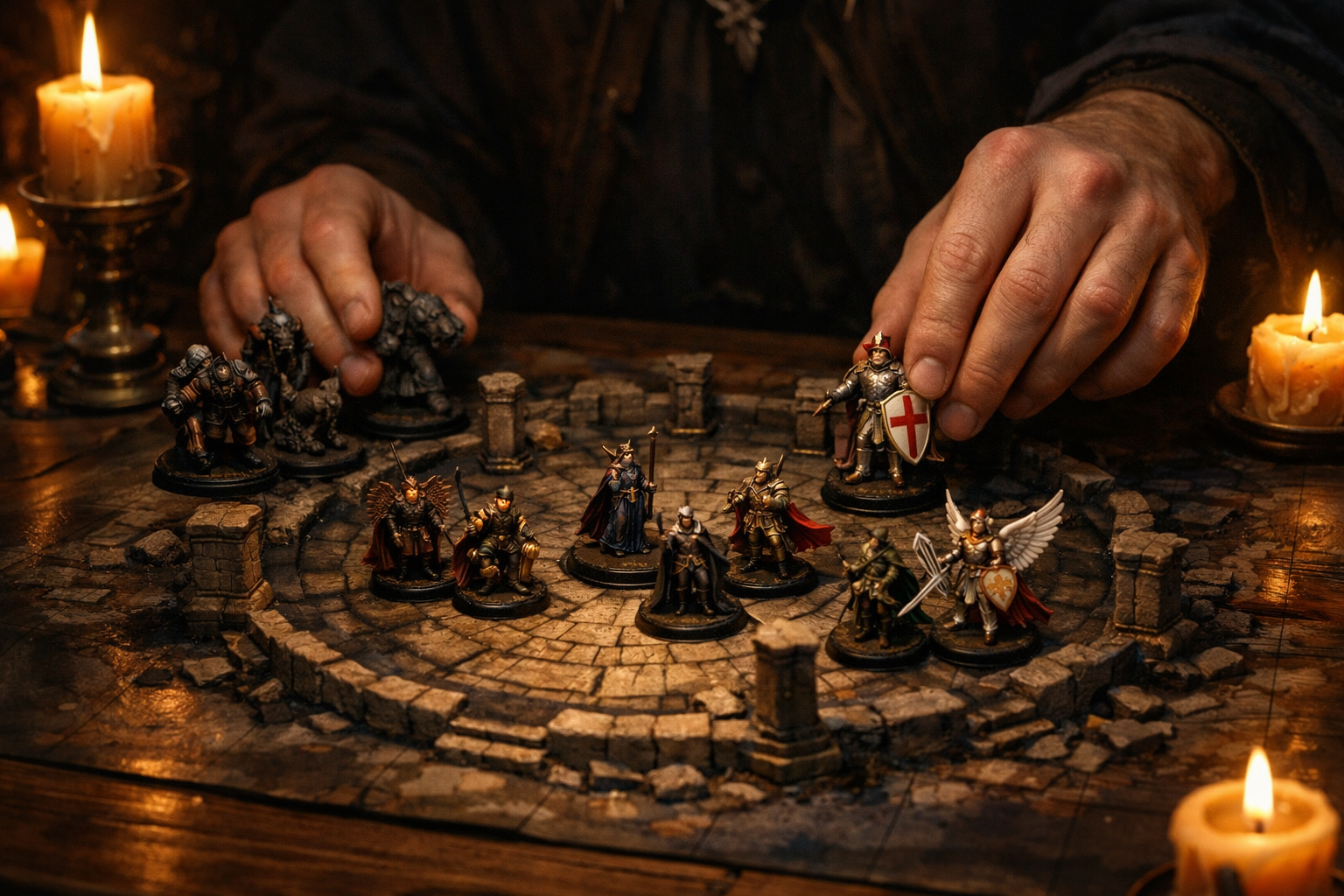
Group size dramatically affects encounter balance in tabletop RPGs. This practical guide shows dungeon masters how to adjust challenges when player count changes.
Every dungeon master faces the challenge of running games with fluctuating player attendance. One week you have six players at the table, the next only three show up. Understanding how to adjust encounter difficulty for different group sizes separates functional sessions from frustrating ones.
Group size affects more than just the raw numbers on each side of initiative. It changes action economy, resource availability, tactical options, and the entire rhythm of combat encounters.
Why Standard Encounter Builders Fall Short
Most encounter building systems, including official challenge rating calculations, assume a party of four to five characters. These systems provide a baseline, but they treat party size as a simple multiplier when the reality is far more complex.
A party of three characters faces different challenges than a party of six, even when both encounters are theoretically balanced to the same difficulty threshold. The smaller party has fewer actions per round, limited tactical flexibility, and less redundancy if one character falls. The larger party can absorb losses more easily but may find combat slows to a crawl.
Consider a straightforward scenario: a group of adventurers exploring ancient ruins encounters a guardian construct in a circular chamber with four stone pillars. With three players, this encounter functions very differently than with six, regardless of how you adjust the guardian's statistics.
The Three-Person Party Challenge
Small parties face specific disadvantages that raw math cannot fully capture:
Limited role coverage: With only three characters, you likely lack a full spread of capabilities. Missing a dedicated healer, scout, or controller creates vulnerabilities that enemies can exploit.
Fragile action economy: Every character who falls or becomes incapacitated represents a thirty-three percent reduction in party actions. One lucky critical hit from an enemy can cascade into a total party wipe.
Reduced tactical options: Flanking maneuvers, coordinated positioning, and complex battlefield control become difficult or impossible with only three bodies.
Resource strain: Fewer characters mean fewer spell slots, hit points, and abilities to draw upon during the adventuring day.
When running encounters for three players, reduce enemy numbers more aggressively than you reduce individual enemy power. A single tough opponent often works better than multiple weaker ones, as it prevents the party from being overwhelmed by action economy disadvantage.
In the ruins scenario, a single guardian construct might work well for three players, but adding even one additional enemy could tip the balance toward an unfair fight.
The Large Party Reality
Parties of six or more players create opposite problems:
Combat pacing: With six to eight players, each taking their turn, combat rounds can drag. A single encounter might consume an entire session.
Spotlight distribution: More players mean less individual spotlight time. Characters may go long stretches without meaningful contribution.
Overwhelming action advantage: Large parties can nova down threats before enemies act meaningfully. Bosses fall in a single round, removing dramatic tension.
Complex battlefield tracking: Managing initiative, positions, and effects for ten or more creatures taxes even experienced dungeon masters.
For larger groups, add enemies rather than simply increasing individual creature power. Multiple opponents create dynamic battlefields and give each player distinct targets, keeping everyone engaged.
The guardian construct encounter might need two or three constructs for six players, or one construct with several animated armor pieces, creating multiple threats without making any single enemy impossible to damage.
Practical Adjustment Methods
Hit Point Scaling
The simplest adjustment method involves modifying enemy hit points on the fly. This requires no preparation and adapts to actual play conditions.
For smaller parties, reduce enemy hit points by twenty to thirty percent. This compensates for reduced damage output without changing encounter structure.
For larger parties, increase hit points by fifty to seventy-five percent. This prevents encounters from ending anticlimactically while maintaining the same fundamental challenge.
Track hit points privately. Players need not know you are adjusting values mid-combat. This flexibility lets you respond to lucky or unlucky dice rolls, keeping encounters tense without becoming unfair.
Enemy Number Adjustment
Changing the number of opponents often works better than scaling individual creatures:
For three-player parties: Use sixty to seventy-five percent of the enemy numbers you would use for four players. Round down when uncertain.
For six-player parties: Use one hundred fifty to two hundred percent of standard enemy numbers.
This approach preserves action economy balance while keeping individual enemies at consistent power levels. Players develop accurate expectations about creature capabilities, and you avoid recalculating statistics.
Ability Modification
Adjust what enemies can do rather than how much damage they deal:
Reduce abilities for small parties: Remove one legendary action, eliminate a recharge ability, or skip a multiattack.
Add abilities for large parties: Grant additional reactions, increase legendary action counts, or add area control effects that make positioning matter.
These changes affect encounter dynamics without requiring mathematical recalculation.
Environmental Compensations
The battlefield itself can balance disparate party sizes:
For small parties: Add cover, create chokepoints, provide defensive positions, and include terrain that limits enemy movement. The stone pillars in the ruins become crucial cover, letting three characters control lines of sight and minimize their vulnerability.
For large parties: Open the battlefield, add verticality, create hazards that demand positioning attention, and include objectives beyond simple combat victory. The circular chamber might include unstable floor sections or arcane wards that damage anyone nearby.
Environmental features give you real-time adjustment tools. You can emphasize or de-emphasize terrain elements based on how the encounter develops.
Pacing Adjustments for Party Size
Initiative Management for Large Groups
When running six or more players, consider initiative modifications:
Side initiative: All players act on the same initiative count, reducing bookkeeping and speeding combat. Players coordinate their turns, encouraging teamwork.
Simultaneous turns: Players declare actions simultaneously, then resolve them. This works especially well for experienced groups.
Turn timers: Implement a visible timer for turns, keeping combat moving without becoming hostile to thoughtful play.
Encounter Frequency
Party size should influence how many encounters you run per session:
Small parties: Run two to three encounters per session, allowing time for roleplay and exploration. Small groups move through combat relatively quickly.
Large parties: Run one to two encounters per session. A single well-designed combat can fill three hours with a large group.
Rest and Resource Considerations
Different party sizes require different resource management approaches:
Small parties: Provide more opportunities for short rests. Consider allowing rest periods in places that would normally be risky. Three characters burn through resources faster relative to the challenges they face.
Large parties: Make rests more costly. Large parties can handle more attrition, and easy rest access leads to every encounter becoming a full-resource nova.
Adjust the adventuring day structure based on your typical player count. Small parties might face four encounters between long rests, while large parties might handle eight.
Testing Your Adjustments
No formula perfectly predicts encounter difficulty. Test your adjustments:
Monitor character resources: If characters end most combats at full hit points and spell slots, increase difficulty. If they are desperate after every fight, reduce it.
Track combat length: Aim for three to five rounds. Longer combats risk tedium, shorter ones feel inconsequential.
Watch player engagement: If players check phones or lose focus, the encounter likely needs adjustment, whether mechanically or narratively.
Ask for feedback: After sessions, ask players whether combats felt appropriately challenging. They often provide insights you miss while managing the table.
Conclusion
Balancing encounters for different party sizes requires flexibility and observation rather than perfect mathematical formulas. Start with encounter building guidelines, then adjust based on actual play. Modify hit points, enemy numbers, abilities, and environments to match your specific group.
The guardian construct in the ruins serves three characters differently than six, regardless of statistics. Understanding these differences and having adjustment tools ready helps you create consistently engaging encounters.
Ready to improve your encounter design? Visit The Dungeon Trainer for practical guides on combat pacing, monster tactics, and session planning.
Sources and Further Reading
- Dungeon Master's Guide (Wizards of the Coast, 2014) - Official encounter building guidelines and challenge rating system
- The Monsters Know What They're Doing by Keith Ammann (2019) - Tactical considerations for different encounter sizes
- Sly Flourish (slyflourish.com) - Articles on lazy dungeon master encounter adjustment techniques
Related reading
- One Year as a Dungeon Master: Lessons Learned from Running a Campaign Start to Finish
Running a tabletop campaign from session one to campaign conclusion teaches lessons no amount of preparation can anticipate. Discover what one year behind the screen reveals about pacing, player investment, and sustainable game mastering.
- Solo Dungeon Master vs Co-DMing: Which Approach Works Best for Your Table?
Dungeon Masters can run campaigns alone or share responsibilities with a co-DM. Each approach offers distinct advantages for preparation, storytelling, and table management.
- Essential Dungeon Master Tools and Resources Every Game Master Should Have
The right tools help Dungeon Masters run smoother sessions and focus on storytelling. Discover the essential physical and digital resources that improve preparation, organization, and gameplay.