AI NPC Generator for DnD That Holds Up at the Table
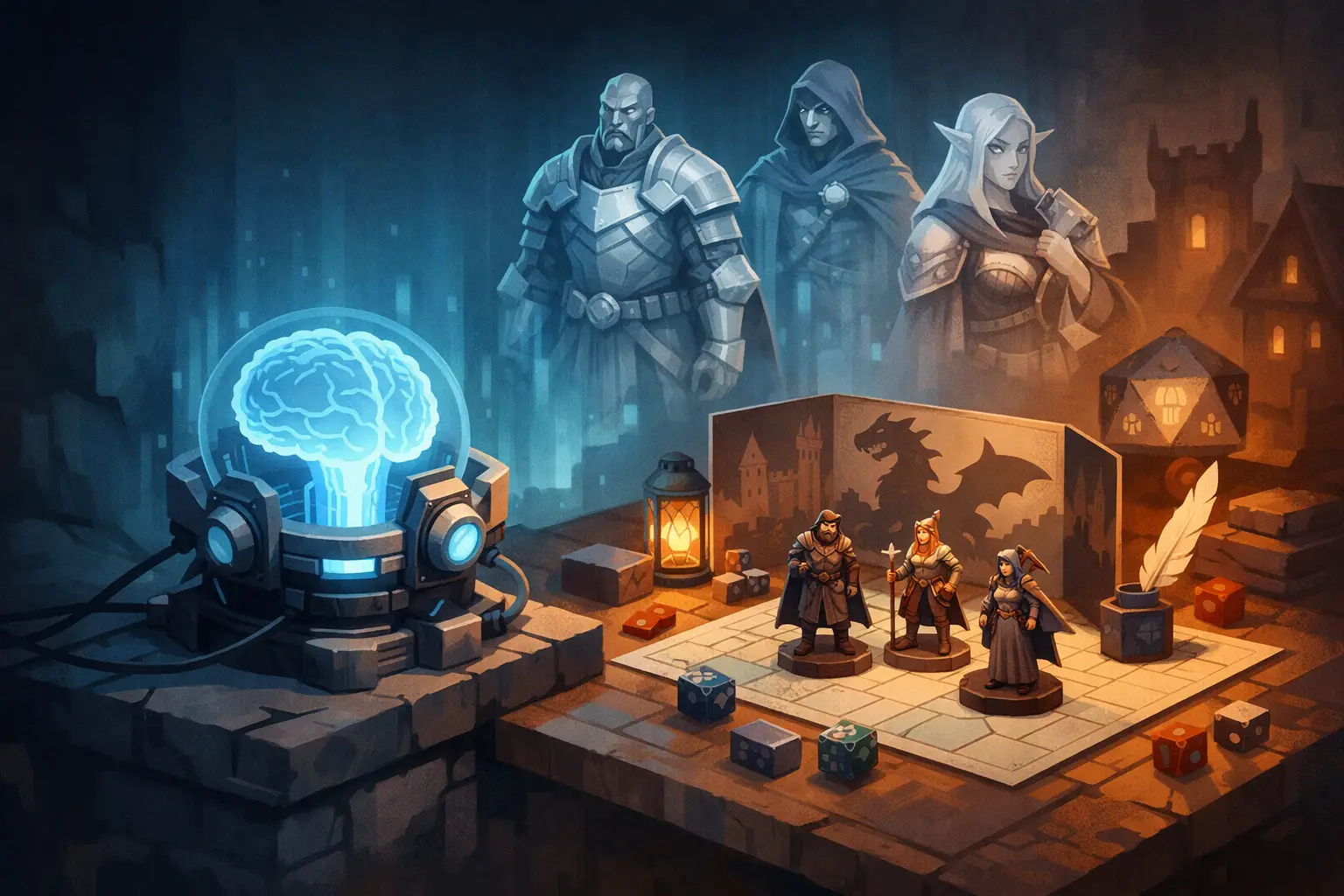
The innkeeper remembers that the party threatened his brother three sessions ago. The captain knows who holds the stolen seal. The prisoner wants freedom, but not at the cost of her daughter's safety. That is the standard an ai npc generator for dnd should meet: not a pile of colorful names, but characters who can sur…
The innkeeper remembers that the party threatened his brother three sessions ago. The captain knows who holds the stolen seal. The prisoner wants freedom, but not at the cost of her daughter's safety. That is the standard an ai npc generator for dnd should meet: not a pile of colorful names, but characters who can survive contact with an actual campaign.
A quick description is easy to generate. A useful nonplayer character is harder. They must react to player choices, retain relevant history, respect the established tone of the setting, and provide information without forcing the next scene down a single track. For a 5E-compatible table, they also need to exist inside a game where checks, spells, combat, and consequences receive consistent adjudication.
The difference matters most when the players do something no prep document anticipated. They charm the jailer instead of bribing her. They accuse the trusted sage. They burn the letter that was supposed to point toward the next dungeon. A capable NPC system does not panic and invent a new railroad. It evaluates the NPC's goals, knowledge, leverage, and current relationship to the party, then gives the table a credible response.
What an AI NPC Generator for DnD Should Actually Generate
An NPC is not their accent. Voice can make a first impression, but it cannot carry a scene once the players start asking questions. The useful output is a playable decision model: what this person wants, what they know, what they are willing to risk, and what could change their position.
At minimum, an NPC generator should establish identity, role, motivation, knowledge boundaries, and a pressure point. Identity is more than a name and ancestry. It includes social standing, ties to factions, and why this person has a place in the campaign. Role identifies what they do at the table: patron, witness, rival, guide, hostage, merchant, suspect, or threat.
Motivation makes the NPC active. "Helpful wizard" is not a motivation. "A disgraced archivist trying to recover a forbidden map before her former mentor finds it" is. It gives the GM something to adjudicate when players offer a bargain, make a threat, or reveal unexpected evidence.
Knowledge boundaries are equally important. An NPC should not become a mouthpiece for every fact in the campaign bible. A dockworker may know which ships arrived after midnight, but not the identity of the masked buyer who paid the harbor master. A cultist may recognize a symbol but misunderstand the ritual behind it. Limited knowledge preserves investigation and lets players earn answers through play.
Finally, every memorable NPC needs pressure. Debt, fear, ambition, loyalty, guilt, a deadline, or a vulnerable relationship gives the character a reason to make difficult choices. It also creates branches. Players can exploit that pressure, relieve it, worsen it, or discover they read the situation incorrectly.
Start With Scene Function, Not a Random Backstory
Before generating an NPC, define what the current scene needs to test. Is it meant to reveal a lead, expose a moral divide, offer a risky alliance, establish a threat, or let the party's past choices return? This does not mean deciding the outcome. It means understanding the scene's function so the NPC has a job beyond filling silence.
Consider a party reaching the last bridge before Ashwarren Keep, one cable still holding over the gorge as Gravehold outriders close from behind. Clinging to the near post is a wounded bridge-warden, a crossbow bolt in his shoulder, insisting he knows a second crossing the cult does not.
If the scene function is information delivery, the warden needs credible knowledge of the second crossing and a reason to share it. If the function is a loyalty test, he may be truthful about the crossing but lying about how far it is. If the function is a pacing pivot, the crossing could open a route that bypasses the outriders but carries the party toward a time-sensitive choice.
The same character concept supports different scenes when its goals and constraints are explicit. Randomized traits can add texture, but they should serve the scenario rather than replace it.
Give Each NPC a Negotiation Position
Most NPC scenes become negotiations, even when no coin changes hands. The players want access, truth, safety, authority, assistance, or absolution. The NPC wants something too.
A practical generation prompt or workflow should capture three elements: what the NPC can offer, what they demand or fear, and what they do if the party refuses. These are the bones of player agency. If the party rejects the acolyte's plea, perhaps she flees with the key. If they imprison her, the cult learns where the party is. If they help her, she reveals a route into the catacombs but asks them to spare her younger brother.
None of those outcomes must be predetermined. They simply give the GM a fair foundation for responding to decisions.
Persistent Memory Separates a Character From a One-Scene Prop
A campaign's strongest NPCs are changed by what happens around them. The guard who was embarrassed in public may become a quiet antagonist. The merchant saved from a basilisk may offer credit later, or use the party's reputation to protect his own business. The noble whose blackmail was exposed may forgive the party, but not trust them.
This requires campaign state. A system needs to retain more than a chat transcript. It should associate the NPC with factions, locations, unresolved promises, secrets revealed, favors owed, injuries, inventory changes, and the party's standing with that character.
Without structured state, an AI may produce a convincing line in the moment and contradict it later. The duke's daughter becomes an only child after the party meets her brother. A frightened witness suddenly knows the villain's full plan. A rival who swore vengeance greets the party as strangers. Those errors break table trust because players notice continuity failures immediately.
Structured memory also supports restraint. An NPC should remember what happened to them, not automatically know what happened in scenes they did not witness. The GM can decide when rumors, reports, magic, or faction intelligence reasonably spread information through the world.
Keep NPC Portrayal Separate From Rules Resolution
An NPC generator can help portray a suspicious gatewarden, but it should not decide whether a failed Deception check becomes a success because the scene would be more dramatic. That is where AI-assisted play needs clear boundaries.
Dice should resolve in code, never by the model. The result of a Persuasion check is a game event. The NPC's response should follow from that result, the difficulty set by the GM or system, the NPC's attitude, and the campaign state. The model can narrate the gatewarden's narrowed eyes and reluctant shift aside. It should not invent a percentage chance, quietly revise a roll, or erase a consequence.
The same distinction applies to spells and combat. An NPC may react emotionally to a charm effect, but the effect's mechanical limits still matter. A guard captain can be terrified, furious, or calculating while remaining bound by the rules governing the condition, saving throw, or ability used against them.
This separation is not a constraint on creativity. It makes creativity dependable. Players can take risks because they know outcomes will be adjudicated rather than retrofitted into a preferred story.
Use AI to Prepare Branches, Not Predetermine Choices
The best prep does not attempt to predict every player decision. It identifies the choices most likely to change the situation and prepares the NPC's response logic.
For a key NPC, forecast a few meaningful branches: the party cooperates, bargains, threatens, deceives, ignores the problem, or sides with an opposing faction. Then ask what changes in the NPC's resources, attitude, and next action. This is more useful than writing three pages of dialogue that may never be spoken.
A scene-forecasting workflow can also flag pacing risks. If every branch requires the party to extract the same clue from the same reluctant informant, the scene may become a bottleneck. Give the truth more than one path into play. The informant might talk, flee and drop evidence, send the party toward a rival, or force them to seek proof elsewhere.
The Dungeon Trainer approaches this problem through structured campaign state and scoped AI roles. NPC portrayal can remain flexible and immersive while the campaign's facts, dice outcomes, and adjudication boundaries remain accountable.
The Human GM Still Owns the Table
An AI NPC generator is most valuable when it reduces cognitive load without taking control of the campaign. It can provide a voice when the party unexpectedly interrogates a minor official, preserve details across a long arc, and surface motivations the GM established weeks earlier. It cannot determine what kind of game your group wants to play.
Some tables want heightened melodrama. Others prefer grounded political consequences or quick, combat-forward scenes. A suspicious contact who becomes a recurring foil in one campaign may be a single-scene obstacle in another. The right amount of detail depends on the NPC's likely importance and the attention your group gives social play.
Prepare enough structure that the character can answer pressure honestly. Then leave space for the table to surprise you. When players remember not just what an NPC said, but why that person changed after their choices, the campaign starts to feel less like generated content and more like a world that is paying attention.
References
5th Edition SRD. (n.d.). Conditions. https://5thsrd.org/rules/conditions/
D&D Beyond. (n.d.). System Reference Document 5.2. Wizards of the Coast. https://www.dndbeyond.com/srd
Artwork on this page was generated using AI.
This work includes material taken from the System Reference Document 5.2.1 by Wizards of the Coast LLC and is licensed under the Creative Commons Attribution 4.0 International License (https://creativecommons.org/licenses/by/4.0/).
Related reading
- How to Predict Tabletop Campaign Outcomes
The party's informant is found dead in an alley behind the exchange at dawn, one torn page of a ledger still clutched in her hand. The rest of it, whatever it was, is already gone. The rogue recognizes the seal pressed into the wax on her wrist: House Vane. The cleric checks the wound and finds it professional, not de…
- 5e Rules Adjudication That Keeps Play Moving
A wounded courier collapses through the waystation door at dusk, Gravehold riders less than a mile behind her. Before she loses consciousness, she presses a locked message case into the rogue's hands: proof that Ashwarren Keep has fallen and the Silence Bell breaks in five days. The case is sealed, the riders are clos…
- What an AI GM Assistant Should Actually Do
Black water laps at the party’s knees. The rogue asks whether the dock pilings can support a climb. The cleric wants to identify the rune carved into a half-submerged crate. Meanwhile, the players are waiting for an answer, not a search through five old session notes.