What Is Session Zero and Why Every Campaign Needs One
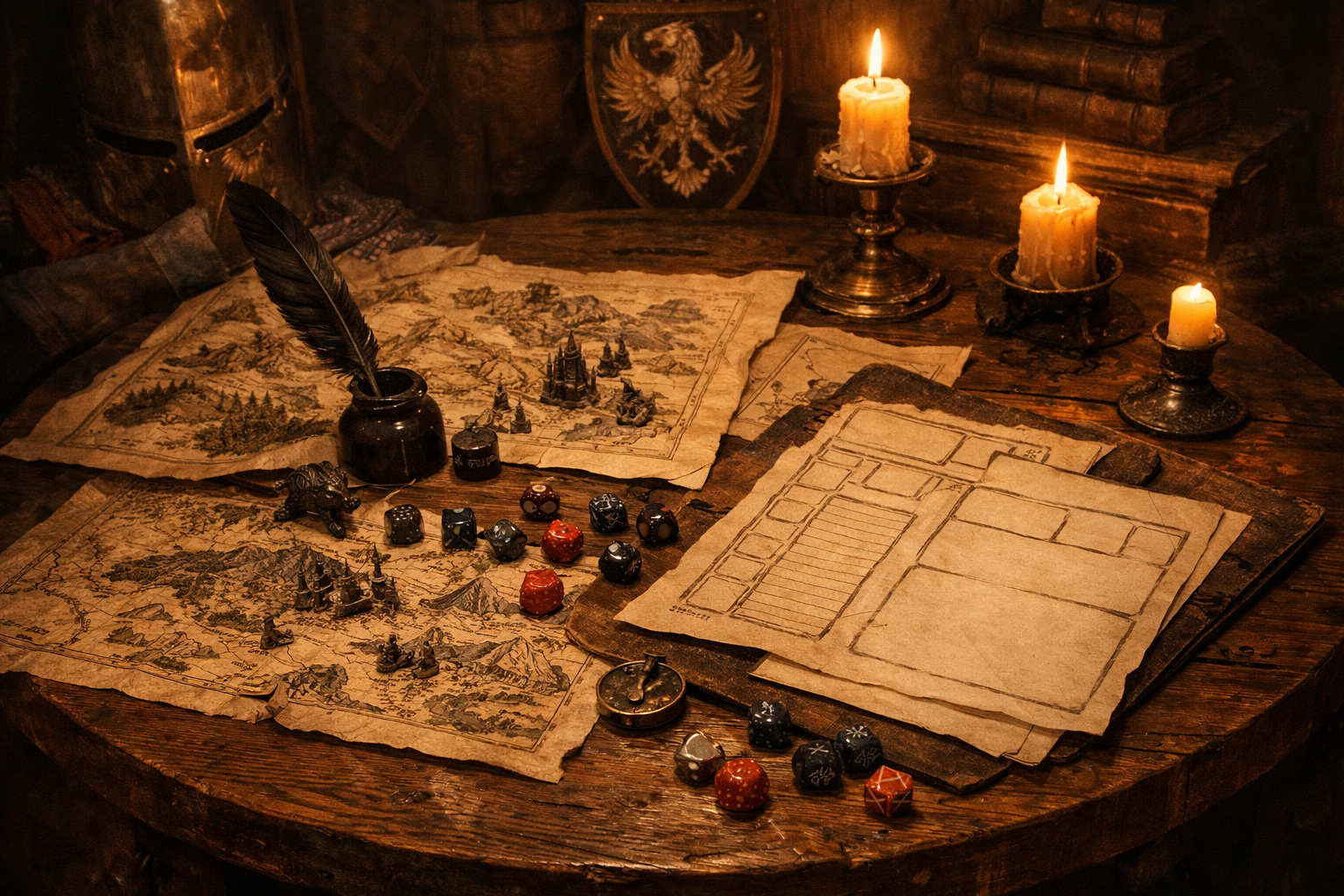
Session zero is a pre-campaign meeting where players and the Game Master align expectations, build characters, and establish boundaries before the adventure begins.
Session Zero is an expectations-setting meeting held before, or sometimes during the early stages of, a tabletop roleplaying campaign. Players and the Game Master use it to discuss the campaign, create or finalize characters, establish boundaries, agree on table procedures, and make sure everyone understands the kind of game they are about to play.
Unlike a normal game session, Session Zero focuses primarily on preparation and communication rather than advancing the adventure.
The practice has become widely used across modern tabletop roleplaying, and current Dungeons & Dragons guidance explicitly recommends it as an opportunity to create characters, establish expectations, discuss topics to avoid or embrace, and determine how the characters connect to one another.
A good Session Zero cannot guarantee that a campaign will succeed. People change their minds, schedules change, and problems can still emerge during play. What it can do is expose mismatched expectations early, establish ways to handle problems, and give the group a shared foundation before significant time is invested in the campaign.
The Core Purpose of Session Zero
Session Zero creates shared expectations before the adventure gets underway.
The Game Master presents the campaign concept. Players discuss what interests them. The group establishes how they want to play together.
That conversation commonly covers several areas.
Campaign pitch and tone: The GM describes the setting, major themes, expected starting and ending levels if known, and the type of adventure they expect to run. A gritty political intrigue campaign calls for different expectations than a lighthearted monster-hunting adventure.
Character creation together: Players can create or finalize characters as a group, making it easier to establish connections between them. When the wizard player hears the cleric's concept, for example, the two players might decide that their characters once studied under the same mentor.
Table expectations: The group discusses session frequency, attendance, punctuality, expected session length, communication between games, and what happens when someone cannot attend.
Content boundaries and safety tools: Players and the GM identify material they want excluded, handled off-screen, or approached carefully. They can also agree on tools or procedures for pausing or redirecting play if something becomes uncomfortable.
House rules and game procedures: The GM explains optional rules, house rules, homebrew material, allowed character options, how rules disagreements will be handled, and any other procedures that differ from the game's default rules.
Player-versus-player behavior: If relevant, the group should establish whether stealing from other characters, attacking other characters, secret betrayals, or similar actions are permitted.
The exact topics depend on the group and the game.
What Actually Happens During Session Zero
There is no required length for Session Zero.
For an established group, it might be a short conversation before play. For a new group or a complicated campaign, it might occupy most or all of a gathering. D&D Beyond's Session Zero guidance specifically notes that these conversations can range from a brief calibration to several hours.
A useful structure begins with the campaign concept.
For example, the GM might say:
"We're running a campaign in a coastal city where a merchant guild conflict is escalating. You'll start at level 3 as independent operators who become caught between several factions. Expect political intrigue, investigation, combat, and morally complicated decisions. The overall tone will be serious without being relentlessly grim."
Players can then ask questions about the setting, available character options, important organizations, and what kinds of characters would fit the premise.
Next comes a conversation about boundaries and table expectations.
The group might discuss subjects that should not appear, subjects that can exist but should remain off-screen, and subjects that require care. Depending on the group, this can be handled through direct discussion, private communication, questionnaires, or established tabletop safety tools.
Examples might include graphic torture, violence involving children, sexual content, substance abuse, or particular phobias.
Players do not need to justify why they want something excluded.
Character creation or character review can follow.
Even when players arrive with prepared characters, discussing those characters together allows connections and potential conflicts to surface before play.
Perhaps three players independently created characters who prefer to avoid confrontation, while the campaign assumes proactive adventurers. That can be discussed before it becomes a problem.
The group can also create shared history.
Perhaps the fighter and ranger served together in a military campaign. The bard owes the warlock a significant favor. Two characters grew up in the same town but remember it very differently.
These connections give players immediate reasons to interact and give the GM material that may become useful later.
Session Zero usually ends by confirming practical details such as the first play date, what everyone should prepare, how scheduling will work, and whether there are any unresolved questions before the campaign begins.
How Session Zero Reduces Campaign Problems
Many tabletop conflicts begin with expectations that were never discussed.
One player might expect a dungeon crawl centered on tactical combat.
Another might expect character-focused political intrigue.
The GM might be preparing a dangerous wilderness exploration campaign.
None of those preferences are inherently wrong.
The problem is that the group is trying to play different games at the same table.
Session Zero gives those assumptions a chance to surface.
The same principle applies to character concepts.
Suppose one player creates a ruthless assassin who is willing to betray allies for personal gain, while everyone else builds heroic characters who expect a cooperative campaign.
That character might still work, but the group should know what they are agreeing to before play begins.
The discussion may result in changing the character, modifying the campaign's expectations, establishing limits on inter-party conflict, or deciding that the concept is not a good fit.
Content discussions serve a similar purpose.
If a player has a strong aversion to spiders and the GM intends giant spiders to feature prominently, discovering that before the relevant adventure allows the group to determine an appropriate solution.
Session Zero does not eliminate every disagreement.
It makes important disagreements easier to discover before they become larger problems.
Session Zero for Different Campaign Types
Different games need different levels of preparation.
One-Shots
A one-shot may only need a brief expectations conversation.
Before play, establish:
- The premise
- The tone
- Character relationships
- Important content boundaries
- Major house rules
- Expected session length
- Any unusual mechanics or assumptions
Even 15 or 20 minutes of preparation can prevent confusion once the adventure begins.
Ongoing Campaigns
Long campaigns generally benefit from a more thorough Session Zero because the commitment is larger.
Discuss:
- Campaign style
- Expected length
- Scheduling
- Character creation
- Advancement
- Tone
- Difficulty
- Character death
- Player-versus-player behavior
- Content boundaries
- House rules
- Player interests
- Communication between sessions
The goal is not to create a legal contract.
It is to make important assumptions visible.
West Marches and Open-Table Games
Open-table campaigns have additional challenges because not every participant begins at the same time.
A Session Zero can establish the campaign's shared rules, world assumptions, scheduling procedures, character restrictions, advancement system, and table expectations.
Those decisions should also be documented so that players joining later can review them as part of their onboarding.
Running an Effective Session Zero
Game Masters can make Session Zero easier by preparing a short campaign pitch beforehand.
This does not need to be a large setting document.
A useful pitch explains what players need to know to create appropriate characters and decide whether the campaign interests them.
It might cover:
- Setting summary: A concise description of the world and starting location
- Campaign premise: What the characters are expected to be doing
- Tone and themes: The emotional feel and major ideas of the campaign
- Expected content: The approximate emphasis on combat, exploration, investigation, social interaction, or other forms of play
- Character creation guidelines: Starting level, available species or ancestries, classes, backgrounds, ability-score method, and any restrictions
- Initial hook: Why the characters become involved
- Practical expectations: Session length, frequency, attendance, and communication
During Session Zero, record the decisions that matter.
These notes can become a reference if someone later asks whether a particular house rule was approved, whether player-versus-player actions are allowed, or what the group agreed would happen when a player misses a session.
Also record player interests.
If one player is especially interested in exploration, another in tactical combat, and another in political intrigue, the GM now has useful information for future preparation.
Session Zero should be collaborative.
The GM may establish some non-negotiable features of the campaign, but the purpose is not simply to announce rules.
Questions such as "What are you hoping to do in this campaign?" or "What would make this campaign disappointing for you?" can reveal information that a campaign pitch alone cannot.
Revisit the Conversation During the Campaign
Session Zero does not need to be the group's final expectations conversation.
Preferences may change after actual play begins.
Some groups informally call a later check-in "Session Zero Point Five," although no special name is necessary.
After several sessions, the group might ask:
- Are we getting the kind of game we expected?
- Is the balance between combat, exploration, and roleplay working?
- Is the campaign's tone still enjoyable?
- Are any house rules causing problems?
- Does anyone want more or less spotlight time?
- Have new boundaries or concerns appeared?
- Is the scheduling arrangement still working?
A player might discover that they want more opportunities to use their combat abilities.
Another might want more time for conversations between characters.
The GM might discover that a house rule looked good on paper but slows the game considerably.
Changing course is not a failure.
Expectations can be revised as the group learns what actually works at the table.
Common Session Zero Mistakes
Avoiding the Boundaries Conversation
Some groups skip discussions of limits because the subject feels awkward.
The conversation does not need to be dramatic or invasive.
Establish what should not appear, what should remain off-screen, how someone can signal discomfort during play, and how the group will respond.
Players should not be required to explain personal reasons for their boundaries.
Letting One Person Dominate
Session Zero is a group discussion.
If one participant speaks for most of the meeting, quieter players may never communicate what they actually want.
The GM can deliberately invite everyone to contribute without pressuring anyone to disclose more than they are comfortable sharing.
Overloading Players With Lore
Players usually need enough setting information to understand the campaign and create appropriate characters.
They rarely need an encyclopedia before Session One.
Provide what is relevant now.
Additional history, geography, organizations, and lore can emerge when they become important.
Treating Every Preference as a Promise
Player preferences are useful guidance, but the GM does not need to guarantee that every session will contain an equal amount of combat, exploration, investigation, and roleplay.
Use the conversation to understand priorities, not to create an impossible content quota.
Failing to Document Decisions
People forget conversations.
Record important agreements about house rules, scheduling, character restrictions, safety procedures, advancement, and other campaign-wide decisions.
The notes do not need to be elaborate.
They need to be accessible.
Virtual Session Zero
Online groups can conduct Session Zero through voice or video calls, text channels, shared campaign documents, or combinations of these tools.
Shared documents are particularly useful for recording:
- Campaign information
- Character connections
- Scheduling expectations
- House rules
- Important table procedures
- Agreed campaign assumptions
Character creation can also happen collaboratively online through digital character sheets or screen sharing.
Some groups continue parts of Session Zero asynchronously.
Players might add character connections, backstory details, organizations, locations, or questions to a shared document between meetings.
The important part is not whether everyone is sitting in the same physical room.
It is whether the group has actually communicated.
Example: The Saltmere Campaign
Consider a fictional campaign set in the port city of Saltmere.
The GM prepares a pitch describing a conflict between merchant guilds, the city's political environment, and a campaign focused on intrigue, investigation, and occasional action.
During Session Zero, two players say they are interested in investigation. Another wants to specialize in negotiation and social encounters. A fourth wants to play a protective martial character.
Instead of beginning as strangers who happen to meet in a tavern, the players decide that their characters work for a small private investigation company.
The ranger and rogue have handled previous cases together.
The bard is a new hire who sees the company as a route to adventure and influence.
The paladin was initially hired as protection but has gradually become personally invested in the team's safety.
The players now have an immediate reason to cooperate.
During the boundaries discussion, one player asks the group to avoid detailed descriptions of drowning. That is especially relevant in a coastal campaign, so the GM records the boundary and plans accordingly.
The group also agrees to meet twice each month and establishes a house rule for identifying magic items.
None of these decisions guarantees that the campaign will succeed.
They do mean that the first adventure begins with the players understanding the premise, the characters already connected, and several potentially disruptive questions already resolved.
Tools and Resources
Several established resources can make Session Zero conversations easier.
TTRPG Safety Toolkit
The TTRPG Safety Toolkit is a free, living collection co-curated by Kienna Shaw and Lauren Bryant-Monk.
It brings together information about numerous tabletop safety and support tools that can be used before, during, and after play.
Individual tools included or referenced in the collection have their own creators and attribution requirements, so the toolkit should be treated as a curated resource rather than the origin of every tool it contains.
The Same Page Tool
The Same Page Tool, created by Chris Chinn and originally published through the Deeper in the Game blog, is designed to expose assumptions about how a roleplaying game is expected to work.
Its questions cover subjects such as player authority, GM authority, character behavior, consequences, and the overall structure of play.
It can be useful when players use the same words, such as "story-driven" or "sandbox," but mean very different things.
Consent in Gaming
Consent in Gaming, written by Sean K. Reynolds and Shanna Germain and published by Monte Cook Games in 2019, provides guidance for discussing mature or potentially difficult subjects in tabletop games.
It also includes a consent checklist that groups can use when discussing content.
Character and Campaign Questionnaires
A questionnaire does not need to be an official product.
Simple questions can create useful character and campaign material:
- What does your character want?
- What does your character fear?
- Who does your character trust?
- Who do they owe a debt?
- Why are they willing to work with this party?
- What kinds of situations does the player want to explore?
- What kinds of situations does the player want excluded?
The answers give players material for roleplay and give the GM potential story hooks without requiring a lengthy backstory.
Making Session Zero a Priority
A Session Zero does not need to be formal, lengthy, or complicated.
What matters is that the important conversations happen.
Even groups that have played together for years can benefit from repeating the process for a new campaign because familiarity with the people does not automatically mean everyone wants the same kind of game this time.
A horror campaign may need different boundaries than the group's previous heroic fantasy game.
A highly tactical campaign may need different character expectations than a narrative mystery.
A weekly campaign may require different attendance rules than an occasional one-shot.
Session Zero gives the group a place to make those differences explicit.
It helps turn individual expectations into shared expectations before the campaign begins.
That foundation can make later character development, campaign preparation, rules decisions, and table communication easier to manage.
Using Digital Tools
Digital tools can help preserve the decisions made during Session Zero so they are not lost between sessions.
The Dungeon Trainer supports human-run campaigns with campaign organization, shared play records, preparation tools, game-management features, and optional AI assistance.
A GM can use those tools to preserve campaign information, character relationships, important decisions, and other notes established during Session Zero while still running the table themselves.
The technology should support the agreement the group created, not replace the conversation that created it.
Sources and Further Reading
Chinn, C. (2010, March 28). The Same Page Tool. Deeper in the Game.
Haeck, J. (2024, March 11). How to run a Session 0 for your D&D game. D&D Beyond. Original work published January 8, 2021.
Reynolds, S. K., & Germain, S. (2019). Consent in gaming. Monte Cook Games.
Shaw, K., & Bryant-Monk, L. (n.d.). TTRPG Safety Toolkit.
Shea, M. E. (2021, April 5). Running Session Zeros. Sly Flourish.
Wizards of the Coast. (2024). Basic Rules for Dungeons & Dragons. D&D Beyond.
Wizards of the Coast. (2024). Dungeon Master's Guide. Wizards of the Coast.
Related reading
- When Session Zero Prevents a Campaign Collapse: Lessons from a Failed Table
Not every campaign makes it to the end. See how one table's collapse revealed exactly why session zero matters, and what you can learn from their mistakes.
- Session Zero vs First Session: When to Cover What
Understanding the difference between session zero and your first session helps you allocate time wisely and start your campaign with momentum instead of confusion.
- Session Zero Checklist: Essential Tools and Resources for Game Masters
A comprehensive toolkit for running productive session zero meetings, from character creation worksheets to safety tools and scheduling templates.