Dungeon Master vs Game Master: Understanding the Difference
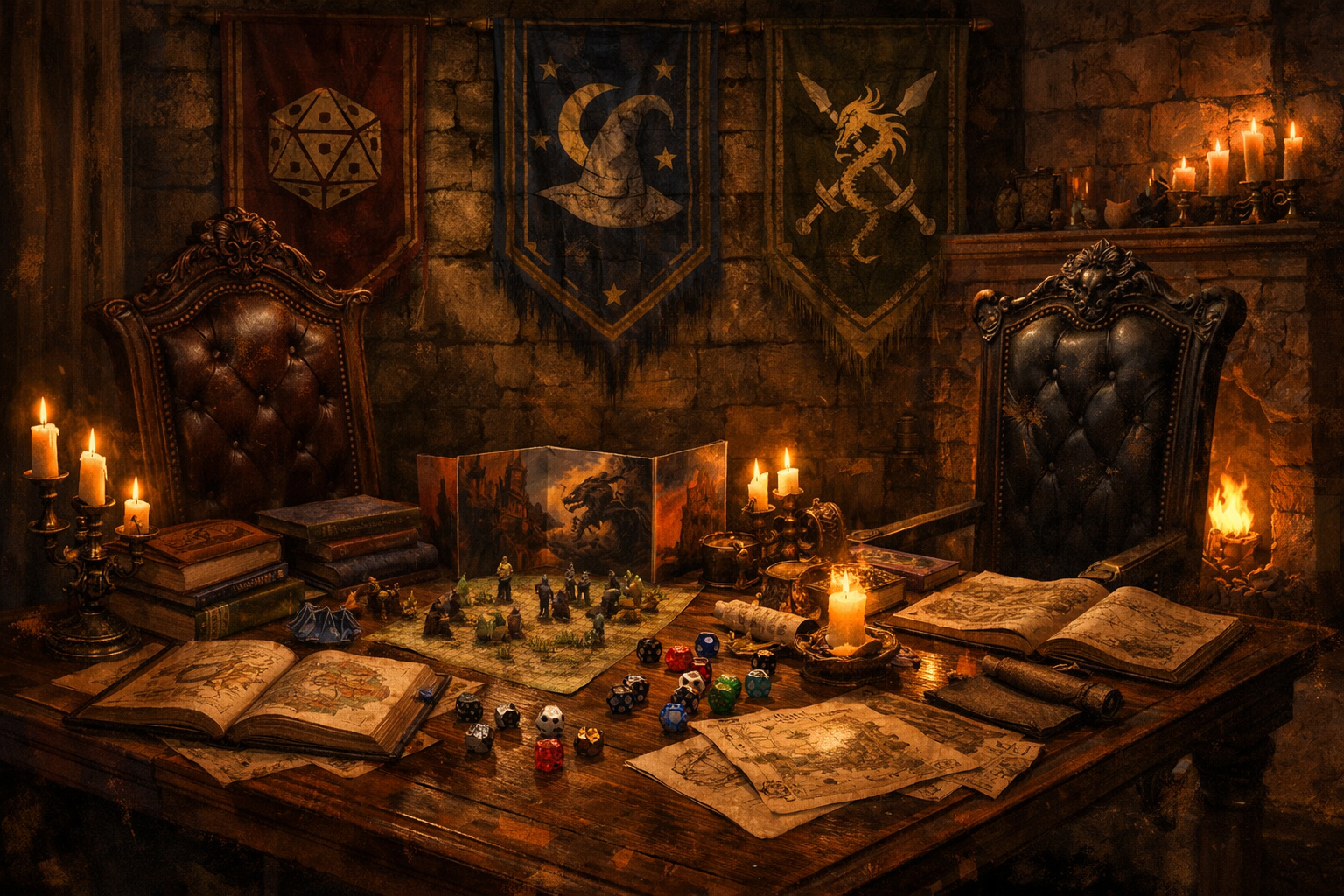
The terms Dungeon Master and Game Master often appear interchangeable, but understanding their distinctions helps you navigate the tabletop RPG community with confidence.
If you've explored tabletop roleplaying games, you've encountered both "Dungeon Master" and "Game Master." These terms often appear interchangeable in casual conversation, yet each carries specific meaning within the hobby. Understanding the distinction helps you communicate clearly with other players, choose the right resources, and appreciate the breadth of tabletop RPG traditions.
This comparison examines both terms, their origins, when each applies, and what every person running a tabletop game shares regardless of title.
The Core Distinction: Trademark and System
The fundamental difference is simple: "Dungeon Master" is a trademarked term owned by Wizards of the Coast, used specifically for the person running Dungeons & Dragons sessions. "Game Master" is a generic term for the person running any tabletop roleplaying game, whether that's Pathfinder, Call of Cthulhu, Blades in the Dark, or any other system.
When you run D&D, you're a Dungeon Master. When you run other RPGs, you're typically called a Game Master, though many systems use their own specific titles.
System-Specific Titles Across the Hobby
The tabletop RPG community has developed dozens of system-specific titles for the person who facilitates play:
Keeper in Call of Cthulhu and other horror-focused games emphasizes the role of maintaining atmosphere and cosmic dread.
Storyteller or Narrator in games like Vampire: The Masquerade highlights collaborative narrative creation.
Marshal in Deadlands reinforces the Western genre and frontier justice themes.
Hollyhock God in Nobilis reflects that game's mythic tone and divine player characters.
Referee appears in older RPG texts and emphasizes neutral adjudication of rules.
These specialized titles aren't merely flavor. They signal how each game approaches the facilitator's role, the tone players should expect, and the relationship between rules and fiction.
What Both Roles Share
Regardless of title, the person running a tabletop RPG performs remarkably similar functions:
Presenting the World
Every facilitator describes environments, portrays non-player characters, and brings the setting to life through narration. Whether you're describing a dragon's lair in D&D or a noir detective's office in Gumshoe, you translate imagination into shared experience.
Adjudicating Rules
You interpret the game's mechanics, resolve ambiguous situations, and maintain fair play. A Game Master running Savage Worlds and a Dungeon Master running D&D both decide when rules apply, when exceptions make sense, and how to keep gameplay moving.
Balancing Challenge
You design encounters, puzzles, and obstacles that engage without overwhelming. This challenge-balancing appears whether you're building a D&D combat encounter or designing a tense negotiation scene in a political intrigue game.
Consider a recurring example: Elena runs a campaign where her players are establishing a frontier trading post. When bandits threaten the settlement, she needs to create tension without destroying everything the players built. As a Dungeon Master running D&D, she balances combat difficulty using challenge ratings and action economy. If Elena were running the same scenario in Powered by the Apocalypse game, she'd use different mechanics, but the underlying responsibility of creating meaningful challenge remains identical.
Facilitating Player Agency
You respond to player choices, adapt to unexpected solutions, and ensure everyone contributes to the story. This facilitation defines quality tabletop play across every system.
Managing Table Dynamics
You address conflicts, ensure everyone gets spotlight time, and maintain a welcoming environment. These social responsibilities transcend any particular game system or title.
When Terminology Matters
Understanding which term to use helps in several practical situations:
Seeking Resources
If you search for "Dungeon Master tips," you'll find D&D-specific advice about encounter building using challenge ratings, managing D&D's action economy, or using official Wizards of the Coast tools. Searching for "Game Master advice" yields broader principles applicable across multiple systems.
When you need system-specific guidance, use the correct title. When you want universal facilitation techniques, "Game Master" resources cast a wider net.
Joining Communities
Online forums, Discord servers, and local groups often organize around specific games. Introducing yourself with the right title signals your experience and helps others understand your background.
Someone who says "I've been a Dungeon Master for five years" communicates D&D experience. Someone who says "I've been a Game Master for five years" might run any number of systems, and follow-up questions help establish common ground.
Professional Contexts
If you write tabletop content, develop games professionally, or teach RPG design, precise terminology demonstrates expertise. Using "Dungeon Master" only for D&D content shows respect for both trademark law and the diverse hobby landscape.
The Interchangeable Gray Area
Despite these distinctions, many experienced players use "DM" and "GM" interchangeably in casual conversation. The context usually clarifies meaning. If someone discusses running Curse of Strahd, everyone understands they mean Dungeon Master even if they say "GM."
This flexibility reflects the hobby's collaborative, inclusive nature. Tabletop gaming prioritizes shared fun over rigid terminology enforcement. Gentle clarification helps when confusion arises, but pedantry about titles rarely improves anyone's experience.
Skills Transfer Between Systems
The overlap between Dungeon Master and Game Master responsibilities means skills transfer remarkably well between systems. A DM experienced in pacing D&D combat can apply similar principles to action scenes in other games. Someone skilled at improvising NPC dialogue in Call of Cthulhu brings that same talent to D&D.
Returning to Elena's frontier trading post: whether she runs this campaign in D&D, Pathfinder, or a narrative-focused system, her ability to listen to players, build on their ideas, and create meaningful consequences matters more than system mastery. The mechanical details change, but the facilitation craft remains consistent.
This transferability encourages exploring different games. Your experience as a Dungeon Master provides a foundation for running other RPGs, and experimenting with other systems often improves your D&D games by exposing you to different design philosophies.
Respecting the Broader Hobby
Using accurate terminology shows respect for the tabletop RPG hobby's diversity. Dungeons & Dragons is the most popular system, but thousands of other games offer different experiences, themes, and mechanics. Calling everyone a "Dungeon Master" suggests D&D is the only game that matters, erasing decades of creative work by other designers.
When you acknowledge that a Keeper running Call of Cthulhu does something distinct from a DM running D&D, even though both facilitate tabletop play, you honor the specific design goals each game pursues. Horror investigation games create different experiences than heroic fantasy, and the facilitator's title reflects that intentional difference.
Practical Advice for New Facilitators
If you're preparing to run your first game:
Use the term your game specifies. Running D&D? You're a Dungeon Master. Running most other games? You're a Game Master or the system-specific title.
Don't stress about perfection. Whether you call yourself a DM, GM, Keeper, or Storyteller, your primary job is creating fun experiences with your table. Facilitation skills matter more than titles.
Learn from everyone. Advice for Dungeon Masters often applies to Game Masters and vice versa. Read broadly, watch actual play shows featuring different systems, and borrow techniques regardless of where you find them.
Ask your players. If terminology questions arise at your table, brief discussion builds shared understanding. Some groups prefer formal titles, others use first names, and neither approach is wrong.
The Community Context
The tabletop RPG community generally handles this distinction with grace. Experienced players understand both terms and use them appropriately. Newcomers learn quickly through context and gentle correction when needed.
This linguistic flexibility reflects gaming's core values. Tables gather to tell stories together, solve problems, and enjoy shared imagination. Whether you call the facilitator a Dungeon Master, Game Master, or something else entirely, the goal remains creating memorable experiences with friends.
Tools That Support Any Title
Regardless of what you call yourself, certain tools improve your craft. Quality dice, organizational systems for notes, session planning frameworks, and reference materials help every facilitator run better games.
Digital tools like The Dungeon Trainer offer resources for developing facilitation skills, managing campaign notes, and improving table dynamics. While its name references "Dungeon," the underlying principles of listening to players, creating meaningful challenges, and managing session flow apply whether you're running D&D or any other system. The optional AI features provide practice scenarios, but no tool replaces the human facilitator's creativity and responsiveness to their specific players.
Looking Forward
As the tabletop RPG hobby grows, new players continually discover the joy of facilitating games. Some will run D&D exclusively and proudly call themselves Dungeon Masters. Others will explore multiple systems, identifying primarily as Game Masters. Many will run different games at different times, code-switching between titles as context requires.
All approaches enrich the hobby. The Dungeon Master preparing a D&D adventure and the Game Master designing a Blades in the Dark score both contribute to tabletop gaming's vitality and creativity.
Moving Forward at Your Table
Whether you identify as a Dungeon Master, Game Master, or any other title, focus on what matters most: understanding your players, facilitating their agency, creating meaningful challenges, and building shared stories together.
The terminology helps you find appropriate resources and communicate clearly with the broader community. But at your table, surrounded by friends rolling dice and imagining together, the title matters far less than your commitment to everyone's enjoyment.
When Elena's players defend their trading post from bandits, the exciting decisions, memorable moments, and collaborative problem-solving don't depend on whether she calls herself a DM or GM. They depend on her preparation, responsiveness, and dedication to her table's fun.
That dedication defines great facilitation, whatever title you choose.
Sources and Further Reading
- Dungeons & Dragons Dungeon Master's Guide (5th edition), Wizards of the Coast
- Call of Cthulhu Keeper Rulebook (7th edition), Chaosium Inc.
- The Alexandrian (thealexandrian.net), Justin Alexander's game mastering blog with system-agnostic advice
- Return of the Lazy Dungeon Master by Michael Shea (Sly Flourish), SlyFlourish.com
- Shannon Appelcline, Designers & Dragons series, Evil Hat Productions (history of RPG development and terminology)
Related reading
- When Session Zero Prevents a Campaign Collapse: Lessons from a Failed Table
Not every campaign makes it to the end. See how one table's collapse revealed exactly why session zero matters, and what you can learn from their mistakes.
- Session Zero vs First Session: When to Cover What
Understanding the difference between session zero and your first session helps you allocate time wisely and start your campaign with momentum instead of confusion.
- Session Zero Checklist: Essential Tools and Resources for Game Masters
A comprehensive toolkit for running productive session zero meetings, from character creation worksheets to safety tools and scheduling templates.